
The Adult Vaccination Schedule in India Nobody Hands You After Childhood
Vaccination cards stop after school admissions, but the shots don't. Here is what a doctor actually checks for at forty, sixty and seventy, and why a vaccine that was stored wrong can fail without anyone knowing.
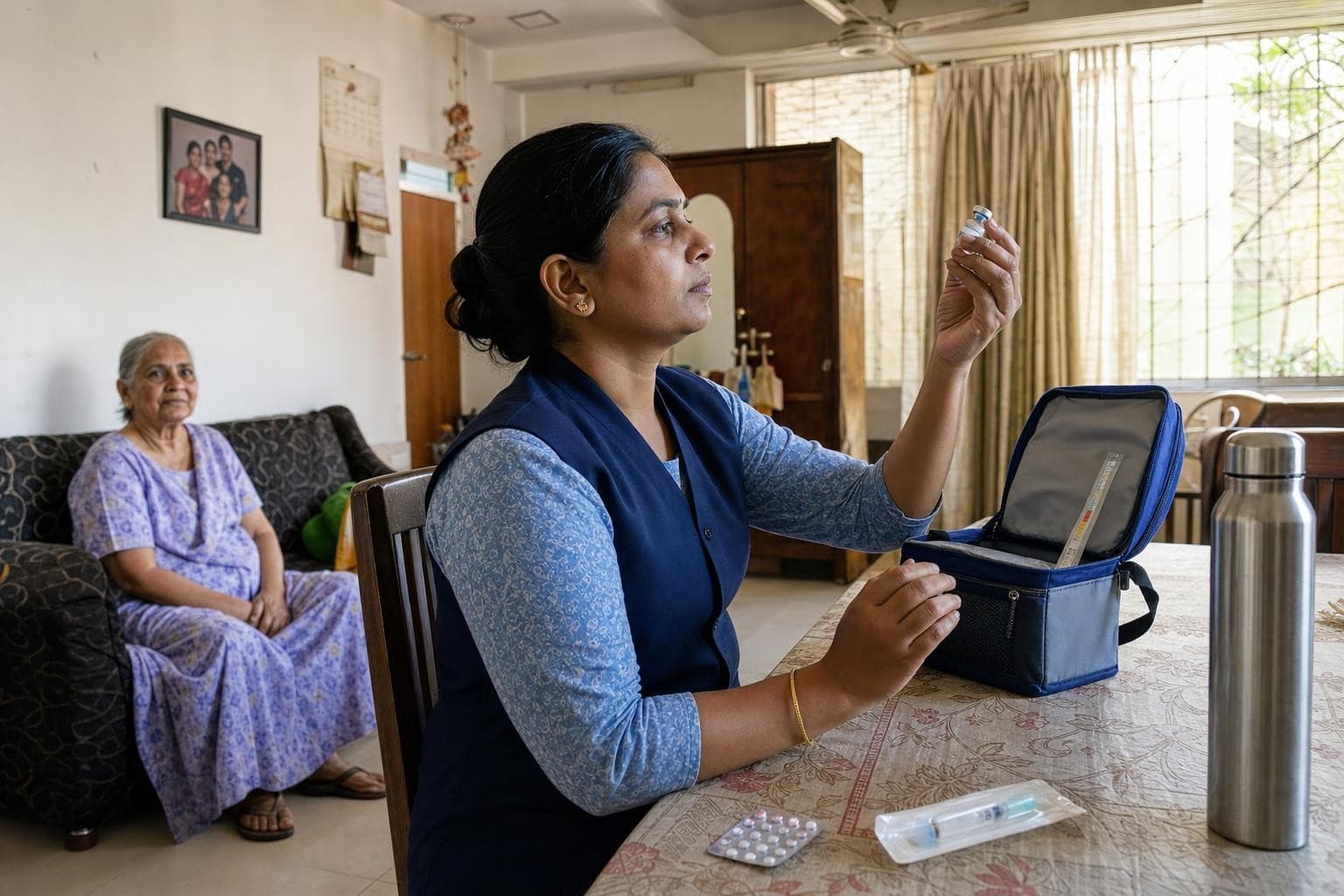
Every parent in Mumbai has dug out a child's vaccination card for a school admission. Almost nobody has one for themselves. The shots don't stop at eighteen. The paperwork just does, and that's the part that trips families up.
A vaccine schedule for adults exists. It isn't printed on a laminated card anyone hands you at a pharmacy counter. It sits across a few different guidelines, changes with age and health condition, and gets skipped less because families refuse it and more because nobody ever brought it up. A vaccination visit at home is a reasonable way to catch up once someone finally asks the question. Knowing what to ask for is the harder part.
What changes in your forties
The one shot almost everyone in this age group is overdue for is a tetanus booster. Childhood tetanus cover fades over roughly a decade, and most adults never get a repeat dose unless a rusty nail or a deep cut forces the issue in an emergency room. A scheduled booster, taken calmly at home, beats a hurried one after an injury.
This is also the decade a flu shot stops being optional advice and starts mattering, especially for anyone managing diabetes, high blood pressure or a lung condition. Flu doesn't hit a forty-something the way it hits a seventy-year-old. But a bad week of it, on top of an existing condition, can knock a working adult out of action for far longer than the illness itself should.
Hepatitis B is worth a real conversation here too, particularly for anyone who was never vaccinated as a child and works in healthcare, travels for work, or lives with someone who is. It's not automatic. It's a question worth asking a doctor rather than assuming either way.
Sixty is when the list gets longer
Past sixty, two vaccines move from "consider it" to "most guidelines recommend it": the pneumococcal vaccine, which protects against a bacterial infection that turns a routine chest cold into pneumonia far more easily in older adults, and the shingles vaccine, for anyone who has already had chickenpox, which in India is most people over fifty.
Shingles catches families off guard because it isn't a new infection. It's the old chickenpox virus, dormant for decades, resurfacing as a painful rash once immunity weakens with age. A vaccine reduces both the chance of an outbreak and how brutal the nerve pain afterward tends to be if one happens anyway.
The annual flu shot also stops being a maybe in this decade. Every winter, not every few years. Families who get one shot and assume they're covered for the next three or four winters are working from the wrong assumption entirely.
Seventy and beyond needs a doctor in the loop, not a chemist
By seventy, the vaccine question usually can't be answered without looking at the whole medical picture. Some pneumococcal protection needs a repeat dose years after the first. Some clinics offer a higher-dose flu formulation aimed specifically at older immune systems that respond more weakly to the standard one.
None of this is something to sort out at a chemist's counter based on what's in stock that day. A doctor who knows the existing conditions, current medications and any past reaction to a vaccine should be the one deciding what's due and what can wait. That conversation matters more here than at any earlier stage, because the margin for a badly timed reaction is thinner.
Why cold chain decides whether the shot even works
Here's the part almost no family thinks to ask about: a vaccine that spent even a few hours at the wrong temperature can lose its effectiveness without changing color, smell or appearance in any way. There's no visible warning. The dose looks completely normal and does close to nothing.
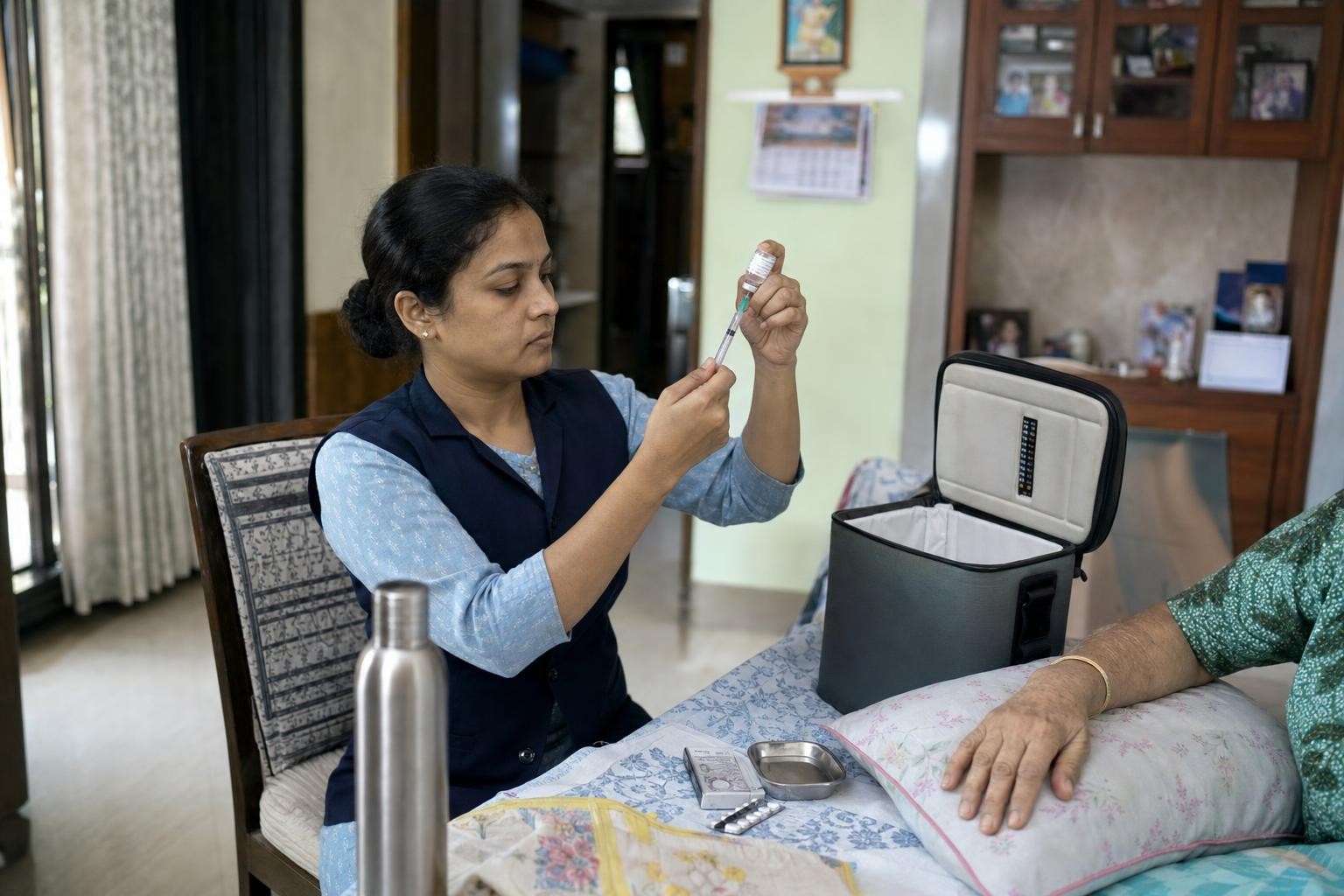
Vaccines need to stay between two and eight degrees Celsius from the manufacturer's fridge to the needle. That's the cold chain, and every break in it, a delivery van without proper refrigeration, a vial left on a counter during a long queue, a home visit where the carrier bag sat in a parked car in Mumbai's heat, is a break that can quietly undo the whole point of getting vaccinated.
This is the actual argument for using a service that takes cold chain seriously rather than the cheapest available slot. A trained professional carrying a vaccine in a proper temperature-controlled case, checked and logged, isn't a convenience add-on. It's the difference between a shot that protects someone and one that doesn't, with no way to tell which happened just by looking.
Keeping track without a laminated card
Most families lose the thread here simply because no single doctor is tracking the whole picture. A cardiologist mentions a flu shot in passing. A dermatologist brings up shingles for an unrelated reason. Nobody connects the two into an actual schedule.
A simple fix works better than anything elaborate: one notebook, or one note on a phone, with a date and a vaccine name every time a family member gets one. It sounds almost too basic to mention. It's also the single habit that prevents a shingles vaccine from getting repeated by accident two years later because nobody remembered the first one.
If vaccination is one of several things a household is coordinating after a hospital stay or alongside ongoing care, the broader picture of what home healthcare in Mumbai covers is worth reading alongside this, so a booking doesn't get missed or duplicated. And if you're at the stage of actually arranging the visit itself, what a home vaccination appointment involves start to finish covers the practical side of what to expect.
The card stopped after school. The need to keep track of it never did.
Questions families ask
Do I need a prescription to get vaccinated at home?
Yes. A valid prescription or a doctor's recommendation is needed before any vaccine is administered, whether at a clinic or at home. This isn't paperwork for its own sake. It's the step where someone checks the vaccine is right for that person's age, history and current health.
How often does the tetanus booster actually need repeating?
Roughly every ten years for most healthy adults, though a deep or dirty wound can call for an earlier dose regardless of when the last one was given. If nobody remembers the last date, it's safer to ask a doctor than to guess.
Can one family member get vaccinated while others in the house need different shots?
Yes, and it's common. A single home visit can often cover a flu shot for one person and a shingles vaccine for another, since a trained professional carries what's needed and checks each person's history separately before administering anything.
Is the shingles vaccine only for people who feel unwell?
No. It's given to otherwise healthy older adults specifically to prevent an outbreak before it starts, not as treatment once a rash has appeared. Waiting for symptoms defeats the purpose of getting it early.
How can I tell if a vaccine was stored correctly before it reaches my home?
You mostly can't, by looking. That's exactly why cold chain practice matters more than price when choosing who administers it. Ask directly whether the provider uses temperature-controlled transport, and expect a clear answer, not a vague one.
What if my parent had a reaction to a vaccine years ago?
Tell the doctor before scheduling anything new, even if the reaction was mild and long ago. Past reactions change what gets recommended and sometimes rule a specific vaccine out entirely, so this isn't a detail to leave out of the conversation.
Healkin facilitates care at home and does not diagnose, prescribe or change a doctor's treatment plan. Which vaccines are appropriate, and when, should always be decided with your own doctor based on your medical history. A reaction that seems more than mild after any vaccine is a reason to call your doctor promptly.