
Home Care After Hospital Discharge in Mumbai: What to Arrange Before the Ambulance Leaves
A discharge summary is a checklist disguised as a medical document. Here is how to read it, what to arrange before you leave the hospital, and how to get through the first 72 hours at home without a scare.
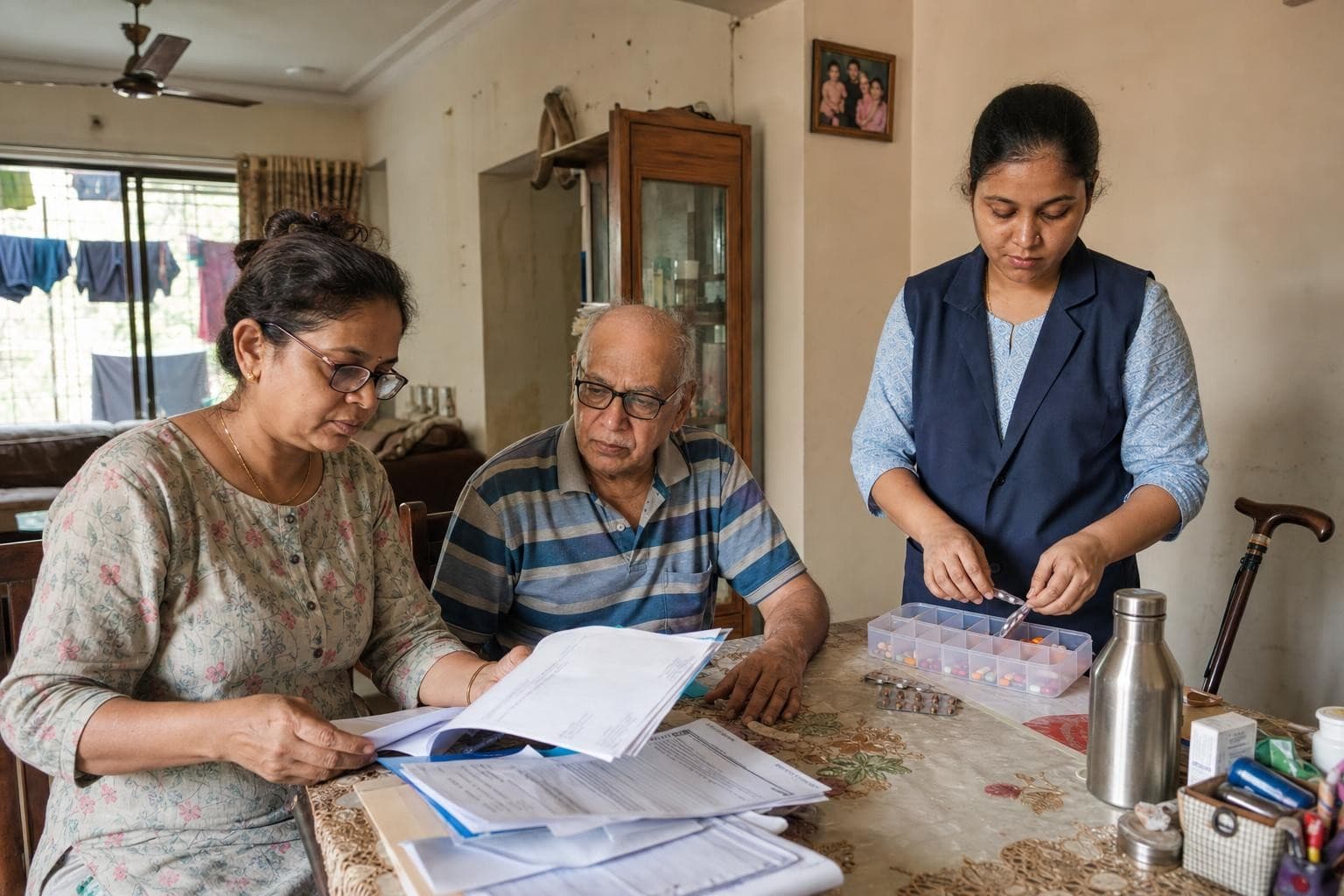
The discharge summary arrives folded into a plastic hospital envelope, usually somewhere around lunchtime, usually while a nurse is unhooking the last cannula and someone from billing is calling about the final invoice. You read it once, standing up, in a corridor. Then you fold it back into the envelope and it does not come out again until the follow-up appointment three weeks later.
That is the document deciding what happens to your parent for the next month.
A discharge summary is not paperwork to file. It is a checklist written in the wrong order, on the wrong day, for someone who is not in a state to read it carefully. Home care after hospital discharge in Mumbai exists mainly to fix that: to read the summary properly, once, before the ambulance leaves the hospital compound, and to have the flat ready for what it actually says.
Reading the discharge summary like it matters, because it does
Four sections carry almost everything you need. The rest is for the next doctor's file.
Diagnosis and procedure, in plain terms if the doctor will give it to you in plain terms. Not to become an expert, but to know what you are watching for. A hip replacement and a stroke discharge home to two completely different weeks.
Medicines, with the new ones marked separately from what your parent was already taking. This is where mistakes start. A blood thinner started in hospital, an existing blood pressure tablet, and a chemist who fills whatever the old prescription says because nobody told him it changed. Ask, before you leave, for the medicine list read aloud against what is physically in the bag going home with you.
Follow-up, meaning the actual date, not "in a week." Write it on a calendar before you leave the building. Discharge fatigue is real, and the follow-up that gets missed is usually the one nobody wrote down.
Red flags, the paragraph doctors write fast and families read faster. Fever above a stated number. Breathlessness. A wound that looks worse instead of better. Confusion in a patient who was clear-headed an hour ago. That paragraph is short because it has to be memorised, not filed.
If any of the four is missing or unclear, ask before the doctor leaves the ward. A five-minute question in the hospital saves a confused phone call at 2am.
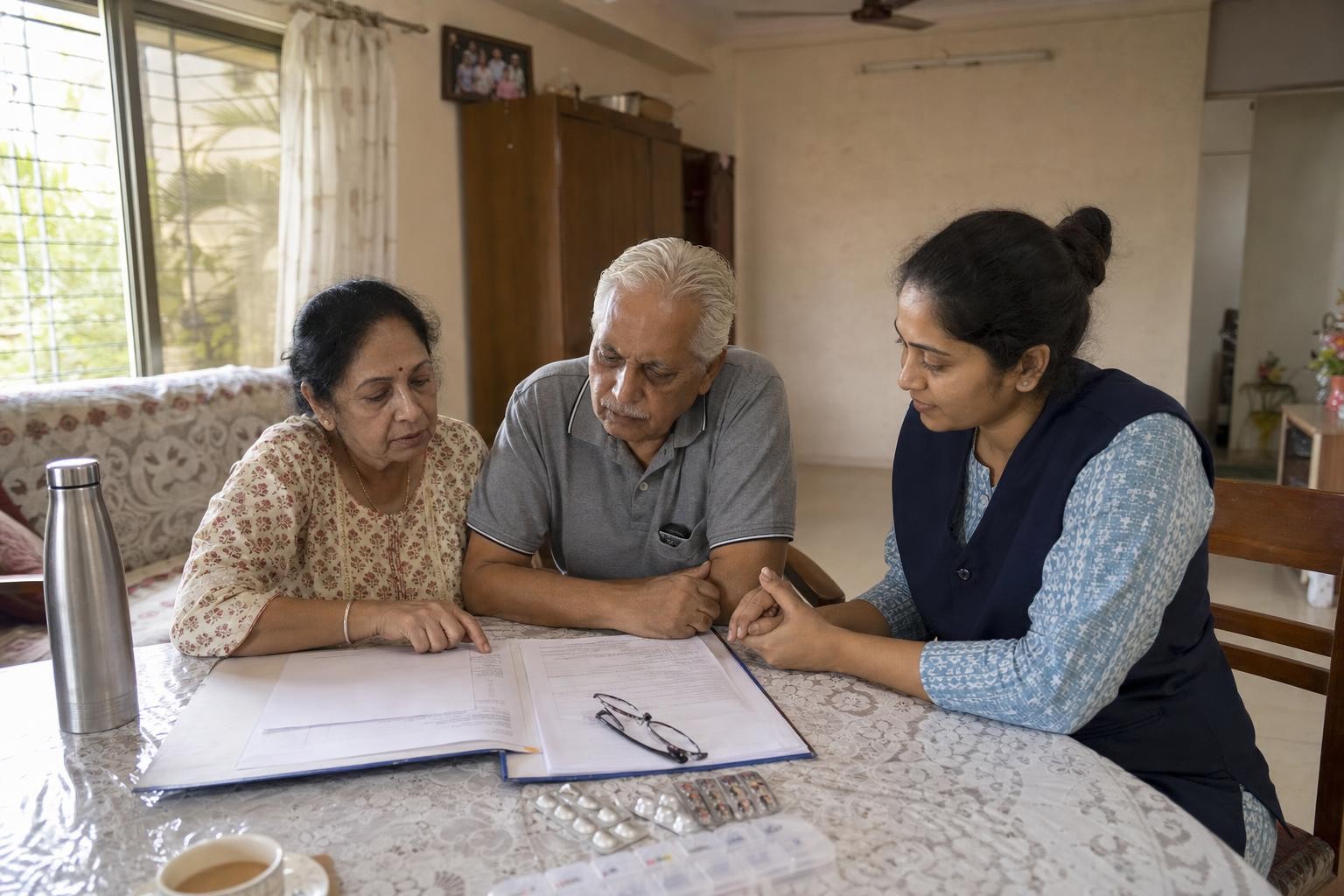
What to have ready before the car reaches your building
Most of this takes an hour and a phone call, done while your parent is still in the ward being discharged.
Equipment, if the summary calls for it. A hospital bed for anyone who cannot get in and out of a normal bed unaided. A wheelchair or walker for mobility that has changed. An oxygen concentrator if the discharge saturation was borderline. All of it takes longer to arrive on the day you need it than the day before, and a Mumbai lift that will not fit a hospital bed is a problem worth discovering before delivery, not after.
Medicines, bought in full before you get home, not in the smaller quantities a hospital pharmacy sometimes dispenses. A 9pm chemist run on discharge night, for a medicine your area's chemist does not stock, is the kind of thing that turns a manageable evening into a bad one.
The room itself. A path from the bed to the bathroom clear of the rugs and low stools that live in most Mumbai flats and that a steady walker never notices. A chair with arms, for someone who needs to push up, not rise from a low sofa. A working nightlight, because the 3am walk to the bathroom is where falls happen.
Someone who knows the plan. One person in the house, not everyone, should hold the medicine schedule and the follow-up date. Confusion between two people quietly holding half the plan each is how a dose gets missed or doubled.
The first 72 hours, hour by hour
The first three days are where a discharge either settles or comes apart. What to expect, roughly:
Day one is mostly rest, and mostly fine. Expect grogginess from anaesthesia or hospital sleep debt, a poor appetite, and a patient who wants to be left alone more than fussed over. Vitals if the summary asked for them. Medicines on the new schedule, checked against the written list, not memory.
Day two is when pain from a procedure often peaks instead of easing, which surprises families who expected day one to be the hardest. It usually is not. Appetite should be returning even slightly. This is the day to watch the wound, if there is one, and the day a fever is most likely to show up if it is going to.
Day three is usually the first real improvement, if the discharge is going normally. Sitting up longer, eating more, talking more. If day three looks like day one, that gap between expected and actual is worth a call to the hospital, not another day of waiting.
Across all three days, the red-flag paragraph from the discharge summary stays live. Fever past the stated number, breathlessness, a wound discharging more than expected, new confusion, chest pain: none of those wait for a scheduled follow-up. Call, or get to a hospital, the same day.
The follow-up appointment is for the plan. The red flags are for everything that cannot wait for the plan.
Where a home visit actually helps, and where it does not
A nurse or attendant coming to the flat in the first week does three things a family usually cannot, however carefully they read the summary.
Vitals recorded properly, with a number written down instead of a guess at "seems okay." A wound or dressing checked by someone who has seen a hundred of them and knows which redness is normal day-two inflammation and which is not. And the medicine box itself explained clearly, new against old, once, by someone who is not also grieving the last three weeks in a hospital corridor.
What it does not replace is the follow-up appointment or a genuine emergency. A home visit is planned support between doctor contact, not a substitute for either end of that. If your parent also needs someone for the daily lifting, bathing and company through the weeks after, our bedside care at home in Mumbai page covers what that looks like and what it costs. And if the discharge came with a dressing to manage at home, the first fortnight after a surgical discharge walks through that part in more detail than a discharge summary ever does.
Questions families ask
How soon after discharge should the first home nurse visit happen?
Within the first day or two is usual, especially if the discharge summary mentions a wound, a new medicine regimen, or vitals to track. It is the visit that catches an early problem while it is still small.
What if the discharge summary is handwritten and hard to read?
Ask the ward nurse or resident doctor to read it aloud before you leave. Most hospitals will, and it takes far less time than a confused phone call back to the ward two days later over a word nobody can make out.
Our parent lives alone. Who checks on them after discharge?
A daily or alternate-day visit for vitals, medicines and general checking is exactly what fills that gap, alongside a phone check-in from family. It is worth arranging before discharge day, not after a bad night alone.
What if a prescribed medicine is out of stock at the local chemist?
Ask the chemist for the salt name rather than the brand; most have an equivalent in stock even when a specific brand does not. If neither works, call the hospital pharmacy or the discharging doctor instead of substituting anything yourself.
Is it normal to feel worse on day two than day one?
Often, yes, particularly after surgery, when anaesthesia has fully worn off and the body registers what was actually done to it. Worse on day two followed by improvement from day three onward is the usual pattern. Worse on day two followed by continued decline is not, and is worth a call.
How do we know if a fever after discharge is serious?
Your discharge summary should state a specific threshold, often around 100.4°F. Below that, with no other red flags, monitor and keep the patient comfortable. At or above it, or alongside breathlessness, chest pain or confusion, call your doctor the same day rather than waiting to see if it settles.
Healkin facilitates care at home and does not diagnose, prescribe, or change a doctor's treatment plan. If your discharge summary's own red flags appear, or anything about your parent's recovery feels wrong to you, call your doctor rather than waiting for the next scheduled visit.