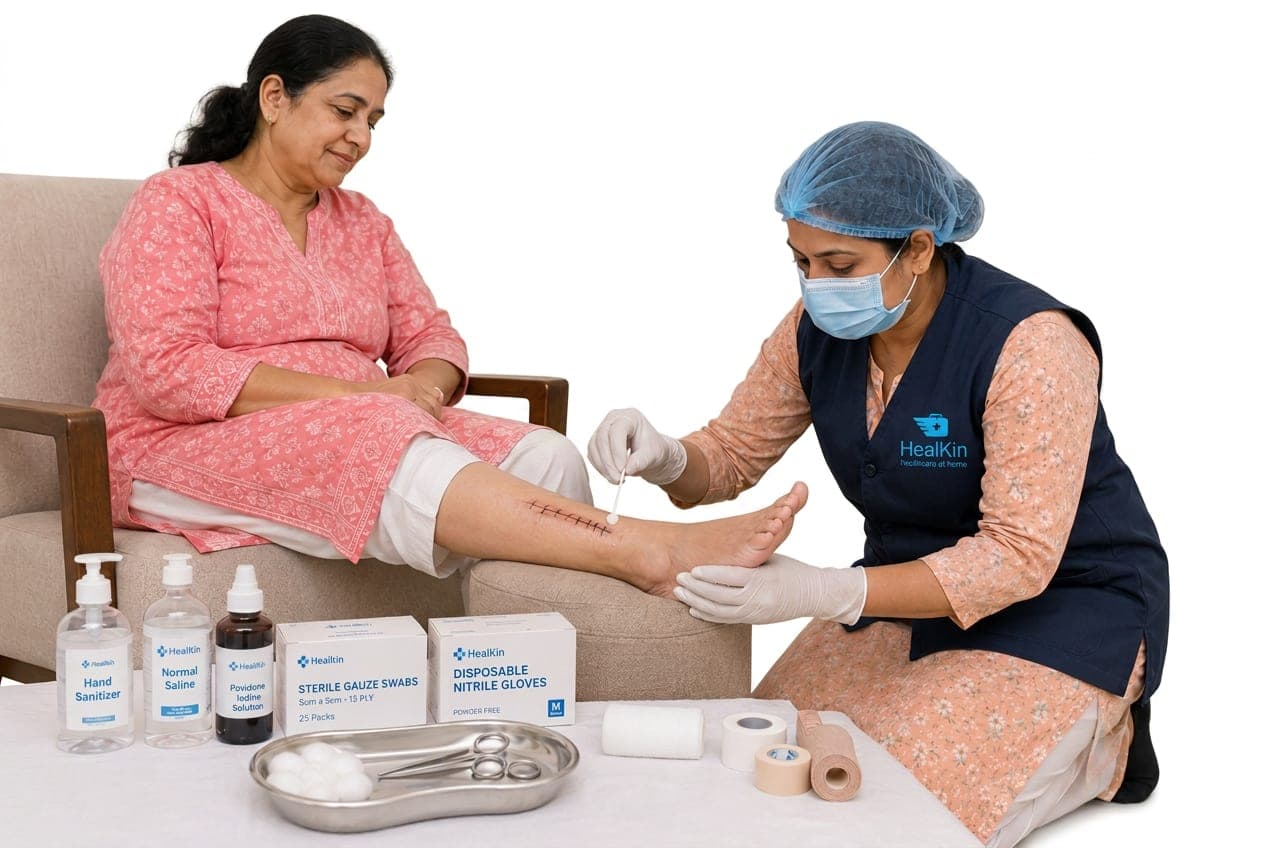
Wound Dressing at Home After Surgery: The First Fortnight, Explained
The two weeks after a surgical discharge decide how a wound heals. Here is how often a dressing should change, what healthy healing looks like, and the signs that mean call the surgeon today.
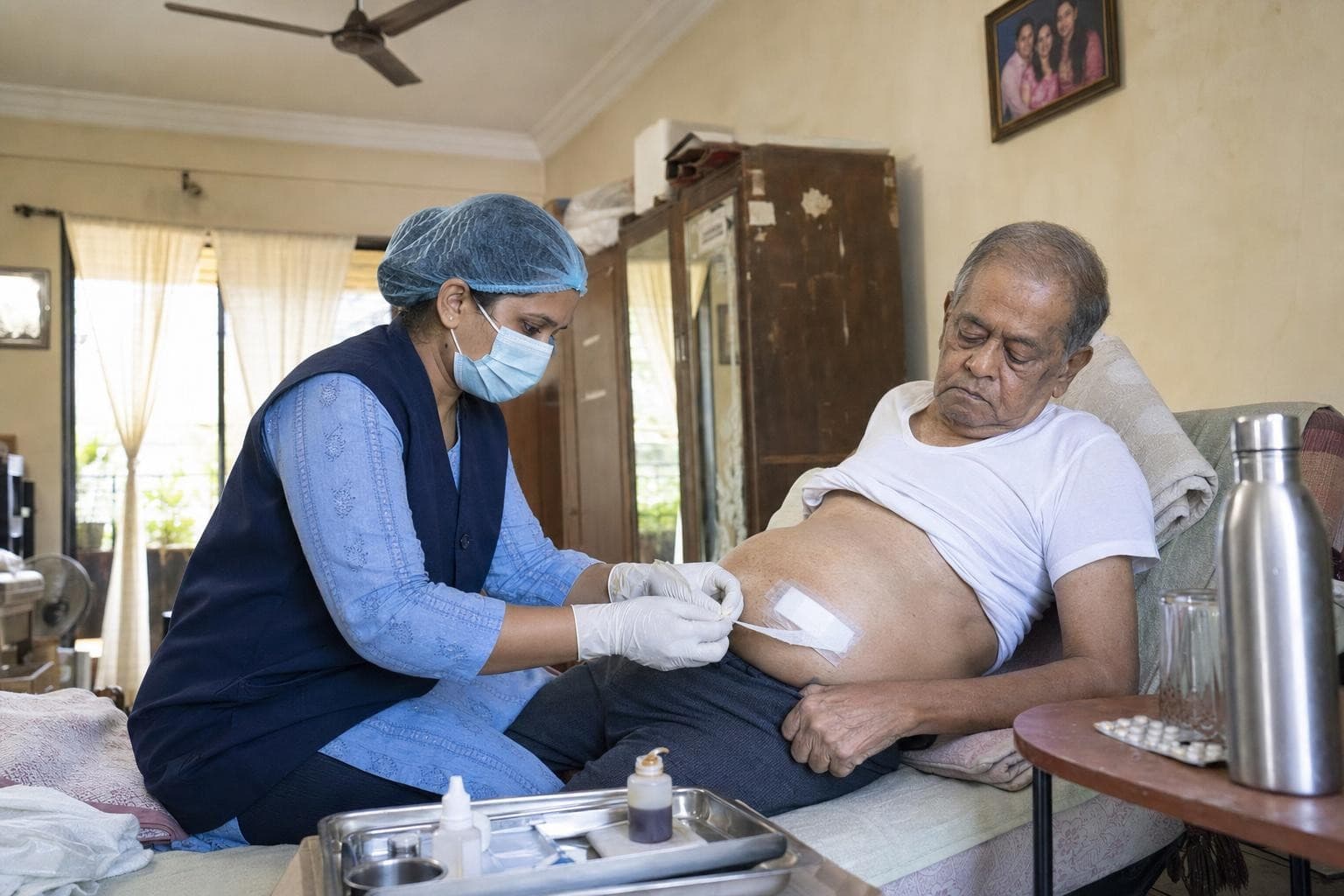
"Dressing to be changed every alternate day."
One line on the discharge summary. It took the surgeon four seconds to write and it dictates your next two weeks. Nobody explains, in those four seconds, what alternate day means when day one falls on a Sunday. Or what a healing wound is supposed to look like. Or which of the dozen small worries that arrive at 11pm deserve a phone call and which can wait till morning.
Wound dressing at home in Mumbai exists because this fortnight is where things go wrong. Not from bad surgery. From a dressing left too long, a wound checked by someone untrained, or a warning sign nobody recognised.
How often a dressing actually gets changed
The interval on your discharge papers isn't arbitrary. It also isn't universal.
A clean surgical incision closed with staples or sutures is usually redressed every second or third day. Sometimes it's left alone entirely, if the surgeon used a waterproof film dressing meant to stay put until the follow-up. A wound still draining, or one healing by secondary intention because it was deliberately left open, needs daily attention. Sometimes twice daily in the first few days.
What decides the interval is moisture, not the calendar. A dressing that has soaked through needs changing whenever that happens, because wet gauze against skin is the environment bacteria find easiest to work in. If the pad is dry and the edges are intact, changing it early does nothing but disturb a wound that's settling. That's the judgment a trained eye brings and a chart of days can't: whether to follow the schedule or move it.
Every change follows the same sequence. Hands washed and gloved. The old dressing lifted, not pulled. The wound bed and surrounding skin looked at properly before anything touches them. Cleaned with the solution the surgeon specified. A fresh sterile dressing applied without tape dragging on skin that's already under strain from the incision beneath. Unrushed, it's five minutes. Done carelessly, it's the most common way a clean wound becomes an infected one.
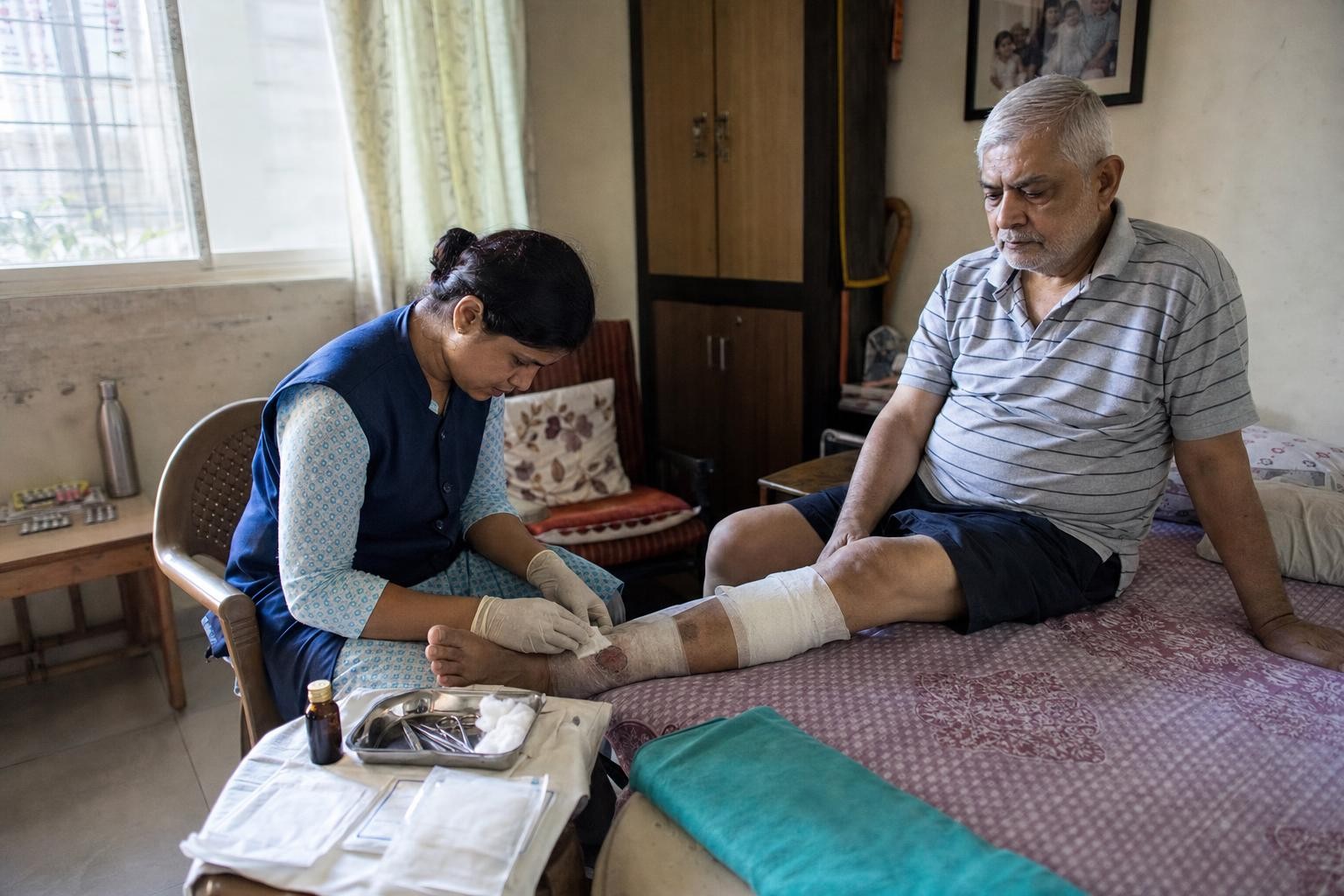
What a healthy wound looks like at each stage
For the first two or three days, expect some redness right at the wound edge, mild swelling, and a little clear or pink-tinged fluid. That's the body's inflammatory response doing its job. By the end of week one the redness should be receding, not spreading, the swelling going down, and the fluid down to almost nothing.
A wound closing properly forms a thin scab or a pale pink line along the incision. Mild itching often comes with it as new skin knits underneath. At this stage itching is a good sign, not a bad one. Bruising around the site is common too, and it can look alarming in week one before it fades through the usual colours.
What shouldn't happen at any stage is the wound getting angrier instead of calmer. More redness on day six than day three. More pain instead of less. Fluid that's gone from clear to yellow, green, or foul-smelling.
Staples and non-dissolvable sutures usually come out somewhere between seven and fourteen days. Where the incision sits decides it: a facial wound is stitched out faster than one on the abdomen, or on a joint that stretches with every step. Removal is quick. A trained nurse checks the wound is properly closed underneath first, instead of removing on schedule and hoping.
The signs that mean call the surgeon today
Some changes aren't "keep an eye on it" situations. They're same-day calls.
Fever above the threshold your surgeon named, usually around 100.4°F. Redness visibly spreading past the wound edge day over day. Pain getting worse instead of better after the first 48 hours. A wound separating along a section that was closed.
Discharge that changes character matters more than discharge that simply exists. Clear or lightly blood-tinged fluid in the early days is expected. Thick yellow or green discharge, a foul smell, or any pus is not. Neither is a wound that starts bleeding again after it had stopped. A red streak tracking away from the wound up the limb, or swelling in a nearby lymph node, means infection has moved past the wound itself. Same-day attention, not wait and watch.
None of this should make a normal healing wound feel frightening. Most incisions heal without any of it. Mild redness, some swelling and manageable discomfort in week one are the expected picture, not the exception. Knowing the difference is what lets you stop worrying about the normal parts.
Why a trained eye matters more than the dressing itself
A family can learn to change a simple dressing, and plenty do it well after one demonstration from a visiting nurse.
The harder thing to learn in one sitting is what to look for underneath. The difference between the normal pink of granulating tissue and the dusky discolouration that signals poor blood supply. The difference between a wound edge healing slowly and one that has quietly started to break down.
Two related situations are worth naming separately here. A bedbound patient develops pressure sores on a completely different timeline, sometimes within hours of unrelieved pressure on a heel or tailbone, and needs two-hourly repositioning alongside any dressing, not instead of it. And a patient discharged with a PICC line or a tracheostomy has a higher-stakes wound need than a straightforward incision. That one shouldn't be managed by family alone at all. If either describes your situation better than a standard post-surgical incision, say so when you book. The visit should match the actual wound.
Home visits for wound dressing, suture removal, bedsore care, PICC line dressing and tracheostomy care are all on the wound dressing at home in Mumbai page, which carries current pricing because it depends on which of those the wound needs. If the same discharge also involves a prescribed infusion, our piece on what an IV drip at home in Mumbai actually looks like covers that part of the routine in the same hour-by-hour detail.
Questions families ask
Can I just use a chemist-bought dressing instead of calling a nurse?
For a very minor cut, yes. Ordinary home first aid is fine. For a surgical incision the risk isn't the dressing material, it's not knowing whether what you're looking at underneath is healing normally or starting to go wrong. A trained eye at each change catches problems while they're small.
The wound looks red around the edges, is that infection?
Not necessarily. Mild redness right at the edge is a normal part of healing, especially in the first few days. Direction is what matters. Redness fading as days pass is expected. Redness spreading outward, or getting worse, is the sign to call your surgeon.
How long does a typical surgical wound take to fully heal?
The visible part, staples or sutures out and the surface settled, usually takes two to three weeks. Full internal healing carries on for months, especially after abdominal surgery. That's why doctors give lifting and activity restrictions that outlast how the wound looks.
Is some bleeding during a dressing change normal?
A little oozing when an old dressing is lifted is common, especially if it had stuck slightly. Not alarming. Active bleeding that doesn't stop with light pressure is different, and so is bleeding that restarts well after the change. Both need a call to the surgeon.
What if the family cannot manage the alternate-day schedule reliably?
That's exactly the gap a home nursing visit closes. Book a visit for each scheduled change and the interval gets kept properly, with the wound looked at by someone trained every time. Nobody at home has to judge timing or technique.
Does a home nurse remove staples and stitches, or only change dressings?
Suture and staple removal at home is a standard part of the service. It happens once the surgeon has confirmed, from the wound's appearance and the timeline, that they're ready to come out.
Healkin facilitates care at home and does not diagnose, prescribe, or change a doctor's treatment plan. If a wound looks worse rather than better, or you notice fever, spreading redness, or unusual discharge, call your surgeon rather than waiting for the next scheduled dressing change.