
Hospital bed on rent in Mumbai: measure the lift before you pick the bed
Renting a hospital bed in Mumbai goes wrong at the lift, the doorway or the plug point far more often than at the choice of bed. Here is how to pick between manual, semi-fowler and electric, when an air mattress earns its place, and what to measure before delivery day.
The discharge date is Thursday. The doctor has said your mother will need to sleep propped up for a few weeks, and someone in the family has typed "hospital bed on rent in Mumbai" into a phone at midnight.
Most of what comes back is about the bed. Very little of it is about your building.
That's the part that goes wrong. A bed that suits the patient perfectly is no use standing in pieces in the society lobby because the lift is a foot too shallow, or wedged in a bedroom doorway with the frame scraping the paint. So start with the flat, then choose the bed.
Start with the building, not the catalogue
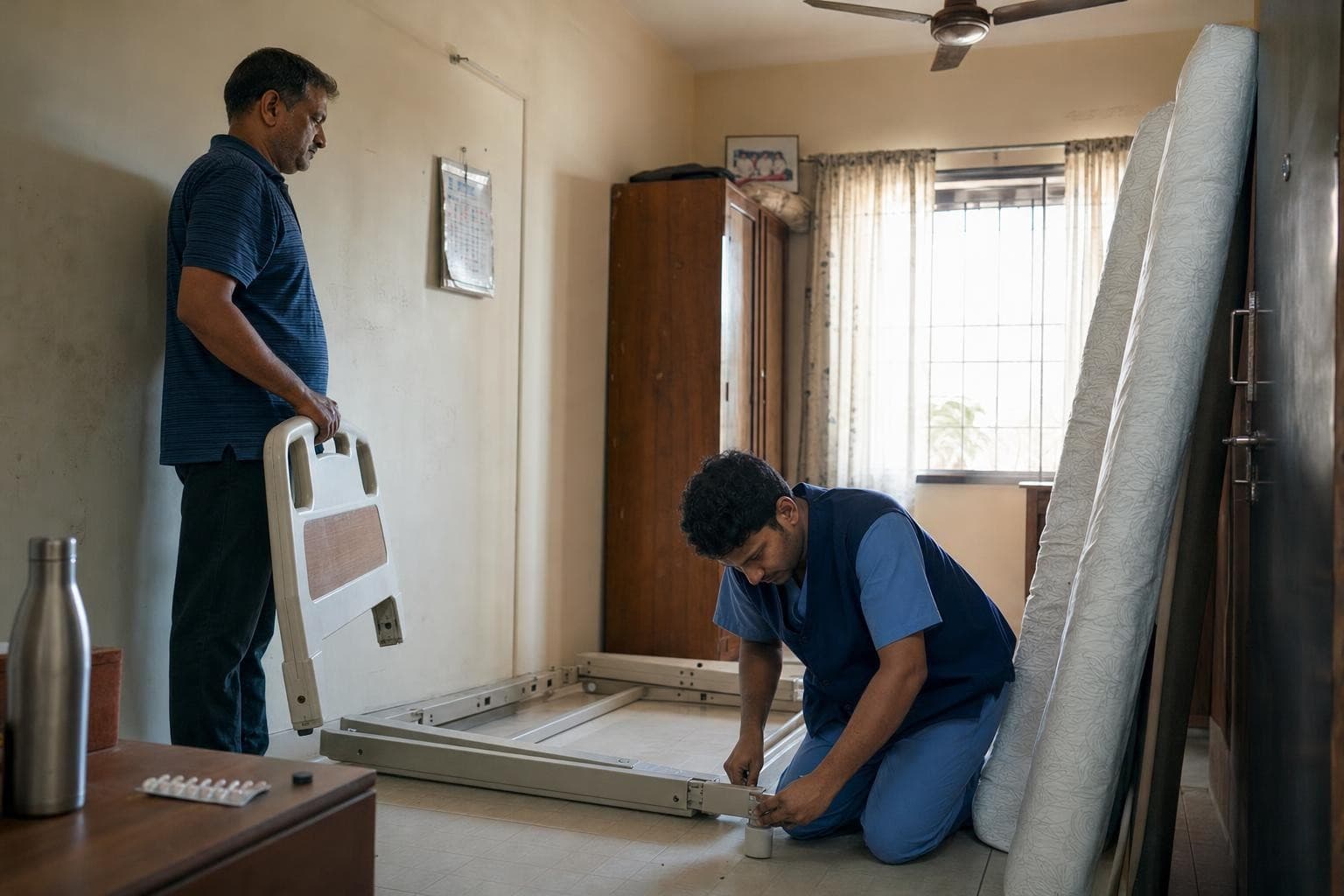
Hospital beds are long. A typical one is close to seven feet end to end and about three feet wide, and that's before side rails. It won't travel assembled in most Mumbai lifts, and it doesn't need to. Rental beds usually arrive as a base frame, a headboard, a footboard and the mattress, and are put together in the room.
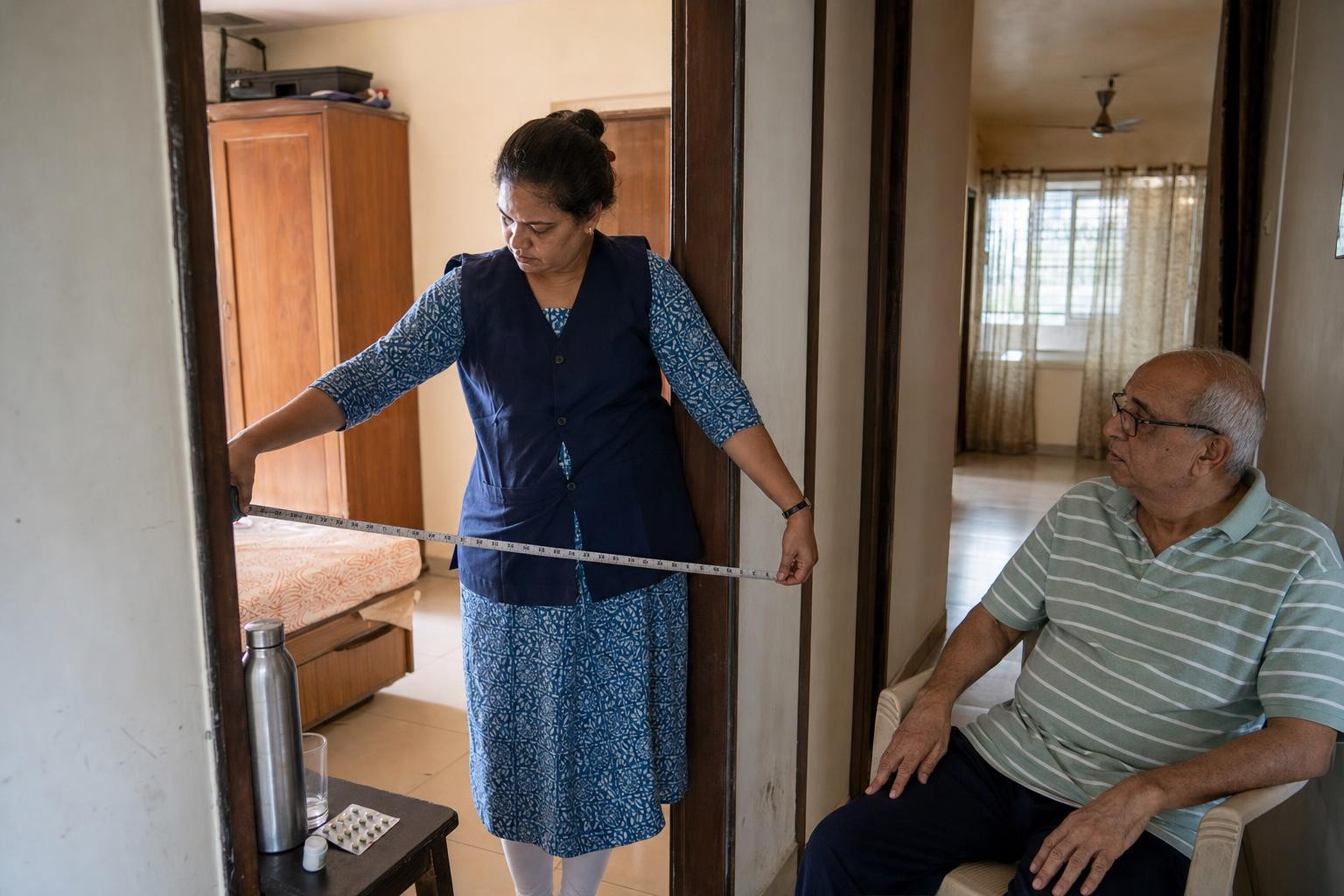
So the pieces have to fit, not the finished bed. Before you book, take a tape measure round the route the bed will travel.
The lift. Measure the inside depth and the diagonal from the bottom of the door frame to the top of the back wall. Long pieces travel tilted. If the building has a service lift, find out whether the society lets you use it, and at what hours. Some only allow deliveries before noon.
No lift at all. In a walk-up or an older building, count the floors and look hard at the turns on the staircase. A tight landing is where long pieces get stuck. Tell the rental company when you book, so they send enough hands.
The doorways. The flat's main door is rarely the problem. The bedroom door often is, especially in older flats where a cupboard sits just inside it.
The room. This is where families compromise most, and where it costs them later. A bed pushed hard against the wall saves floor space. It also means every turn, wash and sheet change has to happen from one side, by one person, leaning over. If you can, leave both long sides free. If you can't, keep one long side and the foot end clear, and make sure that free side is the one nearest the door.
Check for a plug point within reach of the head end, too. You'll need it for an electric bed or an air mattress pump, and a long extension cord running across the floor is a tripping hazard in a room where someone is already unsteady.
Manual, semi-fowler or electric
Once you know the bed will get in, the choice is simpler than the listings make it look.
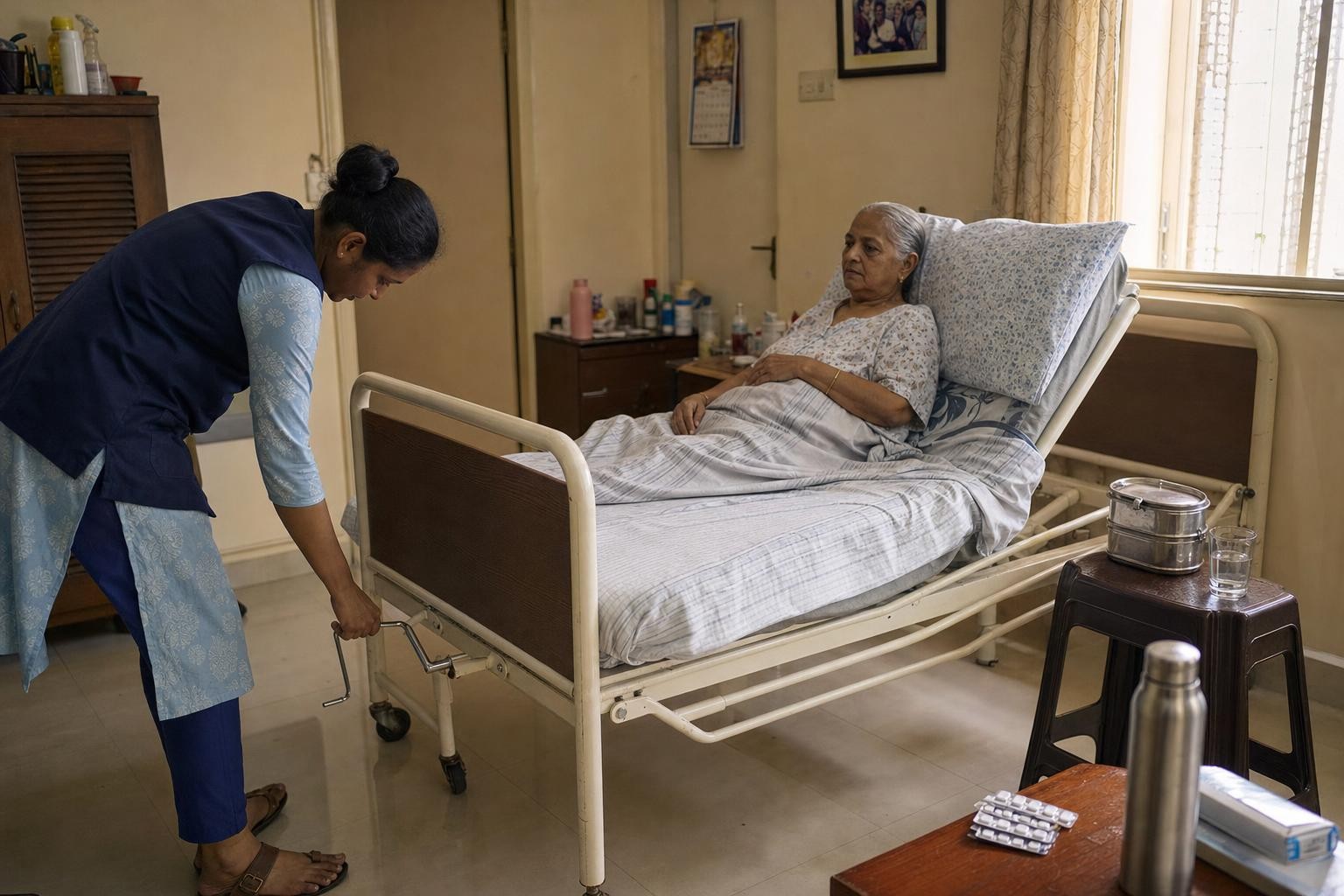
A semi-fowler bed has one crank, usually at the foot end, that raises the backrest. That's it. It's for someone who mainly needs to sit up to eat, breathe more easily, or talk to visitors, and who is otherwise fairly mobile.
A full-fowler or two-crank manual bed adds a second crank that bends the knee section. That stops a patient sliding down the bed every time the back is raised, which matters more than it sounds. Sliding is how skin over the tailbone gets dragged and damaged.
An electric bed does the same movements with a motor and a handheld remote, and most also raise and lower the whole bed.
The real difference between manual and electric isn't comfort. It's who is in control.
With a crank, the patient waits for someone to come and turn it. With a remote, they can sit themselves up at 4am without calling anyone. For a parent who is clear-headed but weak, that small independence counts for a lot. Height adjustment matters for the caregiver as well. Raising the bed to waist level for a dressing or a sponge bath saves a back that's doing this every day for weeks.
Manual beds have one quiet advantage in Mumbai. They don't care about power cuts. An electric bed stops in whatever position it was in when the power went, which is fine if that was sitting up and less fine if it was raised high. If your building loses power often, ask whether the bed has a manual release or a battery, and keep it low when nobody is adjusting it.
If the doctor has talked about ICU-style positioning, tilting the whole bed head-down or feet-down, that's a separate question about how many functions the bed needs. We've covered it in our guide to 3-function and 5-function hospital beds.
The air mattress question
Families often ask about the air mattress last, almost as an add-on. It deserves an earlier thought.
An alternating-pressure air mattress is a thin mattress of air cells that goes on top of the bed's own mattress. A small pump hung on the foot rail inflates and deflates the cells in turns, so the body's weight keeps moving from one patch of skin to another.
It's worth renting when the patient will spend most of the day lying down, can't shift their own weight easily, or already has a red patch on the tailbone, hips or heels. For someone who is up and walking to the bathroom a few times a day, it's usually not needed.
An air mattress makes pressure sores less likely. It doesn't make turning optional.
The two-hourly turns still have to happen, and the skin still has to be checked every time. Our post on bedsore treatment at home walks through that routine.
Three practical things families don't hear until the mattress is on the bed:
It raises the patient. An air mattress adds height, which means the side rails come up less far above the patient than they did before. Check that the rails still sit well above the body, especially for someone who is confused at night.
The pump runs all the time. It hums. It needs its own socket, and it usually has an alarm for low pressure. Learn what the alarm sounds like on the first day, not at 2am.
Pins and sharp things puncture it. Safety pins on a gown, a hair clip, a pet's claws. A slow leak shows up as a mattress that feels flat under the hips.
What drives the cost
We won't quote a figure here, because rental rates change and depend on what's in stock. What moves the price is predictable, though.
The type of bed is the biggest factor: a motor costs more than a crank. An air mattress is a separate rental on top. How long you need it matters, because monthly terms usually work out cheaper per day than a week or two. There's normally a refundable security deposit as well, returned when the bed goes back in good order.
Current rates for beds, mattresses, wheelchairs and the rest are on our medical equipment rental page, with delivery, installation and a demonstration of how to use everything included.
On delivery day
Have someone home who'll be doing most of the caregiving, not just whoever is free. The demonstration is for them. Ask the technician to show you how to lock the wheels, how the side rails drop, and how to bring the backrest down quickly if the patient slumps or feels faint.
Clear the room before they arrive. Rugs come up, the bedside stool moves to the free side, and the path to the bathroom stays open.
Then lie on the bed yourself for a minute. It sounds silly. You'll notice the gap between the mattress and the rail, the draught from the window, the fan right overhead.
When the bed isn't the issue
A good bed can hide a problem for a while. Call the patient's doctor the same day if they're getting more breathless when the backrest is lowered, if a red patch on the skin stays red after you press it gently, or if they've slipped or fallen from the bed, even if they seem fine afterwards. Confusion that's new or getting worse is a reason to call too. Those are questions for a doctor, not for a different mattress.
Questions families ask
Can I rent a hospital bed for just a week or two?
Yes. Weekly terms are available as well as monthly ones. For a stay that might stretch, ask how an extension works when you book, so you aren't arranging a return and a fresh delivery in the same week.
Do I need a prescription to rent a hospital bed?
A bed usually doesn't need one. Oxygen concentrators, CPAP and BiPAP machines do, so if the discharge plan includes any of those, keep the prescription handy when you call.
Will a hospital bed fit in a small lift?
Usually, because it travels in pieces and is assembled in the room. Measure the lift's inside depth and diagonal before booking, and mention it if the building has no lift or a very small one, so the team comes prepared.
Is an air mattress enough to prevent bedsores?
No. It lowers the risk, but the patient still needs turning every two hours and a skin check at each turn. If a red patch doesn't fade when you press it, call the doctor or book a nurse visit.
What happens to an electric bed in a power cut?
It stays in the position it was in. Ask whether the model has a manual release or a battery, and keep the bed at a low height when nobody is adjusting it. A manual bed isn't affected at all.
Who sets up the bed, and what if something breaks?
The bed is delivered, assembled and demonstrated at home. If a crank jams, a motor stops or the mattress pump fails during the rental, call and it's repaired or replaced.
Healkin facilitates care at home and does not diagnose, prescribe, or change a doctor's treatment plan. Breathlessness when lying flat, a red patch on the skin that doesn't fade, new confusion, or any fall from the bed are reasons to call your doctor the same day.