HPV Vaccine for Adults: The Questions People Usually Ask Too Late
Thinking about the HPV vaccine as an adult? Learn about HPV vaccination, age, doses, eligibility, common questions and HPV vaccination at home in Mumbai.
You may have heard about the HPV vaccine when you were younger—or perhaps you only started hearing about it recently.
Maybe someone in your family mentioned it. Maybe your doctor brought it up during a routine consultation. Or perhaps you came across information about HPV and suddenly wondered:
“I never got this vaccine. Is it too late for me?”
It is a reasonable question.
HPV, or human papillomavirus, is extremely common. Certain types of HPV can cause genital warts, while persistent infection with high-risk types can contribute to several cancers, including cervical cancer and some other anogenital and oropharyngeal cancers. HPV vaccination is designed to prevent new HPV infections; it does not treat an HPV infection that someone already has.
That distinction is important because many adults assume that once they are past their teenage years, there is no point in discussing the vaccine.
The reality is more nuanced.
What Is the HPV Vaccine?
The HPV vaccine protects against specific types of human papillomavirus associated with HPV-related diseases and cancers.
HPV is not a single virus. There are many different types, and vaccines are designed to protect against selected types that are associated with important health risks.
India has approved both quadrivalent and 9-valent HPV vaccines, among other HPV vaccine products. The 9-valent vaccine covers nine HPV types.
The vaccine works best when given before exposure to HPV, which is why vaccination is generally encouraged during adolescence. However, people who were not vaccinated earlier may still have questions about vaccination later in life.
And that brings us to the question most adults ask.
Can Adults Get the HPV Vaccine?
The answer depends on your age, vaccination history, health circumstances and the recommendations applicable to you.
For example, CDC guidance recommends routine HPV vaccination through age 26 for people who were not adequately vaccinated earlier. For adults aged 27–45, vaccination is handled through shared clinical decision-making rather than being routinely recommended for everyone.
Indian recommendations and vaccine approvals can differ from U.S. guidance, so adults in India should discuss the appropriate vaccine and schedule with a qualified healthcare professional.
The important takeaway is that age alone should not lead you to assume that you either definitely need or definitely do not need HPV vaccination.
Your individual circumstances matter.
Why Is HPV Vaccination Usually Discussed Earlier in Life?
HPV vaccination is preventive.
It protects against new infections with HPV types covered by the vaccine, but it does not eliminate an HPV infection that is already present.
Since HPV exposure can occur relatively early in life, vaccination before exposure provides the greatest opportunity for protection.
That is why vaccination programs generally focus on adolescents.
But an adult who missed vaccination earlier may still have a conversation worth having with a doctor—particularly when considering future risk of a new HPV infection and which vaccine options are appropriate.
What If I Never Had the HPV Vaccine?
This is probably one of the most common questions adults have.
The first step isn't to panic or assume that you've missed your opportunity.
Instead, find out:
How old you are
Whether you have received any HPV vaccine doses previously
Which vaccine you received, if known
Whether you have relevant medical conditions
Whether there are any reasons you should delay or avoid vaccination
Which HPV vaccine is appropriate and available to you
If you have vaccination records, keep them available for your doctor.
If you don't remember whether you were vaccinated, tell the healthcare professional rather than guessing.
A proper assessment can help determine what should happen next.
Is the HPV Vaccine Only for Women?
No.
HPV is associated with health conditions affecting both women and men. HPV-related diseases can include certain anal, penile and oropharyngeal cancers as well as cervical, vulvar and vaginal cancers.
This is one reason HPV vaccination is increasingly discussed as a gender-neutral preventive health measure.
However, recommendations regarding age, eligibility and vaccination schedules can differ by country and individual circumstances.
For adults, the decision should therefore be based on appropriate medical guidance rather than assuming that the same schedule applies to everyone.
Does the HPV Vaccine Treat an Existing HPV Infection?
No.
This is one of the most important things to understand before getting vaccinated.
The HPV vaccine is preventive, not a treatment for an existing HPV infection or HPV-related disease.
So if someone has already been diagnosed with HPV, vaccination does not replace medical evaluation or treatment.
At the same time, having previously been exposed to one HPV type does not necessarily mean someone has been exposed to every type covered by a vaccine. This is one of the factors a healthcare professional may consider when discussing vaccination in adults.
How Many HPV Vaccine Doses Are Needed?
The number and timing of doses depend on factors such as the age when vaccination was started, the vaccine being used and individual medical circumstances.
For example, CDC guidance uses a two-dose schedule when the series is started before age 15 and a three-dose schedule when it is started at age 15 or later. People with certain immune conditions may also require a three-dose schedule.
Indian guidance has also used age-based two- and three-dose schedules.
Because recommendations can change and vaccine products differ, don't rely on an old vaccination chart you find online.
Ask the healthcare professional to confirm the schedule for the vaccine being administered.
What About HPV Vaccination During Pregnancy?
Pregnancy is one of the situations where vaccination decisions need additional care.
Current CDC guidance states that HPV vaccination is not recommended during pregnancy. Pregnancy testing is not required before vaccination, and if someone receives an HPV vaccine before realizing they are pregnant, CDC guidance does not recommend intervention solely because of that inadvertent vaccination.
If you are pregnant, planning pregnancy or think you may be pregnant, discuss vaccination with your doctor before proceeding.
Are There Side Effects After the HPV Vaccine?
Like other vaccines, the HPV vaccine can cause temporary reactions.
You may experience soreness, redness or swelling where the injection was given. Some people may feel tired or experience other short-term symptoms.
A person receiving the vaccine should follow the instructions provided by the healthcare professional.
It is also common practice to have the recipient seated during vaccination and observe them briefly afterward because fainting can occasionally occur following vaccination, particularly in adolescents and young adults.
If you experience a severe or unusual reaction, seek appropriate medical attention.
Do You Still Need Cervical Cancer Screening After HPV Vaccination?
Yes.
HPV vaccination does not eliminate the need for recommended cervical cancer screening.
The reason is simple: HPV vaccines do not cover every HPV type that can cause cervical cancer. Indian clinical guidance also emphasizes continuing routine cervical cancer screening after vaccination.
So vaccination and screening are not alternatives.
They are different parts of prevention.
Can You Get the HPV Vaccine at Home?
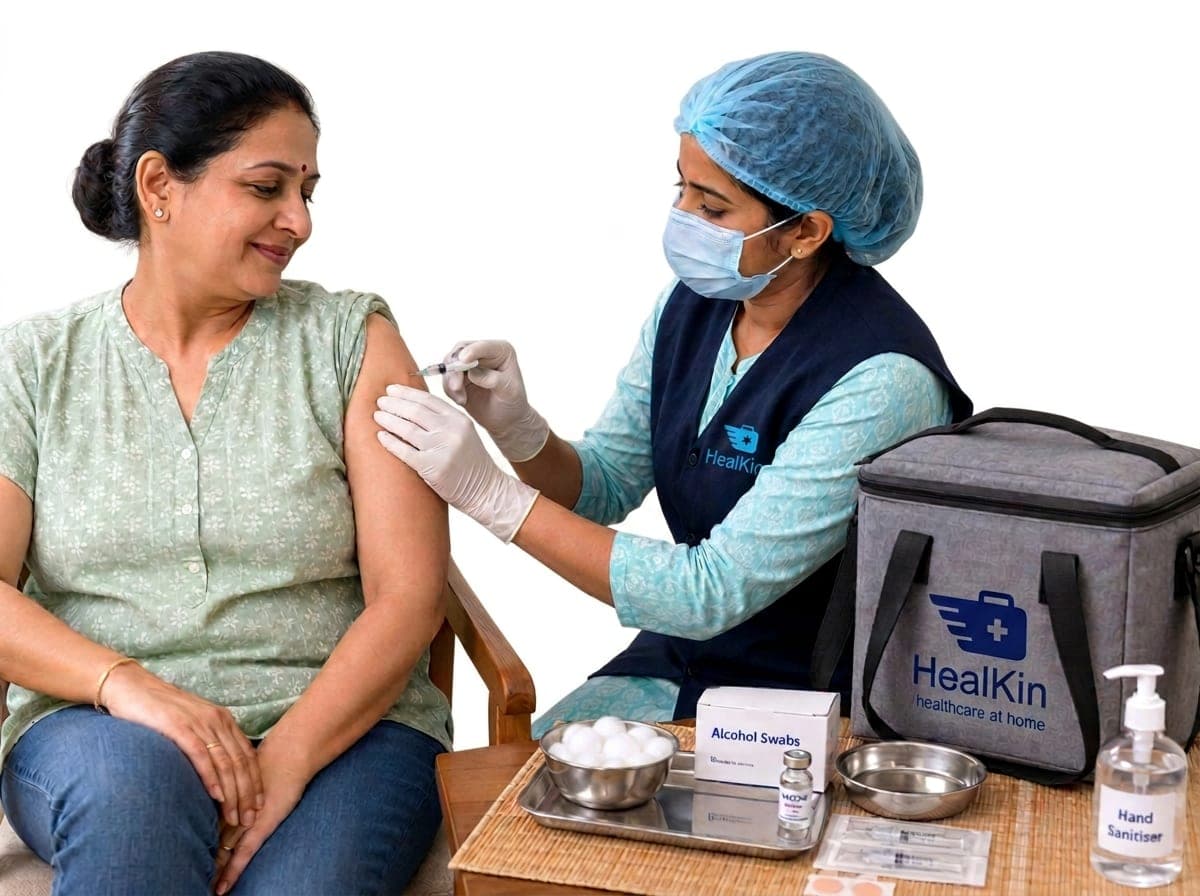
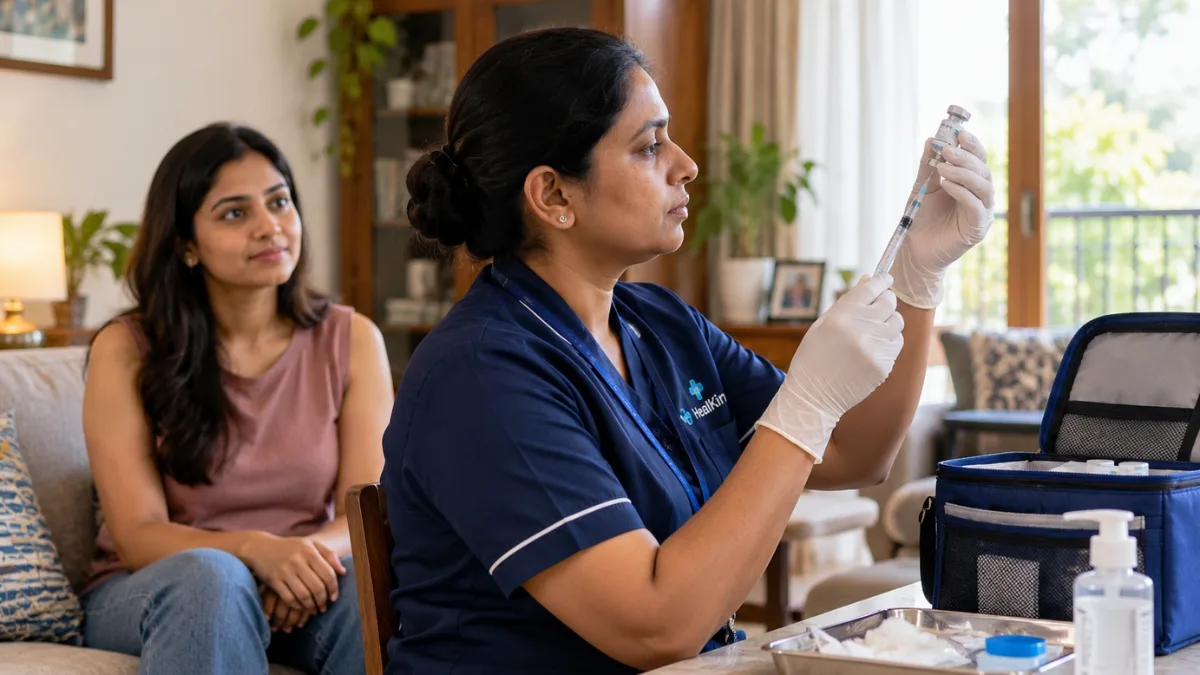
For suitable patients, vaccination can be administered through a professional home vaccination service.
This can be particularly convenient for people who have difficulty travelling to a clinic, busy working adults or families arranging vaccination for multiple members.
However, home vaccination should still follow appropriate medical and vaccine-handling procedures.
The healthcare professional should confirm the vaccine, review relevant patient information, administer the vaccine correctly and provide appropriate post-vaccination guidance.
Healkin currently offers home vaccination services in Mumbai, including vaccination support delivered by healthcare professionals.
If you're considering HPV vaccination at home in Mumbai, confirm the vaccine available, eligibility, schedule and any medical requirements before booking.
What Should You Ask Before Getting an HPV Vaccine?
If you're an adult considering HPV vaccination, you don't need to arrive at the appointment knowing everything.
Start with a few simple questions:
1. Is HPV vaccination appropriate for my age?
2. Have I received an HPV vaccine before?
3. Which HPV vaccine is appropriate for me?
4. How many doses will I need?
5. What interval should there be between doses?
6. Are there any medical reasons I should delay vaccination?
7. Can I receive the vaccine at home?
8. Do I still need routine screening after vaccination?
These questions can give you a much clearer picture before you begin a vaccination schedule.
HPV Vaccine at Home in Mumbai
For many families, getting a vaccination appointment is not difficult because of the injection itself. The bigger problem is finding time to travel, arrange transport, sit in a waiting room and fit another medical appointment into an already busy day.
A home vaccination service in Mumbai can make the process more convenient when the patient is medically suitable for home administration.
At Healkin, home vaccination is designed to bring professional vaccination support to the patient's home rather than requiring a routine trip to a clinic.
If you're interested in an HPV vaccine at home, speak with the healthcare provider about your age, previous vaccination history and the appropriate vaccine before scheduling the dose.
The Question You Shouldn't Be Afraid to Ask
There is no perfect age at which everyone suddenly knows everything about adult vaccination.
Many people simply weren't offered the HPV vaccine when they were younger. Others may have received one or two doses but aren't sure whether they completed the series.
That's why asking the question now is more useful than worrying about whether you should have asked it years ago.
“Is the HPV vaccine appropriate for me?”
That's a conversation worth having with a qualified healthcare professional.
The answer will depend on your individual circumstances—not simply on your age or something you read online.
And if vaccination is appropriate, arranging it through a professional home vaccination service can make the process considerably easier for patients and families in Mumbai.
Frequently Asked Questions
Can adults get the HPV vaccine?
Some adults who were not adequately vaccinated earlier may benefit from HPV vaccination. Eligibility and recommendations depend on age, vaccination history and individual circumstances. For adults, medical guidance should be followed.
Is the HPV vaccine only for women?
No. HPV can cause diseases in both women and men, including several HPV-associated cancers.
Does the HPV vaccine cure HPV?
No. The vaccine helps prevent new HPV infections and does not treat an existing infection or HPV-related disease.
How many HPV vaccine doses are required?
The schedule depends on age at the start of vaccination, the vaccine used and certain medical circumstances.
Can I get the HPV vaccine at home in Mumbai?
Home vaccination services are available for suitable patients. A healthcare professional should confirm whether home administration is appropriate and provide the relevant vaccine and schedule information.
Do I still need cervical cancer screening after HPV vaccination?
Yes. HPV vaccination does not replace recommended cervical cancer screening.
Medical Disclaimer:
This article is for general educational purposes and does not replace medical consultation, diagnosis or treatment. HPV vaccination recommendations can vary according to age, medical history, vaccine product and local guidelines. Speak with a qualified healthcare professional before deciding whether HPV vaccination is appropriate for you.