
Ice Bath at Home in Mumbai: What Cold Water Does for Recovery, and What It Doesn't
Cold water immersion helps with some kinds of soreness and does nothing for others. Here is what an ice bath at home does, the temperature and time window that matters, and who should never get in.
Somebody gets back from a long Sunday run along Marine Drive, calves already tightening before the shower is even done. A friend told them ice baths fix this. So they buy four bags of ice from the corner store, tip them into the bathtub, and sit there for as long as they can stand it. Usually that is not very long. It is also not the useful part.
An ice bath at home in Mumbai works when the water is a specific temperature for a specific number of minutes, not whenever the ice runs out. Get the temperature wrong and you either waste the ice or shock a body that was not warned. Here is what cold water immersion does, what it does not, and the window that separates a useful few minutes from an uncomfortable one that achieves nothing.
What the cold is doing
Cold water pulls blood away from the skin and muscles toward the body's core, a reflex called vasoconstriction. That is the whole mechanism. Everything people say an ice bath does traces back to this one response, and it is worth being honest about how much it explains and how much it does not.
It genuinely reduces the feeling of soreness after hard exercise. Most of the research on delayed-onset muscle soreness, the ache that peaks a day or two after a long run or a heavy lifting session, shows cold water immersion takes the edge off how sore people report feeling. That is not nothing. Less soreness means someone is more willing to move the next day, and movement itself helps recovery.
What it does not clearly do is speed up the actual repair. The muscle fibre damage that causes soreness in the first place heals on its own timeline, and cold water has not been shown to shorten that timeline in any meaningful way. Some evidence even suggests that icing too soon after strength training can blunt the adaptation you were training for, because the same inflammation an ice bath dampens is part of how muscle rebuilds stronger. That is a real trade-off worth knowing before you make cold water a habit after every single session.
Sleep, stress and a sense of having done something feel harder to argue with. People who build a short morning plunge into their week often report calmer mornings and better sleep that night. Nobody has a clean biological explanation for why. It might be the cold. It might be the ten minutes of doing one deliberate thing before the phone comes out.
The temperature and time that matter
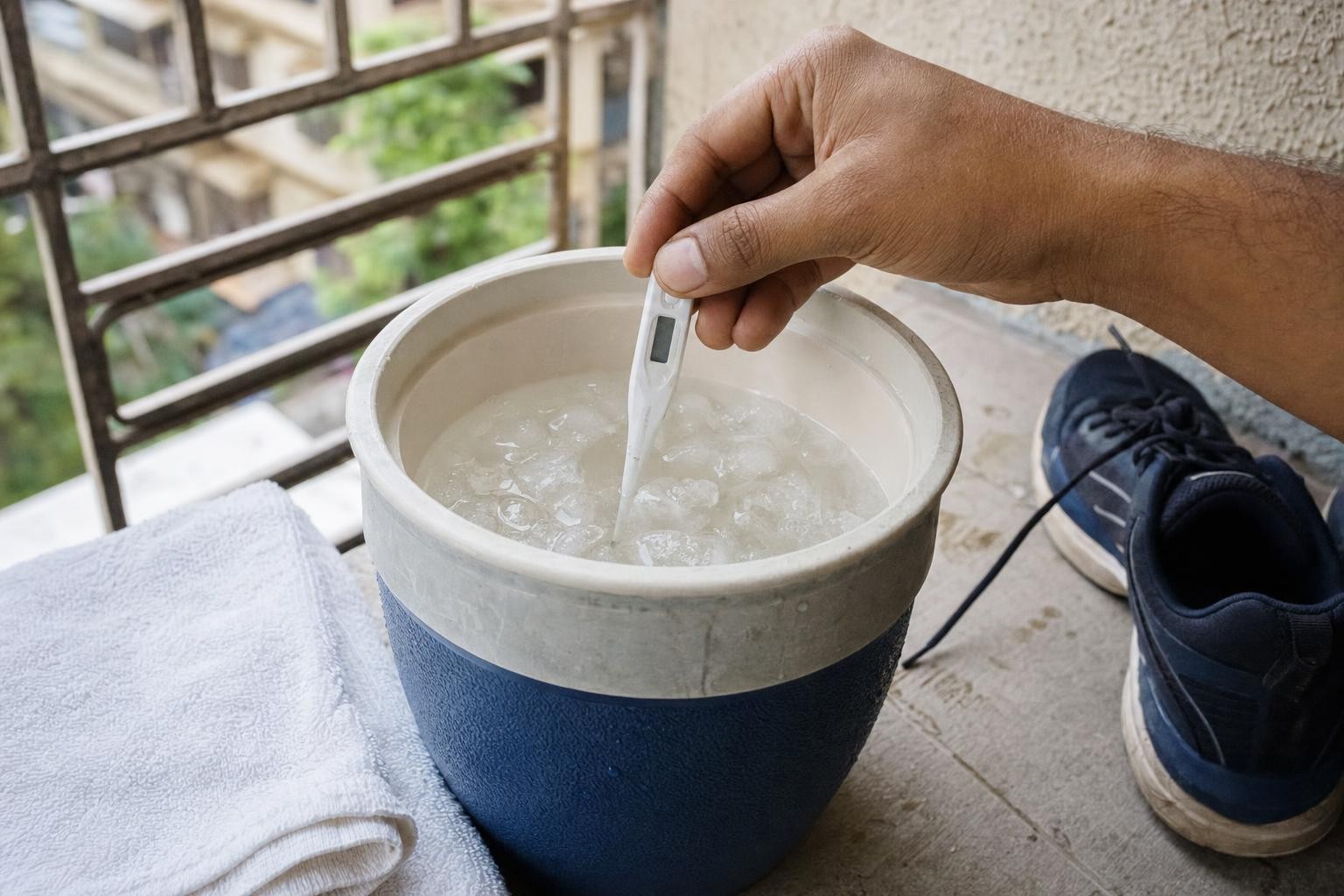
This is where a bathtub full of shop ice falls apart. Ice melting in standing water does not hold a stable temperature, and a household thermometer is rarely on hand to check it. The water could be 15°C, in which case you are sitting in something merely cold and getting little benefit. It could be 4°C, in which case you are risking a genuine cold injury for no extra gain.
The window the evidence supports is narrow: 8°C to 12°C, for two to three minutes on a first session. People who do this regularly build up to longer, but going colder is not the shortcut it sounds like. Most of what cold water offers arrives in the first few minutes. After that you are mostly just cold.
That means the two things worth measuring, most home attempts skip entirely. A thermometer, and a timer someone else is watching. Guessing at both is how a ten-minute plunge in barely-cold water gets confused with a proper session, and how the rare bad reaction happens without anyone noticing it was coming.
Who should not get in
Sudden cold immersion is a real load on the heart. Blood pressure spikes in the first seconds as vessels constrict, heart rate often jumps too, and for most healthy adults that is a brief, harmless stress the body handles fine. For some people it is not.
Do not step into cold water without clearing it with your own doctor first if you have a heart condition or an irregular heartbeat, uncontrolled blood pressure, epilepsy, Raynaud's syndrome, or a cold allergy. The same goes if you are pregnant, or recovering from any recent surgery. Never get in after drinking. None of these are edge cases invented to cover us legally. Each one changes how the body responds to cold in a way that can turn a recovery session into an emergency.
An ice bath is a recovery habit, not a treatment. If a joint or a muscle has been hurting for days, not just the ordinary ache of a hard session, that is a reason to see a doctor about the injury itself. Cold water will mask the discomfort for an hour. It will not tell you what caused it.
Why the supervision matters more than the ice
Cold shock is a real reflex, and it is stronger than most people expect the first time. The gasp response when your torso first hits cold water can make you inhale sharply and involuntarily, which is dangerous in open water and still worth respecting in a tub. Breathing settles within ten to fifteen seconds for almost everyone. That first quarter-minute is the part where having someone else in the room matters most.
The gasp passes in fifteen seconds. What happens after is what a supervised session is really for.
The bigger risk sits later, after you get out. Body temperature keeps dropping for several minutes once you leave cold water, an effect called afterdrop, as the chilled blood that pooled near the skin circulates back toward the core. Someone who felt fine stepping out can feel considerably colder five minutes later, and that is when dizziness or a genuine chill shows up. Nobody should be timing their own immersion and also managing themselves through the minutes after it, alone.
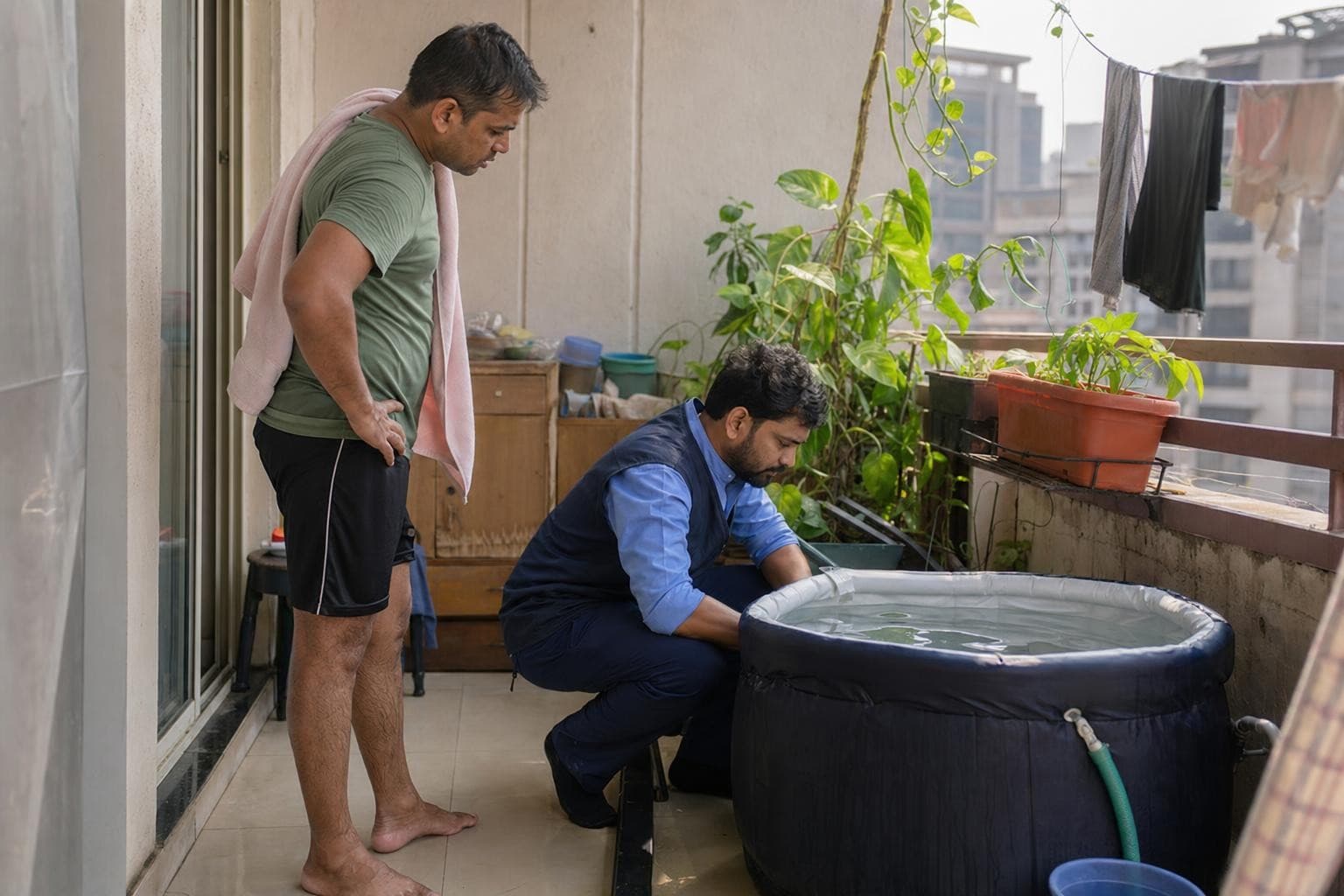
This is the part a session with Healkin's ice bath at home is built around. A trained attendant checks pulse and blood pressure before you get in, sets the water to a measured temperature rather than a guess, times the immersion, and stays through the minutes afterward too. The tub, the ice and the thermometer travel with the attendant and leave with them, so there is no fifty kilos of melting ice to deal with and no puddle for someone else to mop later.
Building it into an actual recovery week
A single ice bath after one hard run will not undo months of skipped sleep or a diet that is not fuelling training properly. Cold water is one tool in a week that already has the basics covered: enough protein, enough sleep, and the ordinary stretching or mobility work that has nothing to do with temperature at all.
Where it earns a regular slot is for people already training hard several days a week, where the cumulative soreness from back-to-back sessions starts to affect the next one. A short plunge the morning after a heavy leg day, or straight after a long race, fits there. Families coordinating other home healthcare visits alongside training, physio or otherwise, might find it useful to read the fuller picture of what home healthcare in Mumbai covers, so a recovery session does not get scheduled at odds with something clinical happening the same week.
Questions families ask
How cold should the water be?
Between 8°C and 12°C for most people, checked with a real thermometer, not judged by hand. Colder is not more effective. Most of the benefit arrives in the first two to three minutes regardless of how cold the water is within that range.
How long should a first session last?
Two to three minutes is enough for a first attempt. People who do this regularly sometimes go longer, but there is no evidence that staying in for ten or fifteen minutes helps more than three does. It mostly just means being cold for longer.
Is it safe to do this every day?
For most healthy adults, yes, though daily icing straight after strength training may blunt some of the muscle adaptation you are training for. Many people settle into two or three sessions a week instead of daily ones, and the right frequency depends on what you are training for and how your body responds.
Can I just use a bathtub and ice from the shop?
You can, but you will be guessing at both the temperature and how long you have been in. A tub of melting ice does not hold a stable temperature, which is exactly the part that decides whether the session does anything.
What if I feel dizzy or unusually cold after getting out?
That can be afterdrop, the body continuing to cool for several minutes after you leave the water. Sit down, wrap up and warm gradually instead of jumping into a hot shower straight away. If dizziness does not pass within a few minutes, or you feel chest tightness or breathlessness, treat it as a medical concern and call a doctor instead of waiting it out.
Who should check with a doctor before trying this?
Anyone with a heart condition, an irregular heartbeat, uncontrolled blood pressure, epilepsy, Raynaud's, or a cold allergy, and anyone pregnant or recovering from recent surgery. If none of that applies and you are generally fit, cold immersion is low-risk, but the first time is not the moment to find out you are the exception.
Healkin facilitates care at home and does not diagnose, prescribe or change a doctor's treatment plan. An ice bath is a recovery habit, not medical treatment, and persistent pain, chest tightness, breathlessness or dizziness that does not pass are reasons to call your own doctor, not to book another session.