
Nebulisation at Home: The Technique Mistakes That Waste Half the Dose
A nebuliser session that's rushed or badly fitted delivers a fraction of the medicine it should. Here is the technique that gets it into the lungs, how long a session should run, and the breathlessness that means the machine isn't the answer tonight.
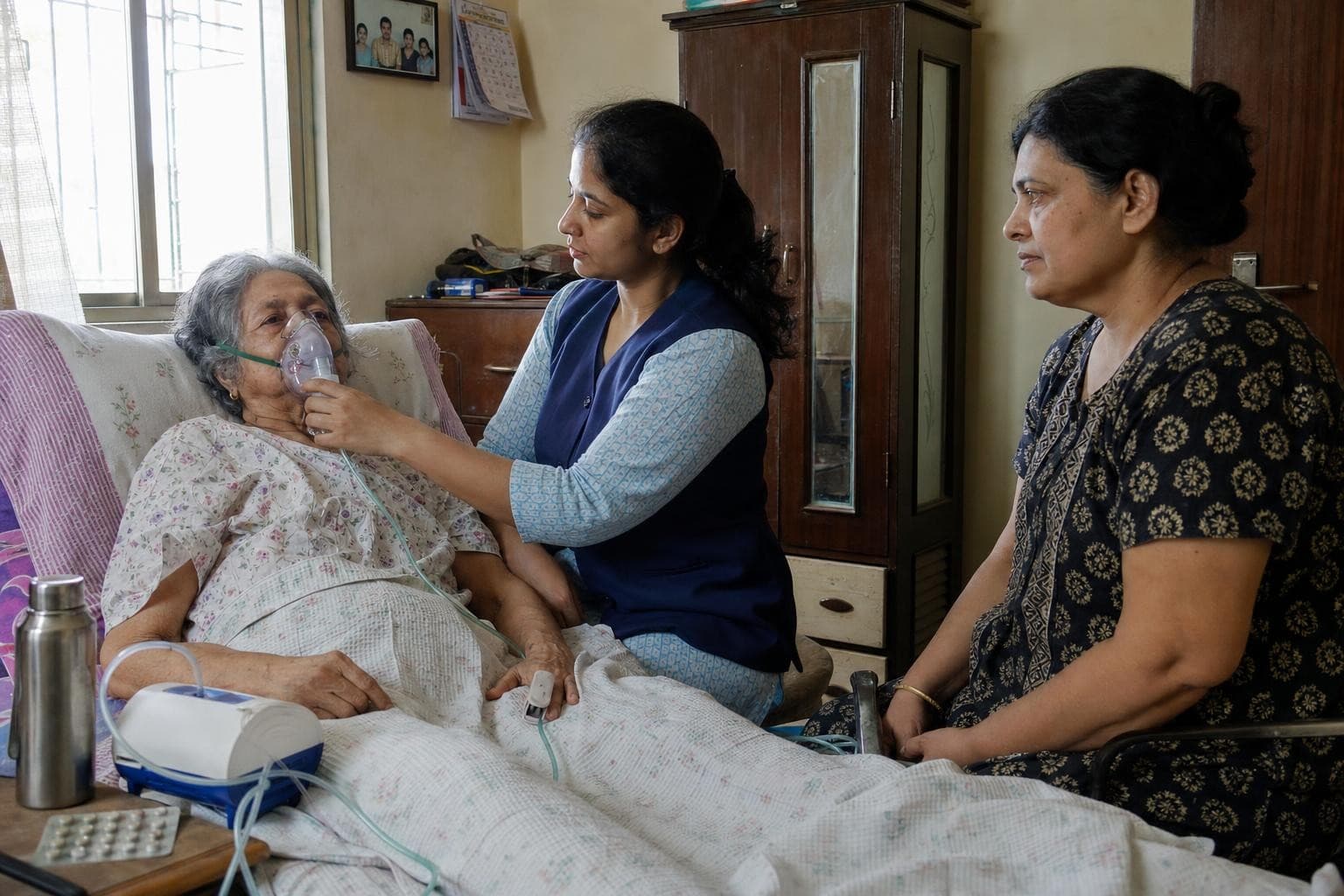
Nebulisation looks like the easiest piece of equipment a family ever gets handed. Load the chamber, switch on the machine, breathe. Most of what goes wrong hides inside that last word.
A mask held an inch off the face. A session cut short because the patient got bored. A machine tilted at an angle it was never meant to run at. None of it looks dramatic in the moment. All of it means less medicine reaching the airway than the prescription assumed. Nebulisation at home in Mumbai works well once a family has the technique down, and the technique is smaller and more mechanical than most people expect.
The seal is where the dose goes missing
A nebuliser doesn't care how much medicine sits in the chamber. It cares whether the mist reaches the lungs before it drifts off into the room.
That comes down to the mask or mouthpiece sitting flush against the face, not resting near it. A gap along the cheek, or a mouthpiece held loosely between the lips instead of sealed around it, lets a visible fraction of the mist escape sideways with every breath out. Watch closely during a session and you'll often see it: a faint cloud drifting past the ear instead of going in. For a child who won't tolerate a tight mask, a slightly looser fit held closer and steadier beats a tight one fought over for ten seconds and abandoned.
Sitting upright matters here too, and it's often skipped for comfort. Lying back changes the angle of the airway. It lets the medicine settle lower in the mask instead of drawing straight in. Thirty to forty-five degrees, same as most respiratory positioning, works for a reason. A patient who's drowsy or unwell can still get most of the benefit propped against pillows instead of flat.
How long a session should run
Most prescribed nebules take eight to fifteen minutes to finish, and that number is doing real work. It isn't a guideline to beat.
Rushing it usually looks like switching the machine off the moment visible mist stops rising, even with liquid still in the chamber. A nebuliser tapers off gradually near the end. That final thin mist still carries medicine. Stopping early because the dramatic cloud has settled is the single most common way a full dose becomes half a dose. The chamber should run dry, or close to it, with a faint sputtering sound that tells you it's finished.
Talking, coughing on purpose to interrupt, or pulling the mask away to answer a phone all break the seal and slow things down further. A session doesn't have to be silent and still for fifteen minutes. The mask just goes back the moment the interruption ends, at the angle it left at.
Cleaning the chamber matters more than families expect
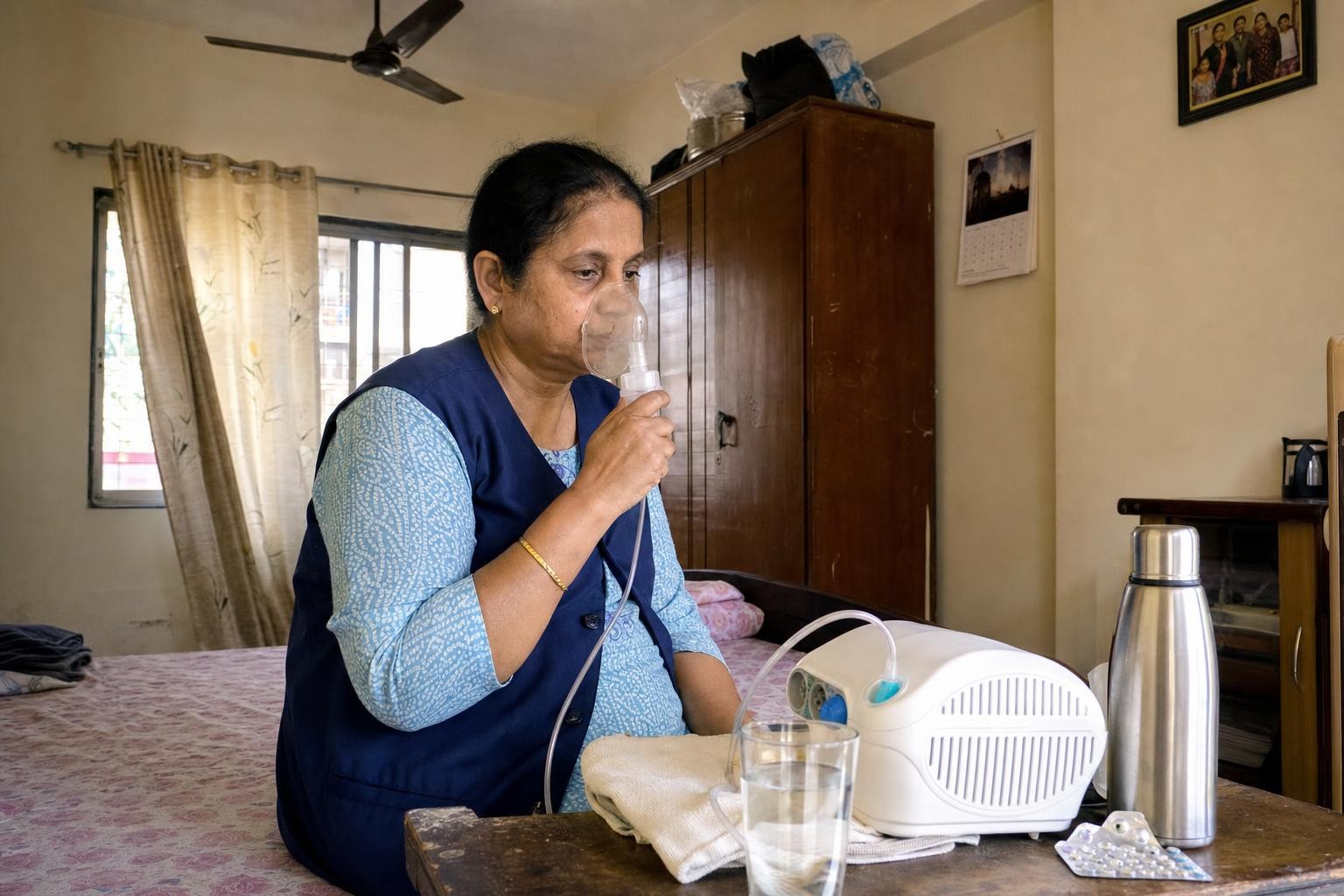
A nebuliser chamber that isn't rinsed and air-dried after every session builds up a residue that narrows the opening the mist passes through. That's not a hygiene footnote. A narrowed opening changes the size of the droplets coming out, and droplet size decides how deep into the lungs the medicine travels.
Rinse with clean water after each use. Shake off the excess, then let it air dry. Don't wipe it with a cloth that's been used for anything else in the room. A chamber shared with general household cleaning stops working the way it should within a few weeks, even though it still switches on and produces mist that looks the same as day one.
What goes into the chamber, and what doesn't
The medicine and diluent in a nebule come pre-measured for a reason. Adding extra saline to "make it last longer" or to ease a child's fear of a short blast of mist changes the concentration the doctor prescribed. Don't do it, even when a session feels too quick to be doing much.
Tap water has no place near the chamber either, not for diluting, not for a final rinse before storage. Use only what the prescription and the nebuliser's instructions call for. If two family members are on different inhaled medicines in the same house, each gets their own chamber and mask. Sharing one between people is how an infection travels further than it needed to.
The breathlessness a nebuliser cannot fix
A nebuliser opens airways narrowed by spasm or inflammation. It doesn't raise oxygen that's dropping for a different reason. It doesn't buy time indefinitely while breathing keeps getting worse.
Breathlessness that doesn't ease within fifteen to twenty minutes of a properly given session, that worsens between doses, or that comes with blue or grey lips, confusion, or a chest working unusually hard just to move air, has moved past what a scheduled dose is built to handle. So has a patient who can no longer speak a full sentence without stopping for breath. That's not a moment to wait for the next scheduled dose. It's a call to a doctor or an emergency number, made now.
One visit, more than one routine
Families managing long-term respiratory conditions are often managing more than the lungs. A patient who spends most of the day propped up for breathing comfort is also at risk of pressure sores from staying in one position too long, and the two-hourly turning routine that prevents one has to fit around nebuliser timings, not compete with them.
That's usually one nurse's visit doing both jobs, not two separate bookings. If nebulisation is one of several things a household has arranged since a discharge, the fuller picture of what home healthcare in Mumbai covers is worth a read, so nothing gets booked twice or missed entirely.
Questions families ask
Can a family give the nebuliser dose themselves once shown how?
Yes. Once a nurse has demonstrated the seal, the position and how long a session should run, most families manage routine doses confidently between visits. Starting a new medicine, changing a dose, or any session where breathing looks abnormal is nurse territory, not a home judgement call.
Does the machine need to be held at a particular angle?
Most nebuliser chambers are designed to sit upright. Tilting the machine during use can affect how the medicine draws into the tubing. Keep it on a flat, stable surface at the height shown in the manufacturer's instructions, not propped at an angle for convenience.
Is it normal for a child to cry through most of the session?
It happens, and a mask held gently but firmly through it still delivers most of the dose. What matters more is not giving up and pulling the mask away every time the crying starts. Restarting the timer each time is what really cuts the dose down.
How often should the tubing be replaced, not just the chamber?
Tubing that looks intact can still build up residue inside over weeks of use. Most prescriptions come with a replacement schedule for tubing and chamber together. Follow that schedule instead of judging by appearance.
Can nebulisation be combined with an oxygen concentrator at home?
Often, yes, depending on what's prescribed. The two serve different purposes. One opens the airway. The other raises oxygen levels. A nurse visit can set up and check both together instead of a family guessing at how they interact.
Healkin facilitates care at home and does not diagnose, prescribe, or change a doctor's treatment plan. Breathlessness that isn't easing, blue or grey lips, confusion, or difficulty speaking in full sentences are reasons to call your doctor or emergency services immediately rather than waiting for a scheduled dose.