Palliative care at home in Mumbai: comfort, the early conversations, and help between doctor visits
Palliative care at home is about comfort, not giving up. Here is what it involves day to day, the conversations a family should have while there is still time, and the support that fills the long gaps between doctor visits.
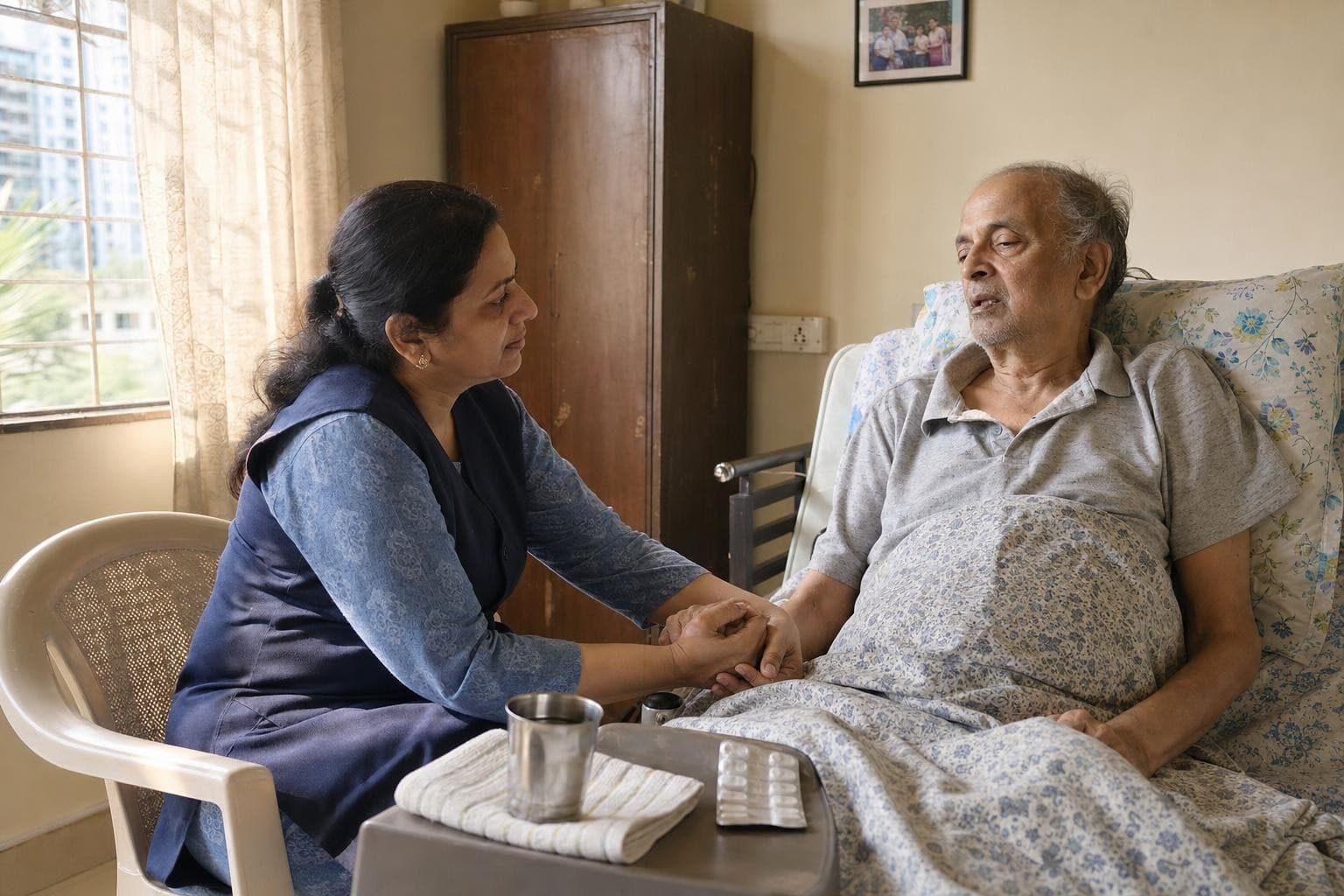
Most families come to palliative care at home in Mumbai the same way. A specialist says there is nothing more the hospital can usefully do, and someone asks quietly whether Papa can come home. The answer is usually yes. What nobody explains is what the weeks after that look like.
This is for that gap. It covers what comfort-focused care at home involves, the conversations worth having early, and where help comes from on the days between doctor visits.
What palliative care means, and what it doesn't
Palliative care is care aimed at comfort. Pain, breathlessness, restlessness, a dry mouth, skin that breaks down, nights without sleep. The goal shifts from curing the illness to making each day as bearable as it can be.
It isn't the same as stopping all treatment. Some people receive palliative care for months alongside treatment that's still controlling their disease. Others come home in their last weeks. Both count.
And it isn't giving up. Families often feel that bringing someone home means they've stopped fighting. Look at what the work involves, though: turning someone gently every two hours, keeping their lips moist, noticing the grimace that means pain before they say it. That's not less care. It's closer care.
The medical decisions still belong to the treating doctor or a palliative specialist. What changes is where the patient lives, and how much of the day-to-day falls on the household.
The conversations to have early
The hardest part of palliative care at home usually isn't physical. It's the decisions that arrive at 2am, when nobody agreed on anything in daylight.
Have these talks while the person can still take part in them. If they can, ask them first.
Where do they want to be? Some people want to stay home to the end. Some would rather be in hospital when things get difficult. Neither is wrong. But the family needs to know which, because it decides what you do on a bad night.
What should happen if they suddenly get worse? Ask the doctor to talk you through it plainly. Would an ambulance and an ICU help, or only prolong a hard ending? Do they want resuscitation attempted? Write the answers down. Keep a copy where any relative, or a night attendant, can find it.
Who decides when they can't? In most Indian families this is a group discussion with a son abroad on video. Pick one person anyway. Tell the others who it is.
Who is the doctor to call? Not "the hospital". A name, a number, and a second number if that one doesn't answer.
The plan you make on a calm Tuesday afternoon is the one you'll be grateful for at three in the morning.
None of this is easy to say aloud. Families often find it goes better with the doctor in the room, so nobody feels they're the one raising it.
What a day of comfort care looks like
Every illness is different, and the doctor's plan sets the medical side. But the daily work in a Mumbai flat tends to look similar.
Pain and breathlessness
Pain medicine is given on the schedule the doctor wrote, not only when someone asks for it. Waiting until pain is bad makes it harder to bring down. Keep a simple notebook by the bed: the time of each dose, and how they seemed an hour later. It's the most useful thing you can show a doctor.
Never change a dose, skip one, or add something from the chemist on your own. If the pain isn't controlled, that's a call to the doctor the same day.
For breathlessness, small things help. Sitting them up with pillows. A fan pointed gently at the face. A calm voice. If oxygen has been prescribed, the flow is set by the doctor and stays there.
Mouth, skin and hygiene
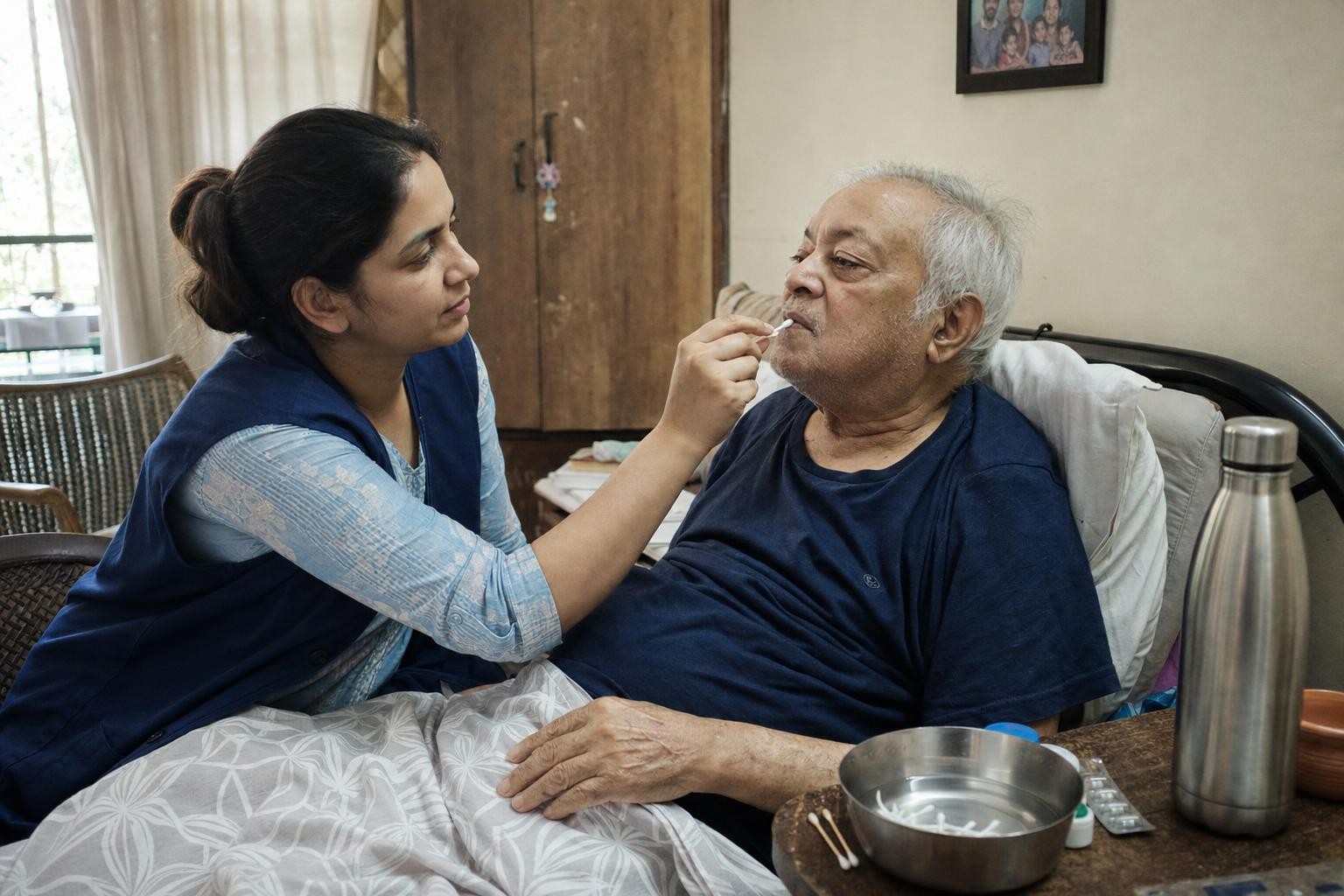
A dry, cracked mouth is one of the commonest discomforts near the end, and one of the easiest to ease. A damp swab or soft cloth on the lips and gums, every hour or two, makes a real difference.
Skin breaks down fast in someone who barely moves. Gentle turning, a clean dry sheet, and a check of the back and heels at each turn are the routine. Our guide to preventing bedsores at home walks through it in detail.
Bathing becomes a sponge bath on the bed. Diapers get changed promptly. These are tiring tasks, and they're the ones families most often hand to an attendant first.
Eating and drinking less
This one frightens families most. Someone who loved their food stops wanting it. Relatives push another spoon of khichdi because it feels like the only thing they can do.
Near the end of life, the body needs far less. Forcing food or water can cause choking, bloating or discomfort. Offer small amounts. Let them refuse. Ask the doctor what is reasonable at each stage, so you're not guessing.
The support available between doctor visits
A palliative doctor might visit once a week, or less. The other six days, the household is on its own. That's where most families run out of strength.
Help at home usually comes in three layers.
An attendant. A trained bedside attendant handles the physical load: turning, sponge baths, diaper changes, helping with meals, sitting up through the night so the family can sleep. Many households start with a 12-hour night shift. It's often the first thing that makes the situation feel survivable.
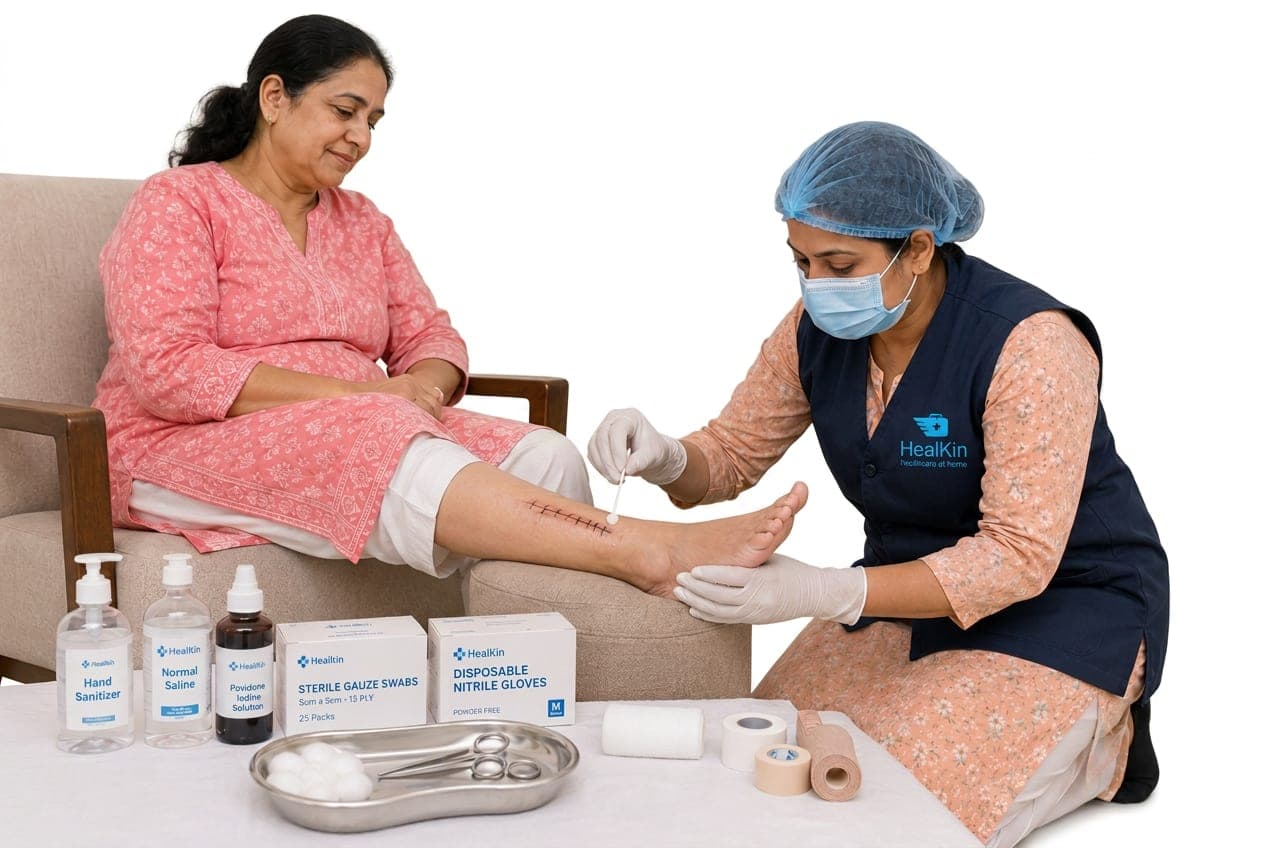
A nurse, when the task needs one. Some work needs a qualified nurse: a dressing on a wound, care of a catheter or feeding tube, an injection the doctor has prescribed. These are usually visits, not full shifts.
Equipment. A hospital bed that raises the head eases breathing and makes turning safer for everyone. An air mattress helps with skin. If oxygen is prescribed, it has to be arranged before it's needed. Measure the lift and the bedroom door before anything heavy is delivered.
Healkin arranges attendants on visits and 12- or 24-hour shifts, with nurse visits for the clinical tasks. The bedside care at home page explains what each covers and shows the current rates, which depend on the hours and how much support the patient needs. A home visit from a doctor can be arranged too, for the weeks the specialist can't come.
One thing worth asking about at the start: who covers when the regular attendant takes leave. A new face in the last weeks unsettles a frail patient. Ask how replacements are briefed.
When to call the doctor
A palliative plan doesn't mean you never call for help. It means you know whom to call, and for what.
Call the doctor the same day if:
Pain isn't controlled by the prescribed doses
Breathing becomes noticeably harder or noisier
They become suddenly confused, agitated or very drowsy
They can't pass urine, or haven't opened their bowels in several days
There's a fall, new bleeding, or a fever
If you've agreed in advance that hospital admission is wanted, a sudden collapse, severe breathlessness or unresponsiveness is an emergency number, not a callback. If you've agreed it isn't, call the palliative doctor straight away. This is the moment that early conversation was for.
Looking after the people doing the caring
Caring for someone through their last months wears a family down in ways that don't show at first. Broken sleep. A job half done. Siblings who disagree about every decision.
Rest isn't a luxury in this situation. It keeps the care going. Take the night off. Let someone else sit with them for an afternoon. If you're feeling it already, our piece on when caring for a parent gets overwhelming is worth reading.
You won't get every day right. Nobody does. What families remember later is usually simpler: that their person was clean, comfortable, and not alone.
Questions families ask
Is palliative care only for the last few days of life?
No. Palliative care can start much earlier, sometimes months before the end and sometimes alongside treatment. Starting sooner gives the family time to plan, and gives the patient more comfortable weeks.
Can a home attendant give pain medicine?
An attendant can help a patient take medicine that's already been prescribed, on the doctor's schedule. Anything injected, or any change to the medicine, needs a nurse or the doctor. Keep a written record of every dose either way.
What equipment do we need for palliative care at home?
It depends on the patient. A bed with an adjustable head end and a pressure-relieving mattress are the commonest. Oxygen, a commode chair or a wheelchair may follow if the doctor advises them.
Should we keep giving food if they refuse it?
Usually not. Offer small amounts of what they like and let them decline. Forcing food or fluids late in an illness can cause choking and discomfort, so ask the doctor what's right for your family member now.
How do we decide between home and hospital at the end?
Start with what the patient wants, if they can tell you. Then ask the doctor what a hospital could still offer. Write the decision down so everyone, including night staff, knows the plan.
Healkin facilitates care at home and does not diagnose, prescribe, or change a doctor's treatment plan. If pain is not controlled, breathing changes, or your family member becomes suddenly confused or unresponsive, call your own doctor straight away.