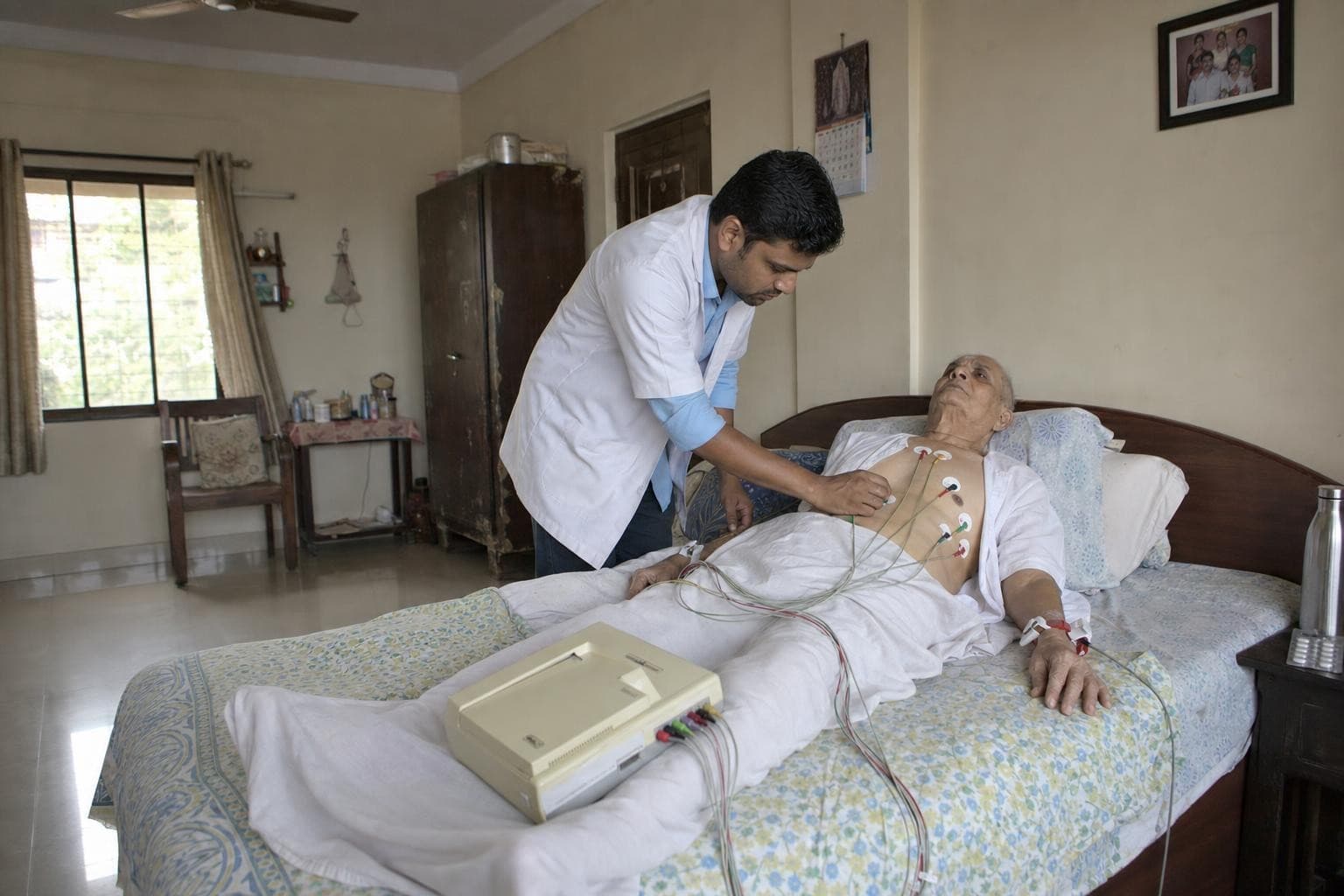
When Is a Portable X-Ray at Home Needed? A Guide for Elderly, Bedridden and Post-Injury Patients in Mumbai
Learn when portable X-rays at home may help elderly, bedridden and post-injury patients. Explore the process, safety and home X-ray services in Mumbai.
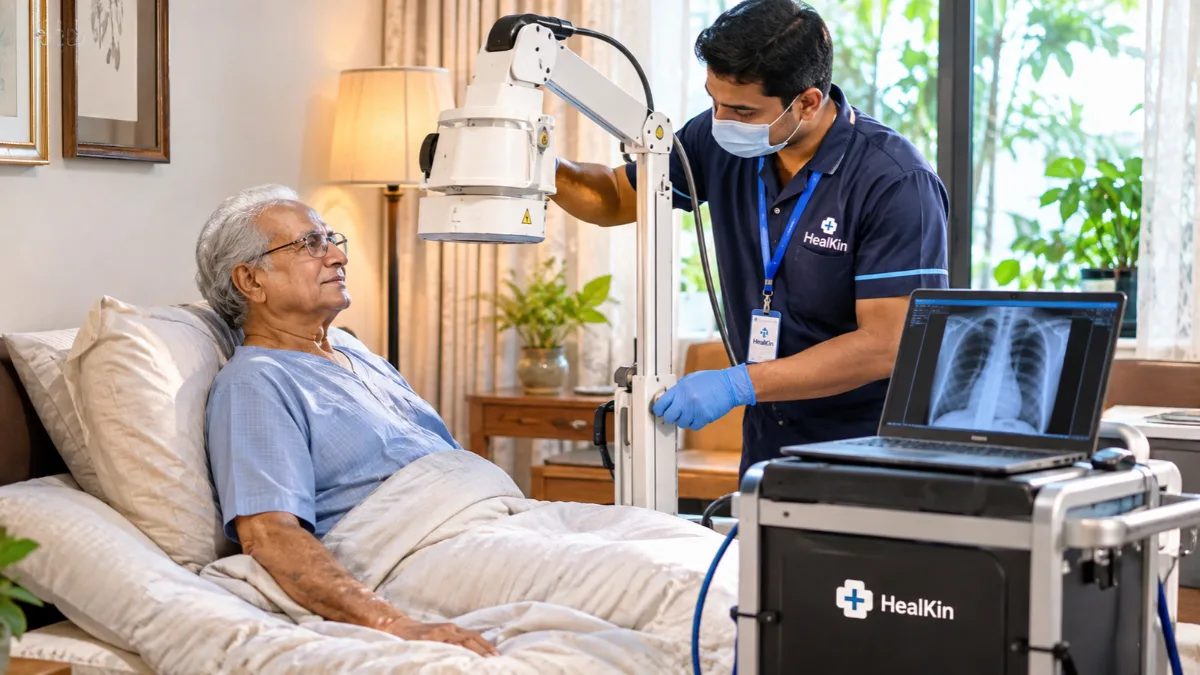
An X-ray is often needed to help doctors investigate an injury, check the lungs or assess a bone or joint. But reaching a diagnostic centre is not always easy. For an older adult with limited mobility, a person recovering after surgery or someone who is bedridden, even a short journey can involve discomfort, transfers and extra arrangements.
A portable X-ray at home may offer a practical alternative when the required examination can be performed safely at the patient's residence. Instead of travelling to a centre, a trained radiography professional brings the necessary portable equipment to the home, subject to the test being clinically appropriate and the location being suitable.
This guide explains when home X-ray services may be useful, how the process works and what families in Mumbai should know before arranging an appointment.
What Is a Portable X-Ray?
A portable X-ray is an imaging examination performed using equipment that can be transported to a patient's location. It uses X-rays to create images of structures inside the body, such as bones and the chest. Depending on the equipment, examination and provider, images may be captured digitally and shared for review by a qualified radiologist.
Portable imaging is particularly useful when moving the patient to a conventional X-ray department is difficult or may cause unnecessary discomfort. However, not every type of X-ray or clinical situation is suitable for a home visit. The doctor and imaging provider should confirm whether the requested examination can be performed at home.
Who May Benefit From an X-Ray at Home?
Home X-ray services may be considered for patients who have a genuine difficulty travelling to a diagnostic centre. Examples include:
Older adults with reduced mobility: Patients who find it difficult to walk, climb stairs or sit through a journey may benefit from an assessment at home when clinically appropriate.
Bedridden patients: A person who cannot safely get out of bed may need bedside imaging, depending on the body part and views requested.
People recovering after surgery: Some patients may need follow-up imaging but have been advised to limit movement during recovery.
Patients after a fall or injury: If a doctor requests an X-ray and travel is difficult, a home examination may be an option. Severe injuries still require urgent medical assessment.
People with limited mobility due to chronic conditions: Certain neurological, musculoskeletal or other long-term conditions can make travel challenging.
A home X-ray is not a substitute for emergency care. If someone has severe pain, major trauma, difficulty breathing, loss of consciousness or another urgent symptom, seek emergency medical help rather than waiting for a home appointment.
Which X-Rays Can Be Done at Home?
The examinations available depend on the portable equipment, the patient's condition, the required image quality and the service provider's capabilities. Portable X-ray services commonly focus on examinations that can be obtained safely at the bedside, such as:
Chest X-rays, when requested by a treating doctor.
Selected limb or joint X-rays, such as the hand, wrist, foot or ankle, where the required positioning is possible.
Other examinations only when the imaging provider confirms that the requested views can be obtained appropriately at home.
Do not assume that every body part or every number of views can be imaged at home. Share the doctor's prescription with the provider in advance so the team can confirm availability and suitability.
How Does a Portable X-Ray at Home Work?
The process is generally straightforward, although exact arrangements vary by provider:
Doctor's advice: The patient should have a doctor's request or prescription specifying the examination required.
Booking and confirmation: The family shares the prescription, address, patient mobility details and preferred appointment time. The provider confirms whether the examination can be performed at home.
Preparing the space: The team may need a clear area around the patient and enough room to position the portable equipment.
Image capture: A trained radiography professional positions the patient and equipment, explains what will happen and takes the required images.
Image review and report: The images are sent for interpretation by a qualified radiologist, and the report is provided according to the provider's stated turnaround time.
The patient may need to change position or remain still briefly to obtain clear images. If movement is painful or not possible, tell the radiography team before the examination begins.
Is a Portable X-Ray at Home Safe?
X-rays use ionising radiation, so examinations should be performed only when medically justified and with appropriate precautions. The radiography professional should follow radiation-safety procedures, use suitable exposure settings and apply shielding when appropriate under applicable protocols.
Tell the team if the patient is pregnant or may be pregnant before imaging. Also share relevant medical information and explain if the patient cannot stand, turn or hold a position comfortably. Do not attempt to reposition a patient with a suspected fracture or serious injury without professional guidance.
A home setting does not change the need for professional standards. Confirm that the service uses trained personnel, appropriate equipment and qualified radiologist reporting.
How Should You Prepare Your Home?
A little preparation can make the visit easier:
Keep the area around the bed or examination space clear.
Ensure there is enough light and accessible electrical supply if the provider requires it.
Keep the doctor's prescription and previous relevant reports ready.
Inform the team about stairs, lift access, narrow corridors or other entry challenges.
Have a family member or caregiver available if the patient needs assistance, while following the radiographer's instructions.
Home X-Ray or Diagnostic Centre: What Should You Consider?
A home X-ray can reduce the need to transport a patient, which may be helpful for people with limited mobility. A diagnostic centre may offer a wider range of equipment, positioning options and imaging examinations. The best setting depends on the doctor's request, the patient's condition and whether the required images can be obtained to an appropriate standard at home.
Ask the provider what examination is available, who will perform it, who will interpret the images, how the report will be delivered and what the total charges include. If home imaging is unsuitable, the provider or treating doctor can guide you towards an appropriate diagnostic facility.
Arrange X-Ray at Home in Mumbai With HealKin
For patients who find travel difficult, arranging diagnostic imaging at home can make the process more convenient. HealKin provides an X-ray at home service in Mumbai, subject to service availability, the prescribed examination and confirmation that it can be performed safely at the patient's location.
Before booking, keep the doctor's prescription ready and share the patient's mobility requirements and complete address. The team can help confirm the next steps and appointment details.
Learn more about HealKin's X-ray at Home service in Mumbai: https://healkin.com/services/x-ray-at-home
Frequently Asked Questions
Can a bedridden patient get an X-ray at home?
In many cases, bedside imaging may be possible, depending on the body part, views required, equipment and patient's condition. The provider must confirm suitability in advance.
Do I need a doctor's prescription for a home X-ray?
A doctor's request is important so the correct examination and views are performed. Confirm the provider's documentation requirements when booking.
Can a chest X-ray be done at home?
Portable chest X-rays are commonly performed in suitable home-care situations, subject to clinical need and service availability.
How will I receive the X-ray report?
Ask the provider about its reporting process and expected turnaround time. Images should be interpreted by a qualified radiologist.
Is a home X-ray suitable after every fall?
No. Serious injuries or emergency symptoms need urgent medical assessment. A doctor should decide whether an X-ray at home is appropriate.
Conclusion
A portable X-ray at home may help elderly, bedridden and mobility-limited patients complete certain imaging examinations without travelling to a diagnostic centre. The key is to confirm that the prescribed examination is suitable for portable imaging and is performed by trained professionals with appropriate reporting.
If your doctor has recommended an X-ray and travelling is difficult, ask whether a home examination is an option. HealKin's X-ray at home service in Mumbai can help families explore a convenient diagnostic arrangement, subject to clinical and service suitability.
Medical disclaimer:
This article is for general information only and does not replace medical advice. The need for an X-ray and the appropriate imaging setting should be determined by a qualified healthcare professional.