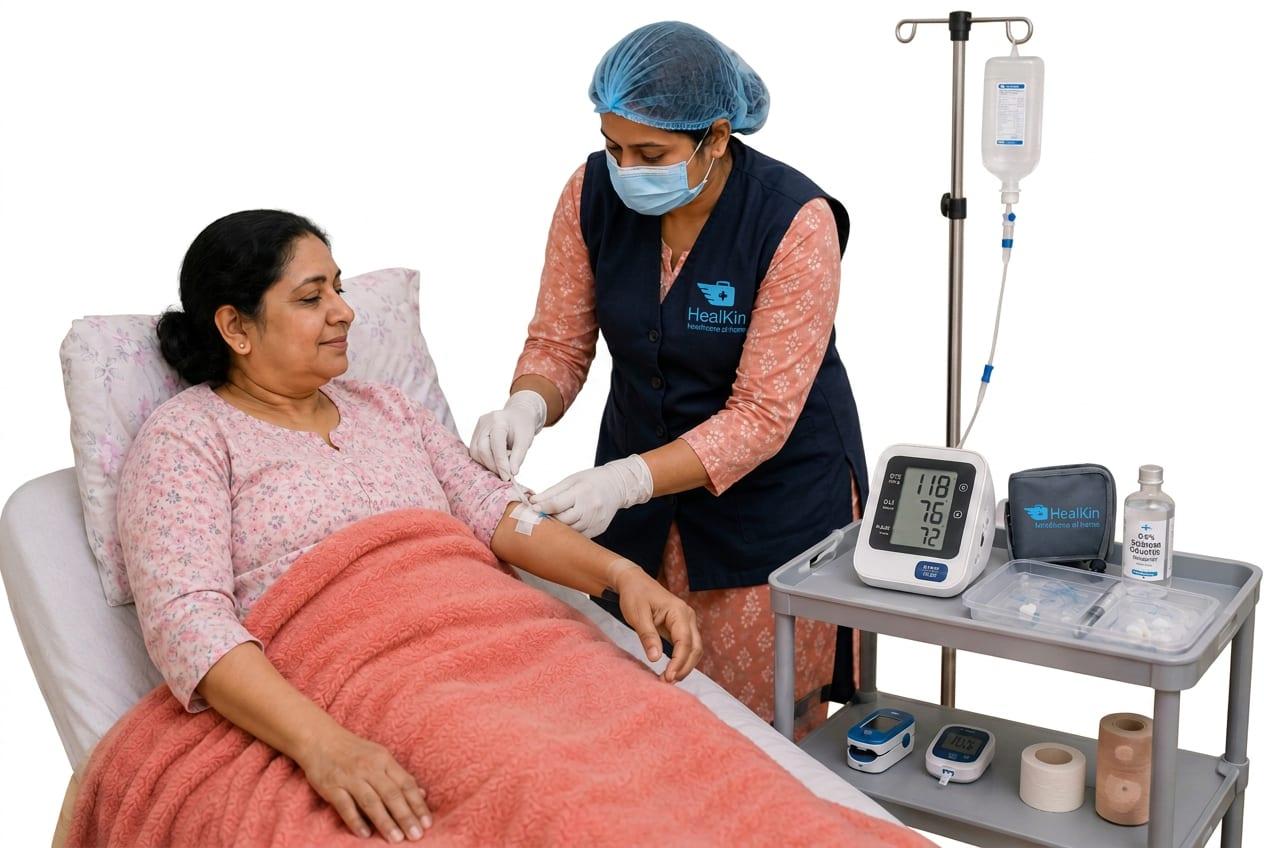
What Is an IV Drip? Benefits, Uses, Procedure and When You May Need IV Therapy at Home
Understand what an IV drip is, how intravenous therapy works, its medical uses, procedure, safety and when to consider IV drip services at home in Mumbai.
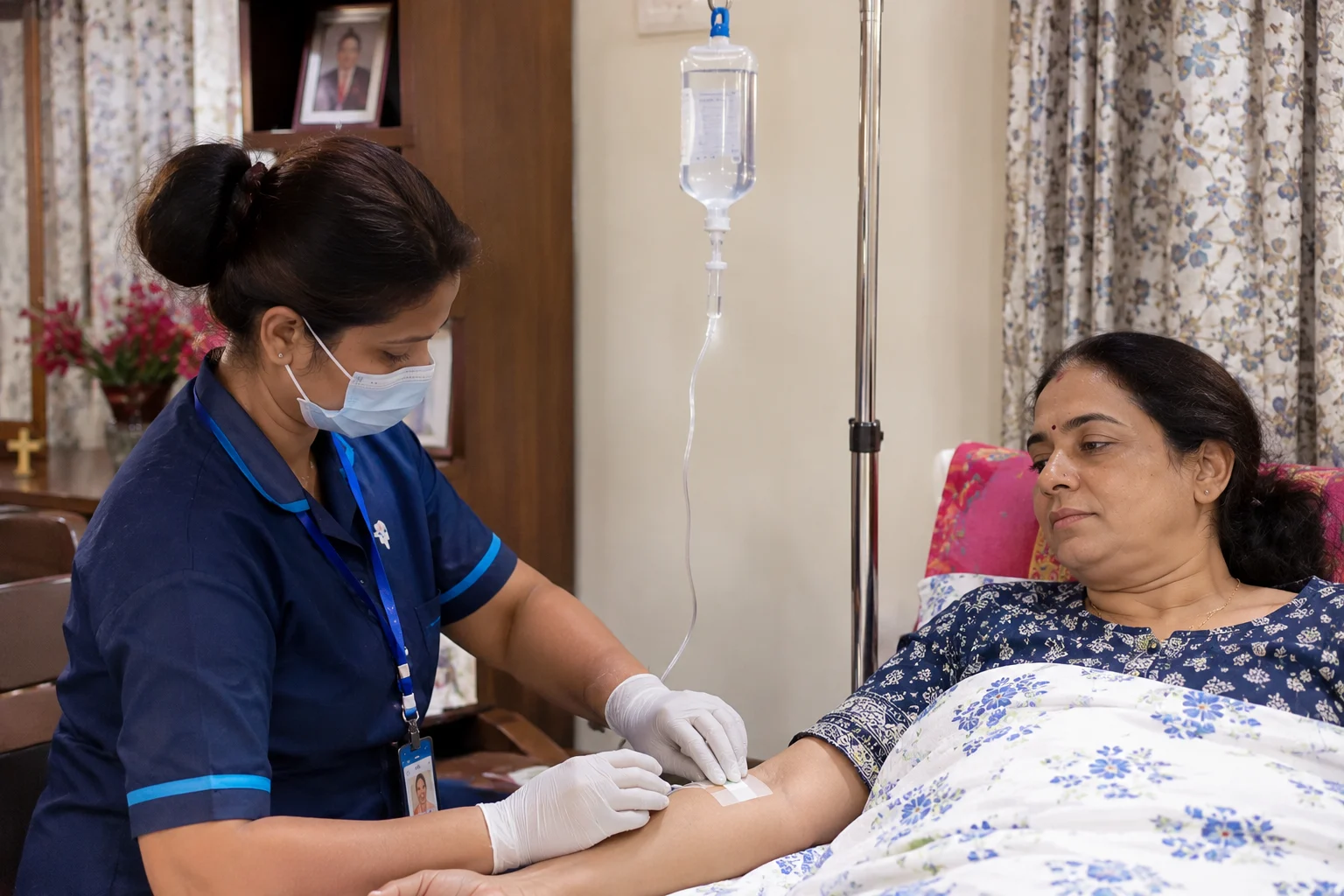
Is an IV Drip Solution the Answer to Tiredness, Weakness and Dehydration?
I thought it would be useful to describe an IV drip in more detail. Home IV therapy is becoming more common and is sometimes recommended by doctors for patients who are at home and still recovering from illness. This can be for a variety of reasons including the patient being unable to take enough fluid by mouth, having lost significant amounts of fluid due to vomiting or diarrhea, or needing to have certain medications given via a vein.
The IV Drip is NOT a cure for tiredness, and it is NOT used for severe dehydration on an ongoing basis. Such dehydration is simply treated with water or an oral rehydration solution. In selected cases of home care, a doctor may recommend an IV Drip for specific medical reasons and under his supervision.
When might a Doctor Recommend an IV Drip? What does an IV Drip do? What is an IV Drip?
What Is an IV Drip?
IV stands for intravenous. ‘Intravenous’ simply means something is to be entered into a vein. The IV fluid is therefore pumped through a small tube called a cannula in your arm, usually in the hand, and then out of the bag in the fluid container and into the arm IV tubing. The fluid then enters the vein and from there flows straight into your bloodstream.
The small plastic tube of a cannula is inserted into a vein in the arm or back of the hand. The IV fluid then flows from a bag through the tubing to the cannula in the vein. The fluid is given at a predetermined rate through the intravenous line.
As opposed to drinking water which in most cases is first to go into the digestive system and after that is absorbed by the blood stream, the IV fluid is directly inserted into the bloodstream.
Depending on the patient’s requirements the IV fluid can contain a range of prescribed fluids, and some key electrolytes, administered in specific quantities and at a specific rate to meet the individual’s requirements.
What Does an IV Drip Do?
An IV Drip can be used for a number of reasons including for the administration of fluids, or for the administration of specific electrolytes. In addition, some medicines are only to be given via an IV.
Some of its medical uses include:
Replenishing fluids lost due to vomiting or diarrhea.
Isoxygen IV solutions contain all of the essential electrolytes to be used in clinical situations where their use is required.
Venous administration of specific drugs prescribed by a doctor.
Treatment continuing at home after a hospital stay and the patient requires an ongoing IV drip of fluids/treatment as prescribed by their Doctor.
It is crucial to remember that IV Drips do not cure all ailments and are only to treat a specific health problem as dictated by your treating doctor.
When Might a Doctor Recommend IV Therapy?
Don’t confuse feeling weak or needing to rehydrate with needing an IV drip. Most people with simple dehydration will recover by drinking plenty of water or other oral rehydration solutions. But occasionally a doctor will prescribe intravenous therapy in certain situations.
1. Significant Dehydration
Dehydration occurs when your body loses more fluid than it takes in, often due to persistent vomiting, diarrhea, fever or excessive loss of body fluids. Once the body has lost a significant amount of fluid in relation to the amount taken in by drinking, your doctor may recommend that you have intravenous fluids administered to rehydrate your body.
2. Vomiting and Diarrhea
Recurring vomiting or diarrhea may cause loss of important fluids and some of the body’s electrolytes. Patients who have severe dehydration, or cannot keep fluids down because of persistent vomiting, require a medical assessment. If required by the clinical situation, IV fluids can be given to counteract dehydration and related electrolyte imbalances.
3. Certain Infections and Illnesses
Some illnesses require treatment with prescribed IV medication or fluid replacement for periods of time, depending on the illness and the patient’s condition.
4. Recovery After Hospitalization
There are many situations where people who have been in hospital are sent home from hospital with a planned course of intravenous fluids or IV medication. This may be given in a hospice, in a care home, in a nursing home or in someone’s own home.
5. When Oral Medication Is Not Suitable
In some cases, there is a medical reason why oral administration of a particular medicine is not appropriate, and the only method of administration is by way of an IV infusion. In these circumstances, the doctor will prescribe the IV version of the medicine.
How Does an IV Drip Procedure Work?
Infusing someone with an IV drip for the first time can be a somewhat foreign process but basically there is a list of steps that are followed for the IV drip infusion.
Step 1: Medical assessment and prescription. This includes checking the doctor’s order, the fluid or medication that is to be given through the IV, the rate in which it is to be given, the patient’s allergies and any of the patient’s past medical problems that may affect administration of IV fluids or medications.
Step 2: THE PREPARATION OF THE EQUIPMENT FOR THE I.V. DIP LOH WHICH INCLUDES THE CANNULA, THE TUBING AND THE FLUID(S) PRESCRIBED BY THE DOCTOR PLUS ANY OTHER EQUIPMENT AS NEEDED FOR THE I.V. dripping process.
Step 3: The cannula is inserted into a vein in the hand or arm. The area is cleaned before the cannula is inserted and the IV tubing connected to it.
Step 4: Starting the infusion. The cannula is connected to the IV line. The prescribed fluid or medication is given at the required rate for the specified time.
Step 5: Monitoring the patient: The health care giver must observe the patient for any unusual changes and also check the area where the cannula was inserted. This includes checking for signs of local infection. Depending on the information from step 3 and the observations from step 5, the nurse may adjust the drip or withdraw it.
The IV line can be removed when required and should be disposed of correctly once used.
How Long Does an IV Drip Take?
The duration of the IV drip depends upon several factors like type of fluid, quantity of fluid to be given, medication to be given, rate of the IV and the patient’s medical condition. Some infusions can be completed in a span of less than an hour while some may require few hours.
HealKin offers 2 hour, 4-hour and8 hour home IV drip treatments in Mumbai, administered by qualified doctors and chosen for home treatment by you.
Remember never to change the flow rate of an IV drip, even if you feel that it is working too slowly. This is because your doctor has prescribed a certain flow rate for safe administration of the fluid or medication.
Is IV Drip Therapy Safe?
IV therapy, like any other form of treatment is associated with certain risks and complications. These include:
Pain, bruising or bleeding around the cannula site.
Swelling or irritation of the vein.
Infection at the insertion site.
Leakage of fluid into surrounding tissue.
Allergic or other adverse reactions to prescribed medication.
Fluid overload due to the excessive amount of liquid or the incorrect rate of administration.
Patients with heart problems, kidney and liver failures need special care since their bodies process extra fluids differently than others.
The treatment must be issued based on a medical assessment, and on the basis of a prescription issued by a medical doctor.
Can You Get an IV Drip at Home?
Yes, selected IV treatments can be done at home of the patient’s doctor has prescribed them for home care.
Patients, who have recently come out of the hospital, and are finding it hard to travel or need an infusion which is prescribed by a doctor but does not require inpatient treatment in a hospital can be given IV Therapies at their Home.
However, it may not be suitable for people who are severely unwell and unstable. An emergency situation also requires immediate medical care and hospitalization.
Before booking an IV Drip at Home, we would like you to confirm whether the service includes the following:
Verification of a valid doctor's prescription.
A qualified nurse with appropriate IV administration skills.
Sterile equipment and safe cannulation practices.
Monitoring during the infusion.
A clear process for any adverse reactions or for any change in the patient’s condition.
IV Drip at Home in Mumbai with HealKin
IV Drip treatment given at home by a qualified Nurse is convenient for patients who have been prescribed intravenous treatment by a doctor and are traveling long distances to attend a Clinic or Hospital for each session of treatment.
HealKin offers doctor-prescribed IV drip infusions in Mumbai at home. The services of qualified nurses are provided at your home where they first verify the doctor’s prescribed medical infusion at home and then administer it safely while monitoring the patient for some time after the IV drip administration at home.
Sessions of the IV Drip at Home are held within the time frame set by the treating Doctor – max up to 2 hours, 4 hours or 8 hours as deemed fit. We require a copy of the valid Doctor’s Prescription for our IV Infusion and IV Medication services, outlining the treatment plan, fluids/medicines and duration of the treatment.
Frequently Asked Questions
What is the main purpose of an IV drip?
Intravenous (IV) fluid, electrolytes or medicines are given through a drip in a vein as prescribed by a doctor.
What does an IV drip do for dehydration?
When you are dehydrated your doctor may order IV fluids and electrolytes to be given through an IV when oral hydration is insufficient or inappropriate. The type and quantity of fluids given by IV depends on your condition.
How long does an IV drip take to finish?
Duration of an IV Drip can vary depending on several factors. Typical IV Drip sessions can last anywhere from less than an hour to a few hours depending on your fluid requirements, the type of fluid being used, and your doctor’s orders for your treatment.
Can an IV drip be administered at home?
Yes, selected IV treatments can be administered at home by a qualified health care provider and/or nurse and are appropriate for home care of a patient.
Do I need a doctor's prescription for an IV drip at home?
This will include verification of the prescribed treatment prior to administration of the IV infusion.
Is an IV drip better than drinking water?
Drinking water or other oral rehydration solutions are suitable for the majority of cases of everyday hydration requirements. IV fluids are given via a vein for specific medical reasons.
Conclusion
An IV drip is more than a bag of fluid running through a patient’s arm. It is in fact a treatment of fluids, electrolytes and medication given via a vein when medically indicated.
It’s very important to note that even the most convenient home IV therapy services need to start with a doctor’s assessment and a choice of the right fluid(s), correct dosage, an appropriate rate of infusion, and proper monitoring.
In case you have been prescribed IV therapy but have to travel a long way to have it administered by a hospital or clinic, a medically supervised IV Therapy at Home service could be an option for you to discuss with your doctor.
This article has been written for general information purposes only. It is not intended to be a substitute for professional health advice, diagnosis or treatment. HealKin IV Drip Solutions home therapy services should only ever be administered under the specific guidance of a qualified doctor and supervised by a trained medical healthcare professional.