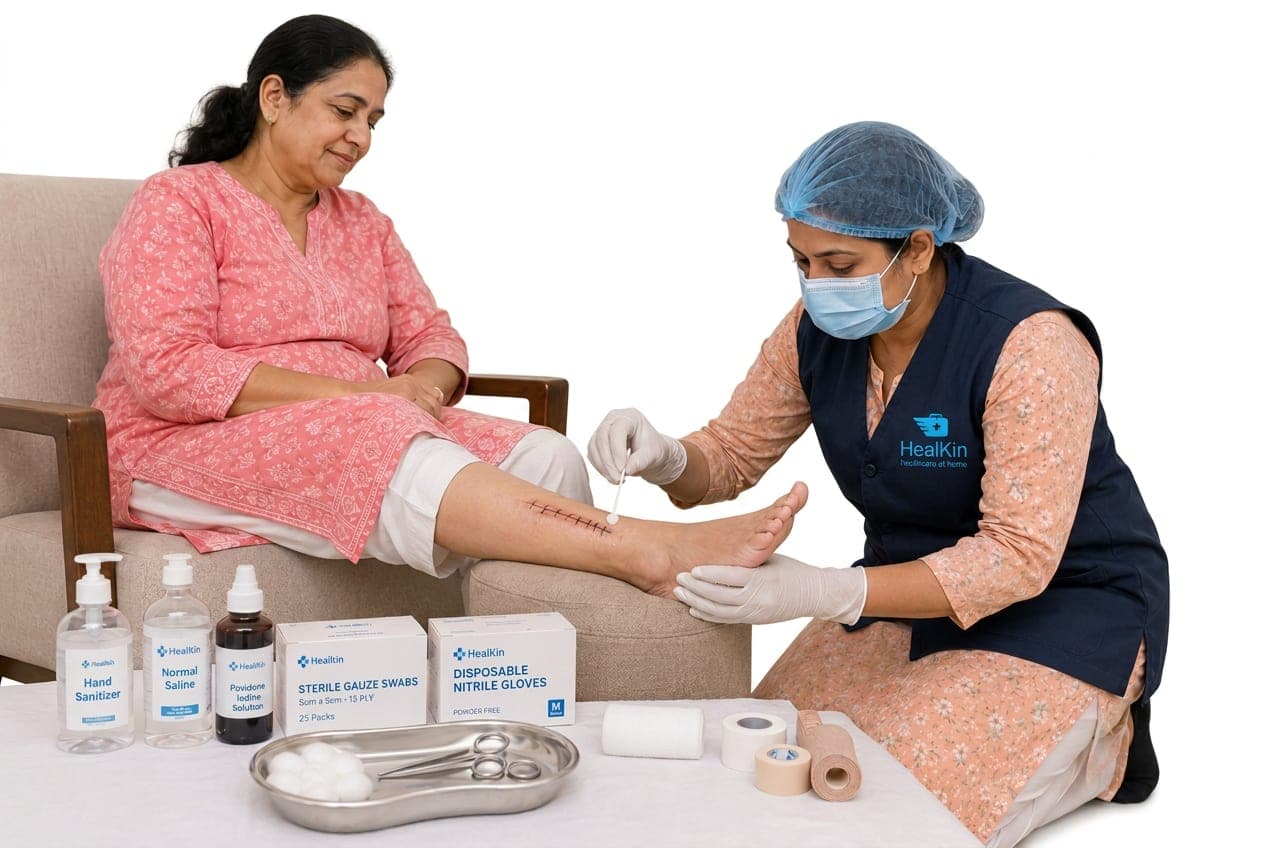
The Wound Looks Fine on Top. What Could Be Happening Underneath?
Is your wound taking longer to heal? Learn about wound infection warning signs, delayed healing and when to seek professional wound care in Mumbai.
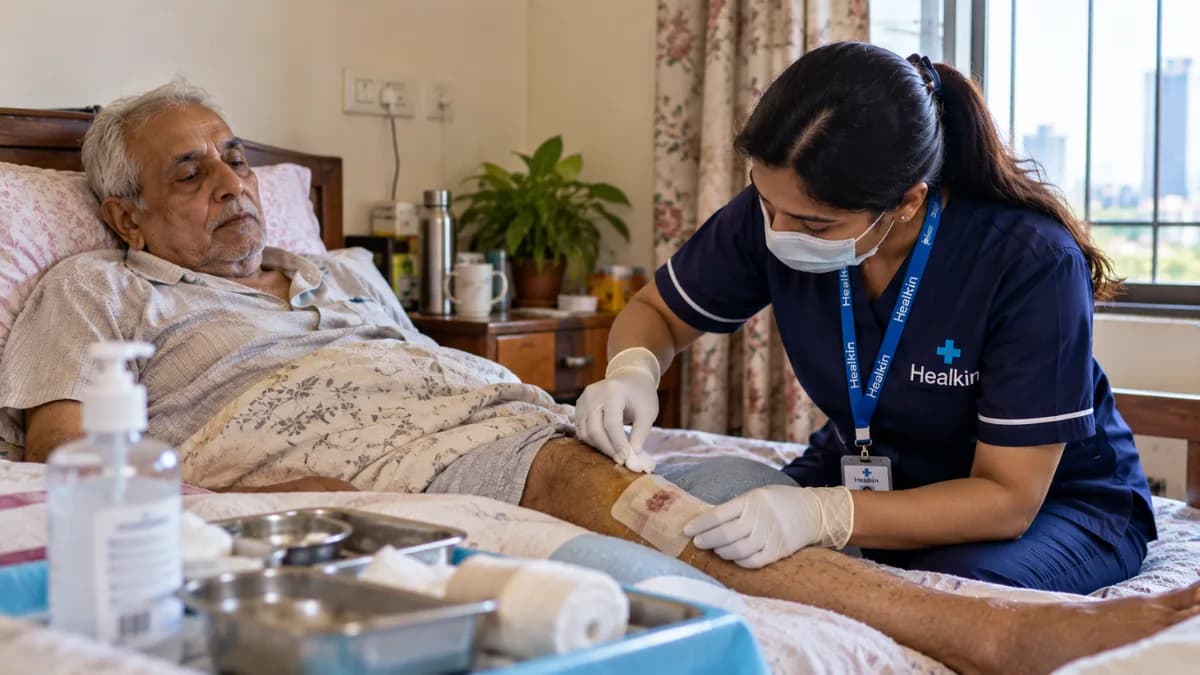
A wound can look smaller, cleaner and less noticeable after a few days. The redness may have faded, the dressing may come away without much fluid, and the skin around it may appear to be returning to normal.
For a family caring for someone at home, these changes are reassuring.
But there is something worth remembering: a wound that looks better on the surface is not always completely healed underneath.
This matters particularly after surgery, an injury, a deep cut or a prolonged period of bed rest. The skin is only one part of the healing process. The tissue beneath it also needs time to repair, and some complications are not obvious from appearance alone.
So, how do you know whether a wound is healing as expected? Which changes deserve attention? And when should you ask a healthcare professional to examine it?
Understanding these questions can help you care for a wound more confidently without becoming anxious about every small change.
Why a Wound Can Look Healed Before It Actually Is
When the skin is injured, the body begins a series of repair processes. Blood clotting helps control bleeding, inflammation supports the early response to injury, and new tissue gradually develops as healing progresses.
The process does not happen all at once.
A small, superficial cut may heal relatively quickly. A surgical incision or deeper wound can take considerably longer, depending on its size, location, blood supply, the person's overall health and other factors.
The surface may close while deeper tissues continue repairing themselves. That is one reason a wound can appear settled even when it still needs protection from pressure, stretching or friction.
For example, someone recovering from abdominal surgery might notice that the incision looks neat and dry. They may feel ready to lift a heavy bag or return to their usual routine. But the tissue beneath the incision may still be healing.
Looking healed and being fully healed are not necessarily the same thing.
This is also why following the surgeon's instructions about activity, dressing changes and follow-up appointments matters, even when the wound looks good.
Five Things That May Be Happening Beneath the Surface
Not every wound complication is hidden, and not every slow-healing wound is infected. Still, certain issues deserve attention when a wound does not progress as expected.
1. The Deeper Tissue May Still Be Repairing
After an operation or a deeper injury, the body must repair more than the visible skin.
New tissue forms, blood vessels support the healing area, and the wound gradually gains strength. These processes take time.
A closed incision may therefore need continued protection, even when it no longer looks like an open wound.
This is particularly important around areas that move frequently, such as the abdomen, knees, shoulders and other joints. Stretching or putting too much strain on a healing incision may interfere with recovery.
What should you do? Follow the activity restrictions provided by the treating doctor. Do not assume that a wound is ready for strenuous activity simply because the skin looks closed.
2. An Infection May Need Medical Attention
A wound infection does not always begin with an obvious pocket of pus.
Sometimes, the first noticeable changes are increasing tenderness, warmth, swelling or redness around the wound. Discharge may become thicker, change colour or develop an unpleasant smell. Fever or chills may also occur.
The important distinction is how the wound is changing over time.
Some mild redness and discomfort can occur during normal healing. However, redness that spreads, pain that increases rather than improves, or new discharge should not be dismissed as part of recovery.
An infection can involve the skin around a wound or extend into deeper tissue. Its severity cannot reliably be determined just by looking at the surface.
If you suspect an infection, contact the treating doctor promptly rather than waiting for the next scheduled dressing change. Seek urgent medical assessment if symptoms are severe or rapidly worsening.
3. The Wound May Be Struggling to Close
Some wounds take longer to heal than expected.
The reasons can vary. A wound may be under repeated pressure, the surrounding skin may be fragile, or the person may have an underlying condition that affects healing.
Diabetes, poor circulation, smoking, inadequate nutritional intake and certain medicines can influence recovery. These factors do not automatically mean a wound will heal poorly, but they may affect the care and monitoring required.
For example, an older adult who spends much of the day in bed may experience repeated pressure on the same area. Even with a dressing in place, that pressure can make it difficult for damaged tissue to recover.
A wound that remains open, repeatedly breaks down or becomes larger needs professional assessment. It may require a different dressing approach or investigation into an underlying problem.
Do not try to solve persistent wound-healing problems by repeatedly changing products without medical guidance.
4. Fluid Beneath the Skin May Need Assessment
After some operations or injuries, fluid can collect beneath the skin. Depending on the cause, this may be blood or another type of fluid.
A collection may sometimes produce swelling, a feeling of fullness, tenderness or a change in the shape of the area. In other cases, the symptoms may be less obvious.
Not every collection is dangerous, but it should not be diagnosed at home by appearance alone.
If swelling is new, increasing, painful or accompanied by redness, discharge or fever, contact the treating clinician. They can decide whether an examination or further investigation is necessary.
Avoid squeezing the area, pressing repeatedly to check for fluid or attempting to drain it yourself.
5. The Wound May Be Under More Pressure Than You Realise
Pressure and friction are easy to overlook during home recovery.
A dressing can appear clean while the skin beneath it experiences repeated rubbing. A patient who spends long periods in one position may also develop pressure damage over areas such as the heels, hips or tailbone.
This is especially relevant for people with limited mobility who cannot change position easily.
Pressure-related wounds may begin with changes in skin colour, warmth, discomfort or an area that looks different from the surrounding skin. In some people, particularly those with darker skin tones, early changes may be harder to recognise by redness alone.
A wound dressing is only one part of care. Depending on the patient's needs, preventing further pressure, managing moisture and following an appropriate repositioning plan may also be important.
Ask the treating healthcare professional how to protect the affected area and whether additional support is needed.
How Can You Tell Whether a Wound Is Healing Normally?
There is no single appearance that applies to every wound. Healing depends on the type of injury, its depth, the procedure involved and the person's health.
In general, a wound that is progressing well should follow the healing pattern explained by the treating clinician. Pain, swelling and redness should generally improve rather than progressively worsen.
A simple way to approach wound monitoring is to notice changes rather than judge the wound by one photograph or one dressing change.
Pay attention to:
· Pain: Is it gradually improving, or becoming more intense?
· Redness: Is it settling around the wound, or spreading outward?
· Swelling: Is it decreasing, remaining stable or increasing?
· Discharge: Has the amount, colour, thickness or smell changed?
· Wound edges: Do they appear to be staying closed, or is the wound opening?
· General wellbeing: Has the patient developed fever, chills or unusual weakness?
These observations cannot confirm whether a wound is infected or healing properly. They can, however, help you recognise when professional advice is needed.
If you are concerned, contact the treating clinician and explain what has changed. A photograph may help communicate the concern, but it cannot replace an examination when one is needed.
Why Wound Dressing Is About More Than Replacing Gauze
It is easy to think of wound dressing as a simple routine: remove the old covering, clean the area and apply a fresh one.
In reality, the appropriate approach depends on the wound.
The type of dressing, cleaning method and change frequency may differ for a straightforward surgical incision, a deeper wound, a pressure injury or a wound with a significant amount of drainage.
Changing a dressing too frequently or leaving it in place longer than instructed may cause problems in some circumstances. Pulling a dressing that has adhered to the wound can also damage fragile healing tissue.
This does not mean every wound requires a nurse at every dressing change. Some patients and family members can manage a simple dressing after receiving clear instructions from their healthcare professional.
However, professional wound-care support can be particularly useful when:
· The wound is deep, complex or slow to heal.
· The patient has limited mobility.
· The dressing is difficult to change safely.
· There are several wounds or pressure injuries.
· The family is unsure how to follow the prescribed dressing schedule.
· The wound needs monitoring by a trained healthcare professional.
For complex wounds, or when complications are suspected, the patient may need assessment by the treating doctor or a wound-care specialist rather than a routine dressing visit alone.
When Should You Seek Medical Help?
One of the most important parts of wound care is knowing when not to wait.
Contact the treating doctor promptly if you notice spreading redness, increasing pain, worsening swelling, pus-like discharge, an unpleasant smell, a wound that is opening, or fever and chills.
Seek urgent medical care if the patient becomes seriously unwell, the wound opens significantly, or bleeding is heavy or does not stop with appropriate direct pressure.
A wound that appears dark or black, develops rapidly worsening swelling, or causes severe or disproportionate pain also needs urgent assessment.
Do not wait for a scheduled home nursing appointment if you suspect a serious complication.
A healthcare professional can determine whether the wound needs a change in treatment, further investigation or hospital-based care. A home dressing service should never delay necessary medical assessment.
What Families Can Do Between Dressing Visits
You do not need to inspect a wound constantly to care for it responsibly. In most cases, following the prescribed care plan and noticing meaningful changes is a better approach.
A few practical habits can help:
Follow the dressing schedule. Use the timing and instructions provided by the treating clinician. Do not change the schedule independently.
Keep the area protected. Follow the recommended instructions for keeping the wound clean and dry, including any bathing restrictions.
Avoid unapproved products. Do not apply antiseptics, powders, creams, oils or home remedies to the wound unless the treating clinician has advised you to do so.
Reduce unnecessary pressure and friction. Follow the recommended positioning and activity guidance, particularly for patients who spend long periods in bed.
Keep follow-up appointments. A wound may need review even if the surface appears to be closing.
Ask questions when something changes. It is better to clarify an unexpected change than to assume it is harmless.
For people with diabetes, circulation problems, reduced sensation or significant mobility limitations, the care plan may need to be more individualised.
When Home Wound Dressing Can Help
For many families, the challenge is not simply understanding wound care. It is managing it consistently while balancing work, travel and the needs of the patient.
A person recovering from surgery may struggle to travel to a clinic. An older adult may need assistance getting out of bed. A family caregiver may be comfortable helping with everyday tasks but uncertain about changing a wound dressing.
In suitable situations, a trained healthcare professional can visit the patient at home to provide the wound-care service that has been arranged.
Healkin offers wound dressing care at home in Mumbai, including selected post-operative dressing, suture removal, bedsore care and other wound-care services, depending on the patient's requirements.
A home visit may help with the prescribed dressing routine and allow a healthcare professional to observe the wound during the visit. If the wound appears concerning, medical assessment may still be necessary.
Learn more: Wound Dressing Care at Home in Mumbai
The right approach depends on the wound, the patient's condition and the advice of the treating clinician.
Frequently Asked Questions
Can a wound look healed but still be healing underneath?
Yes. The skin may close before deeper tissues have fully recovered. The time required depends on the wound's depth, location, the procedure involved and the person's overall health.
How do I know if a wound is healing or infected?
Improvement over time is generally reassuring, while increasing pain, spreading redness, worsening swelling, pus-like discharge, an unpleasant smell or fever may indicate a complication. These signs need clinical assessment; appearance alone cannot confirm an infection.
Is a little redness around a healing wound normal?
Some redness close to a wound may occur during early healing. Redness that spreads or worsens, especially with increasing pain, warmth or discharge, warrants prompt medical advice.
Why is my surgical wound taking longer to heal?
Possible contributing factors include the wound's size and depth, pressure, infection, diabetes, poor circulation, smoking, nutritional issues and certain medicines. A clinician can assess the specific cause and recommend appropriate care.
Should I change the dressing if the wound looks fine?
Not necessarily. Follow the dressing schedule given by the treating clinician. A wound that looks dry or closed may still require protection or a prescribed dressing routine.
Can a nurse change my wound dressing at home in Mumbai?
Healkin offers selected home wound-dressing services in Mumbai. The appropriate service depends on the wound, the patient's needs and whether the situation is suitable for home care.
When should I stop monitoring at home and go to a hospital?
Do not rely on home monitoring if the wound is rapidly worsening, the patient is seriously unwell, bleeding is uncontrolled or other urgent symptoms develop. Seek urgent medical attention rather than waiting for a routine dressing visit.
Conclusion
When a wound begins to look better, it is natural to feel relieved. That improvement is encouraging, but it should not be the only measure of recovery.
Healing takes place beneath the skin as well as on its surface. Following the prescribed care plan, noticing changes over time and seeking advice when something does not seem right can help patients recover more safely.
And if wound dressing becomes difficult to manage at home, professional support may make the routine easier for both the patient and the family.
For appropriate cases, Healkin's wound dressing care at home in Mumbai service can help families arrange support without an unnecessary trip to a clinic.
Medical disclaimer: This article is for general educational purposes and does not replace medical advice, diagnosis or treatment. Follow the treating clinician's wound-care instructions. If you suspect infection or another complication, contact a healthcare professional promptly. Seek urgent medical attention for severe or rapidly worsening symptoms.