
Diabetes Foot and Injection Care at Home: The Weekly Check That Prevents an Amputation
Insulin technique matters more than people think, and so does a foot most families never really look at. Here is the injection site rotation that prevents lumps, the weekly foot check that catches trouble early, and the point where a wound stops being something a family can dress alone.
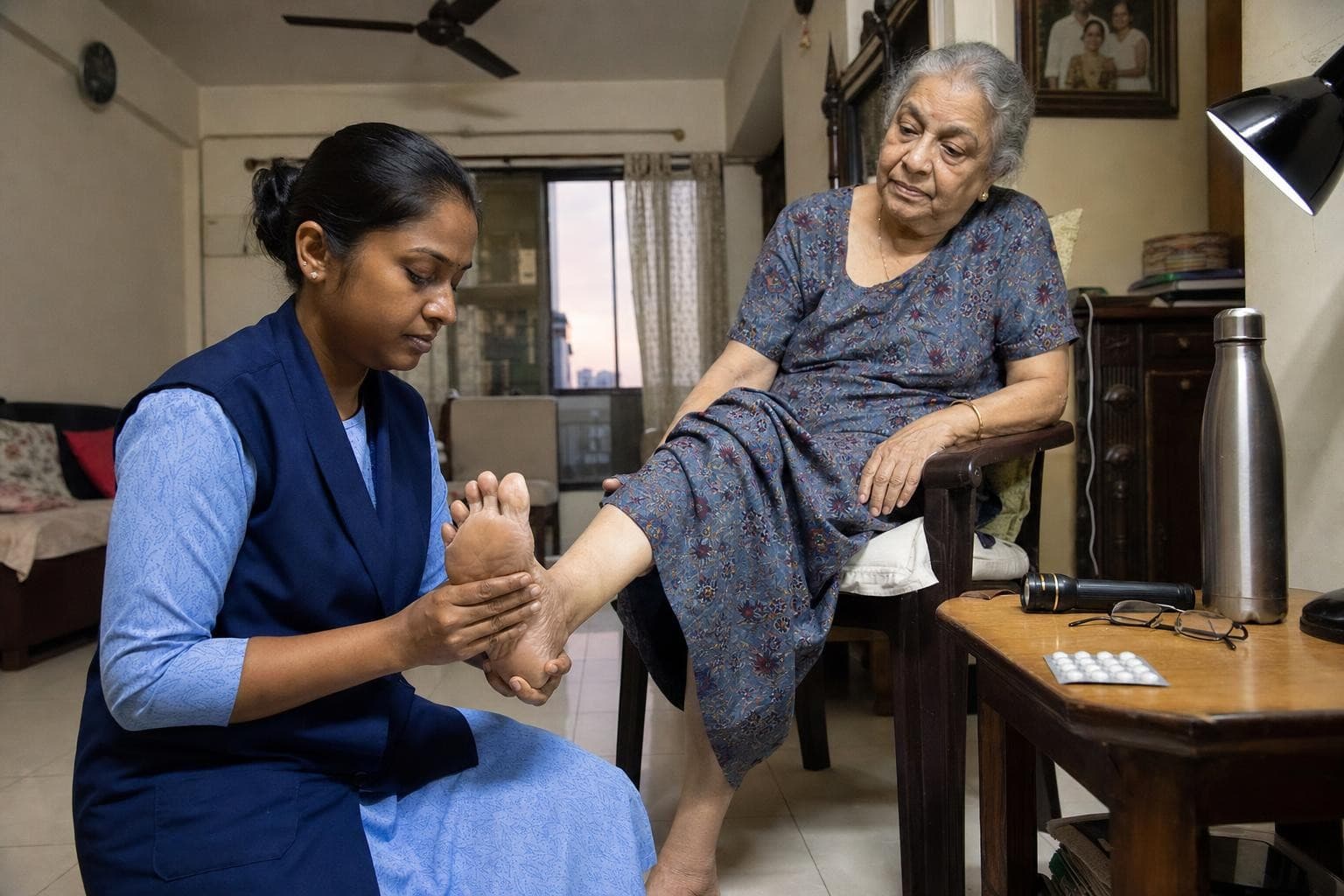
Most families managing diabetes at home have the injection part down. The needle, the dose, maybe even the timing around meals. What nobody quite explains is that where the needle goes, and how carefully anyone ever looks at the feet, matter almost as much as the dose itself.
Two habits sit right next to each other in a diabetic household and rarely get equal attention. One is the daily insulin shot. The other is a foot check that takes ninety seconds and most families never do. Both are preventable-problem territory. Skip either one for long enough and a small, manageable routine becomes a hospital admission.
Insulin injection technique and why the site matters
An insulin injection is a subcutaneous one, meaning it goes into the fatty layer just under the skin, not the muscle. Get that layer wrong and the insulin absorbs unpredictably, sometimes too fast, sometimes barely at all. That unpredictability is often mistaken for the insulin "not working," when the actual problem is technique.
The commonly used sites are the abdomen, the outer thigh, the upper arm and the upper buttock. The abdomen tends to absorb insulin fastest, the thigh slowest. A doctor's plan usually specifies which sites to use and when, because switching sites can shift how fast a dose kicks in, and consistency matters more than families realise.
Site rotation is the part that gets skipped once someone is tired or the injection has become routine. Using the same small patch of skin repeatedly causes lipohypertrophy, a lump of thickened, fatty tissue under the skin. It isn't dangerous by itself, but insulin injected into a lump absorbs poorly and inconsistently, which can send blood sugar swinging for no obvious reason. The fix is simple. Move roughly a thumb's width from the last injection point every time, and cycle through the approved sites instead of returning to a favourite one out of habit.
A few other details save more trouble than they look like they would. Pinching a fold of skin before inserting the needle, if the doctor has advised it for a particular needle length, keeps the injection subcutaneous rather than intramuscular. Letting the alcohol swab dry fully before the needle goes in stops it stinging. And a new needle each time isn't fussiness, it's what keeps the tip sharp enough not to bruise or drag.
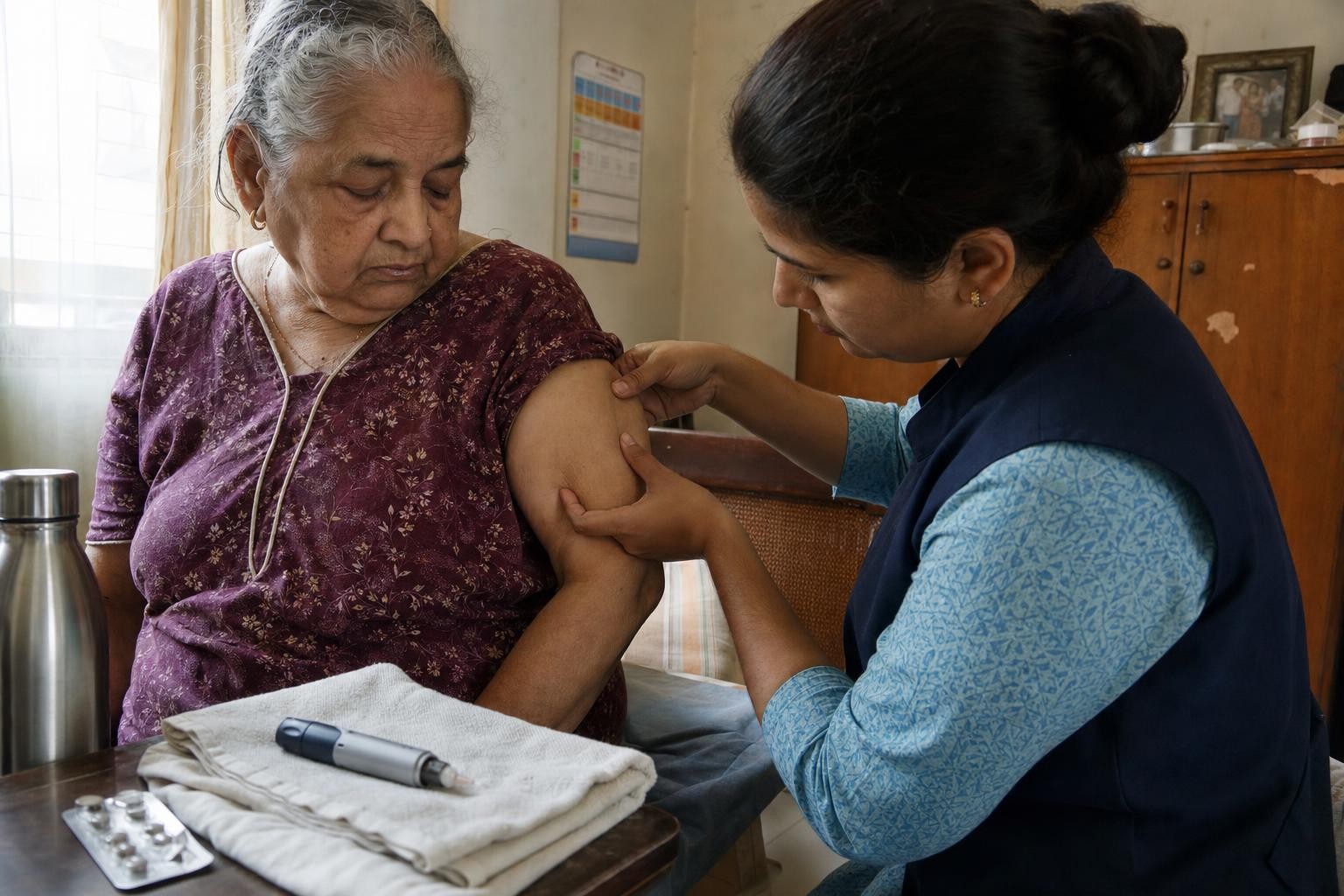
For families who would rather have a trained nurse handle the injection itself, particularly early on or when a patient's eyesight or hand steadiness makes self-injection difficult, prescribed injections at home in Mumbai covers this alongside other doctor-ordered shots, following whatever route and schedule the prescription specifies.
The weekly foot check that prevents an amputation
Diabetes damages nerves slowly, which means a foot problem can be getting worse for days without the person feeling it. That's the entire reason a weekly check matters. It isn't about detecting pain. It's about seeing what pain would normally have warned you about, before it becomes serious.
It takes less than two minutes. Sit the person down somewhere with good light, ideally after a bath when the skin is clean and dry. Look at the top of each foot, the sole, between every toe, and around the heel. Run a hand over the skin, not just your eyes, because a change in temperature or texture sometimes shows up before anything visible does.
What you're looking for.
Cuts, blisters or cracked skin, however small, especially between the toes where they're easy to miss.
Redness or swelling, particularly around a pressure point like the ball of the foot or the heel.
Colour changes, a patch that's gone pale, bluish or unusually dark. Numbness or tingling the person mentions, even in passing.
Nails that are ingrown, thickened or discoloured, which can become an entry point for infection. Dry, cracked skin on the heels splits more easily on a diabetic foot than it would otherwise.
Trim nails straight across, never curved into the corners, and never dig into the edges. If a callus or a nail looks like it needs real attention, that's a job for a podiatrist or the visiting nurse, not a blade at home. Well-fitting shoes matter more than most families realise too. An ill-fitting chappal that would just rub a healthy foot raw can open a wound on a diabetic one that the person never feels happening.
A diabetic foot problem rarely announces itself with pain. It shows up as a sock that comes off stained, or a slipper that suddenly doesn't fit right.
When a foot wound stops being a home dressing
A small cut on a diabetic foot isn't automatically an emergency. Clean it, cover it, watch it for two or three days. What changes the calculation is how it behaves after that.
Call a doctor the same day if you see any of these.
The wound hasn't started closing within a few days, or looks bigger, deeper or wetter than when it started.
Redness is spreading outward from the edges, or the area feels warmer than the skin around it.
There's discharge with an odour, or the drainage has changed from clear to yellow or green. The person develops a fever, even a mild one, alongside a foot wound.
The skin around the wound has gone numb, blackened, or is breaking down further instead of healing.
Poor circulation and reduced sensation are exactly why a diabetic foot wound behaves differently from a normal cut. Healing is slower, infection spreads with fewer warning signs, and a wound that would close on its own in a non-diabetic person can sit open for weeks. Beyond a certain point, a foot wound needs the same structured, doctor-guided wound dressing routine we've written about for surgical wounds: regular cleaning, appropriate dressing changes, and a clear sense of what healthy healing is supposed to look like against what isn't.
This is also where regular blood sugar monitoring earns its place in the routine, not just for the insulin dose but for the feet. Poorly controlled sugar slows healing directly, so a wound that won't close is sometimes a sign to recheck control rather than change the dressing technique. Home blood tests make it easier to track HbA1c and fasting sugar without adding a clinic trip to an already full week.
Building both habits into one routine
The easiest way to keep both habits alive is to attach them to something that already happens daily. Do the foot check right after the evening bath, before the last insulin dose. Keep a small rotation chart, even a simple diagram taped inside a cupboard door, so nobody has to remember which quadrant was used yesterday. It sounds unnecessary until someone is tired at 9pm and reaches for the same easy spot on the thigh for the third night running.
Neither habit takes long. Together they're most of what keeps a diabetic foot out of hospital.
Questions families ask
Can insulin be injected into the same spot every day if it's more convenient?
No. Repeated injections into one small area cause lumps under the skin that absorb insulin poorly, which can make blood sugar harder to control even though the dose hasn't changed. Rotate within the approved sites your doctor has specified, moving a thumb's width each time.
How often should feet actually be checked?
Once a week for most people with well-controlled diabetes, daily if there's already reduced sensation, past ulcers, or poor circulation. When in doubt, check daily. It costs two minutes and catches problems early.
Is it normal for a diabetic foot wound to take longer to heal?
Somewhat longer, yes, particularly with reduced circulation. But a wound that shows no improvement at all after several days, or is getting bigger or more painful, isn't within the range of "normal, just slow." That needs a doctor's review.
Can a family member give the insulin injection themselves?
Yes, most families learn to do this confidently after being shown the technique once. A nurse can demonstrate site rotation, pinch technique and needle disposal on the first visit, and many families continue on their own from there while calling for support if the routine changes.
What shoes are actually safe for a diabetic foot?
Closed, well-fitting shoes with no seams pressing on a pressure point, worn with socks, not barefoot, even indoors. Avoid anything tight, anything that's rubbed before, and check inside the shoe for grit or a folded insole before putting it on, since a diabetic foot may not feel a small stone the way a healthy one would.
Does Healkin provide the insulin injection as a home visit?
Yes, a trained nurse can visit to administer a prescribed insulin injection and demonstrate technique and site rotation for the family. Share the prescription and current routine when booking so the visit covers what's actually needed.
Healkin facilitates care at home and does not diagnose, prescribe, or change a doctor's treatment plan. A foot wound that isn't healing, spreading redness, discharge with an odour, fever, or numbness and darkening skin are reasons to call your doctor the same day rather than waiting for a scheduled visit.