Blood Test at Home in Mumbai: The Fasting Rules People Get Wrong
A fasting blood test in Mumbai fails more often over water and timing than anything else. Here is what fasting actually allows, how a sample survives the commute to a lab, and how to read a report without panicking at a starred value.
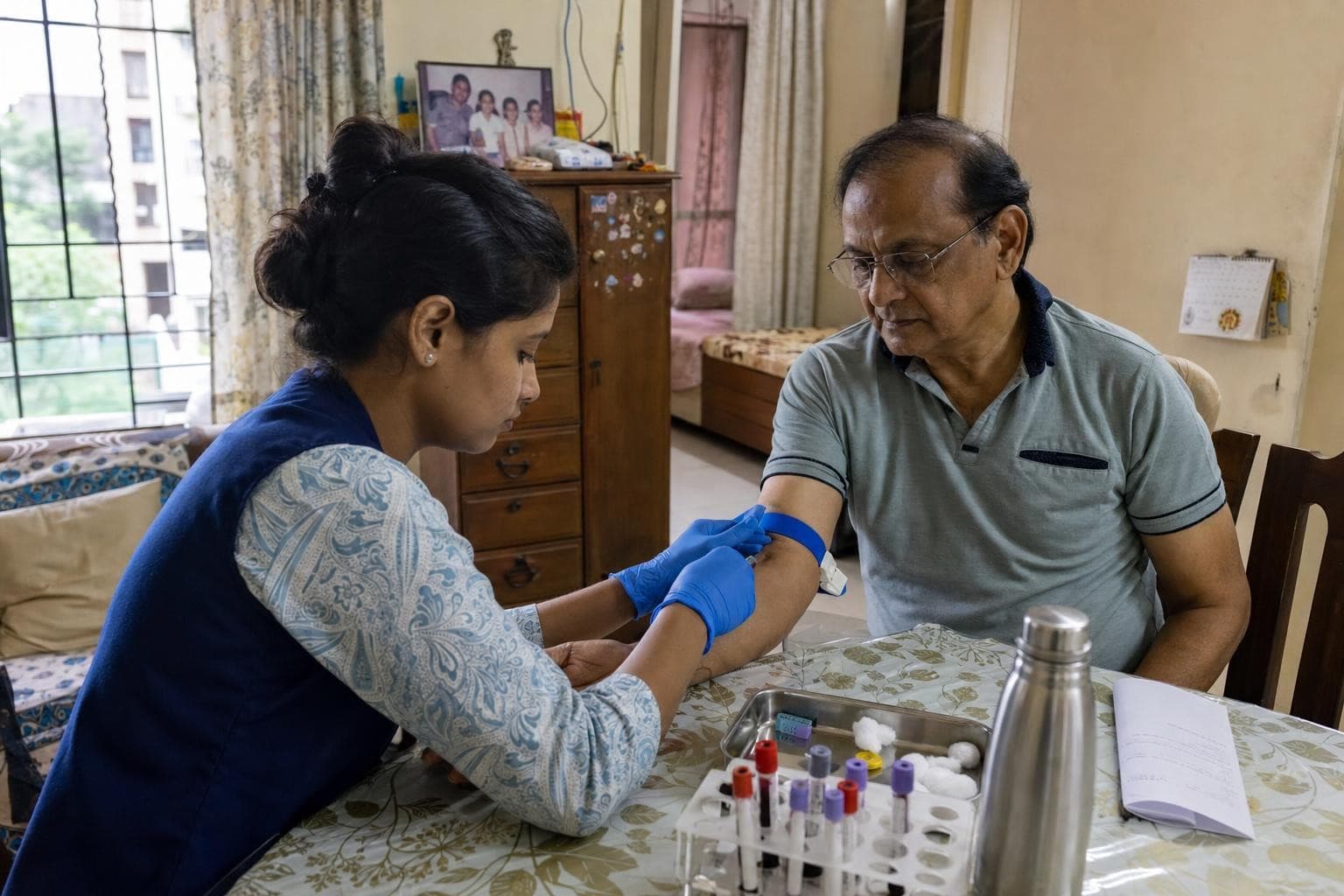
Most people fail a fasting blood test before the phlebotomist even rings the bell. Not from eating. From worrying about eating, then drinking three cups of tea to compensate, then wondering why the sugar reading looks strange three days later. A blood test at home in Mumbai removes the traffic and the queue, but it does not remove the part where the patient has to get the prep right, and that part is where most of the confusion actually lives.
What fasting actually means
Fasting means no food. It does not mean no water. Plain water is fine, and usually necessary, because a dehydrated vein is harder to draw from and gives a lab a smaller sample to work with. Drink normally. Just skip the tea, the coffee, the biscuit with it, and anything sweetened.
Eight to twelve hours is the usual window, which in practice means the last meal is dinner and the draw happens the next morning. Longer than fourteen hours starts to work against you. The body shifts into a different metabolic state past that point, and a fasting sugar or lipid result taken too late can come back skewed in the opposite direction from overeating.
Medication is the part people get wrong most often. Some tablets need to be taken with the fast intact; others need to be held until after the draw. Nobody should stop a prescribed medicine on their own guess. If a doctor hasn't said explicitly what to do with the morning dose, ask before the appointment, not while the phlebotomist is standing at the door with a tray.
Alcohol and heavy exercise the evening before both nudge liver and muscle markers, sometimes enough to trigger a repeat test for no real reason. A normal dinner and a normal evening is the actual instruction, phrased less plainly than doctors usually bother to phrase it.
How a sample survives the commute
A blood sample doesn't sit still once it leaves the arm. Certain cells keep metabolising glucose inside the tube, potassium leaks out of red cells over time, and heat speeds up both. That's the real reason cold chain matters more in Mumbai than it would somewhere with a shorter, cooler drive to the lab.
A home draw actually shortens this window instead of lengthening it. The sample goes straight from a vein into a temperature-controlled carrier instead of waiting in a clinic's collection bin for a courier round. Agilus and Dr Phadke Labs, the two partners a Mumbai booking usually routes through, both run same-day transport built around exactly this problem.
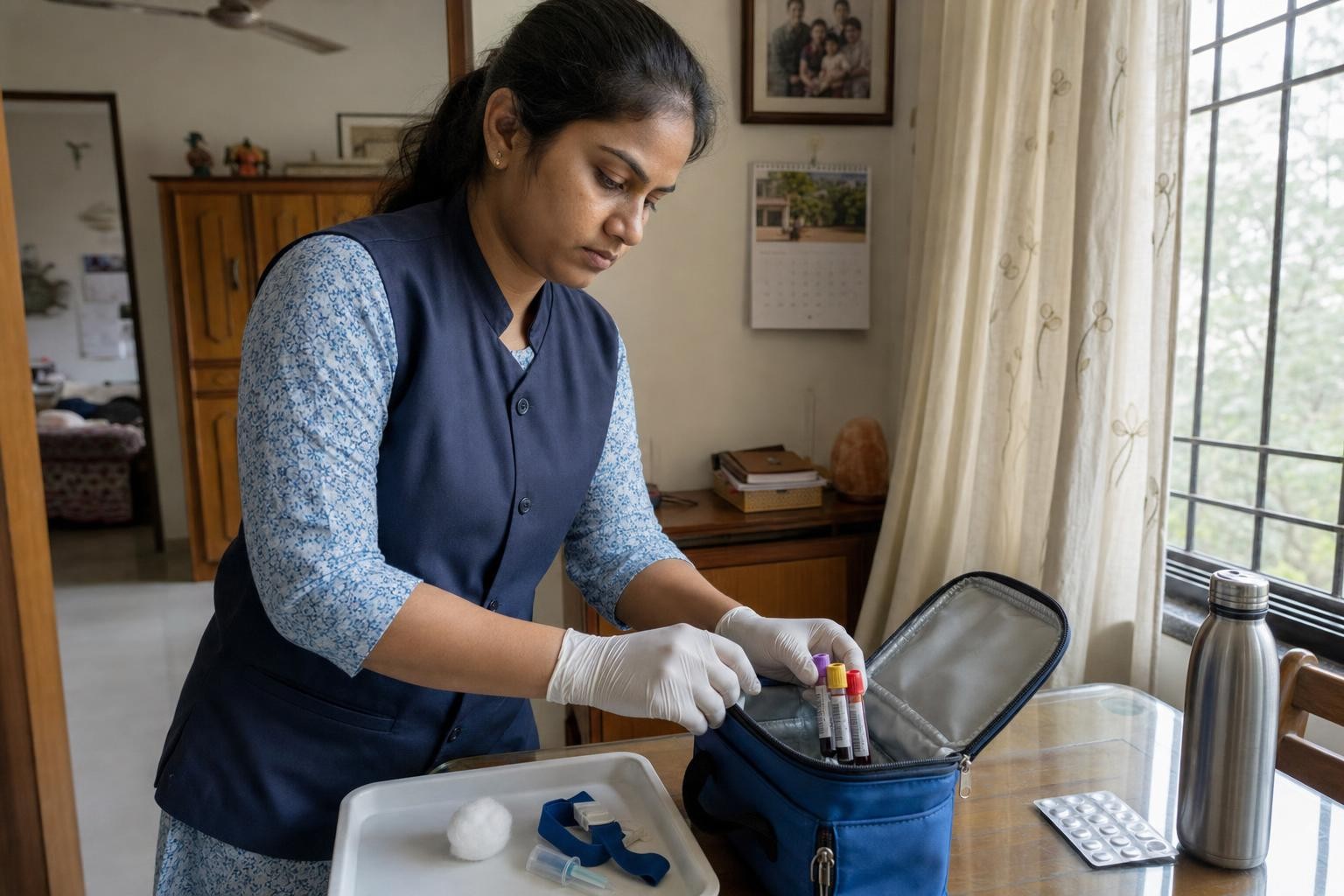
What a family can control is smaller than it sounds. Book the earliest slot you can get, ideally the 6:30 AM window many home services offer for exactly this reason, since fasting samples degrade faster once the day heats up. Keep the appointment. A phlebotomist who has to wait around while someone finishes breakfast is drawing a sample later than planned, in a warmer flat, later in the transport chain.
Reading a report without panicking at a starred value
A report comes back with a column of numbers and a reference range beside each one. Anything outside that range usually gets a star, an arrow, or a different colour, and that single mark is what most people read before reading anything else.
A starred value on its own means the number sits outside a statistical range built from a large healthy population. It does not mean disease. Reference ranges are wide on purpose, and a value just outside one edge is common, especially for things that shift with age, hydration, recent food, or even the time of day the sample was drawn.
Trends matter more than single numbers. A creatinine that has crept up slightly over three reports tells a doctor more than one mildly high reading in isolation. This is the real argument for keeping old reports instead of throwing them out once the next one arrives. A single test is a photograph. A few tests over months are the only way anyone sees movement.
The turnaround itself varies by test. A basic CBC or blood sugar is often back within hours. Hormone panels, cultures, and anything sent to a specialised lab can take a few days. WhatsApp delivery has made this faster, but it hasn't made a thyroid panel process any quicker than the biology allows.
A starred value is a question for your doctor, not an answer by itself.
One number is worth calling about immediately instead of waiting for a scheduled follow-up: anything flagged critical, not simply abnormal. Labs use a separate, narrower threshold for that flag precisely so it stands out from routine out-of-range results. It usually comes with a direct call from the lab, not something sitting quietly in a WhatsApp PDF.
When a report needs more than a home test
A home blood draw is built for routine and scheduled testing: a diabetic's quarterly HbA1c, a thyroid check, a pre-surgery panel, a fasting lipid profile. It is not built for a genuine emergency. Chest pain, breathing difficulty, a fall, or a fever with confusion needs a hospital's full diagnostic reach, not a scheduled sample collection the next morning.
Fever with an unusually low platelet count deserves the same urgency, particularly through Mumbai's monsoon months when dengue circulates widely. If a family is already managing feeds, dressings, or an infusion at home, adding a blood draw to the same visit is often simpler than a separate trip. Anyone tracking a wound for signs of infection with a CRP or white cell count, or running a home IV drip alongside daily monitoring, can usually fold a blood test into the same nurse visit instead of coordinating two separate appointments.
Questions families ask
Can water be had before a fasting blood test?
Yes. Plain water doesn't break a fast and helps the phlebotomist find a vein more easily. Skip anything with sugar, milk, or caffeine until after the draw.
What happens if the patient accidentally ate something small?
Say so before the draw, not after the report looks odd. A small, unplanned bite can shift a fasting sugar or lipid reading enough to matter, and the lab or your doctor may prefer to reschedule than to work from a compromised sample.
How long can a blood sample safely wait before it is processed?
It depends on the test, but most routine samples are stable for a few hours when kept cool. That's the entire reason home collection services use insulated carriers and route the sample to the lab the same morning instead of batching pickups later in the day.
Does a home blood test cost more than a lab visit?
Pricing depends on which tests are booked and varies by lab partner; the current rates are listed on the lab tests page rather than fixed here, since panels and prices change.
Is a report delivered on WhatsApp as reliable as a printed one?
Yes. The digital report comes from the same lab system as a printed copy, just delivered faster. Keep a copy saved for your doctor, since a follow-up appointment often wants to compare it against the last one.
What if a value comes back flagged but the patient feels fine?
Feeling fine doesn't rule out an early or borderline result, and a flagged value that isn't critical usually just needs your doctor's read alongside your history. Don't self-medicate off a report. Call and ask what it means for you specifically.
Healkin facilitates care at home and does not diagnose, prescribe, or change a doctor's treatment plan. A critical lab flag, chest pain, breathing difficulty, or fever with confusion are reasons to seek emergency care rather than wait for a scheduled test.