Home Attendant or Nurse? The Difference That Decides What You Actually Pay
A ward boy, an aaya and a qualified nurse are not the same booking, and mixing them up is how families end up paying for work nobody needed. Here is which tasks legally need a nurse, which an attendant handles, and how to tell the two apart on the phone.
Someone on the family WhatsApp group says book a nurse. Someone else says an attendant will do fine. Your aunt keeps calling it "getting a sister", and now you are on the phone with an agency, being asked to pick a category for a man you have known your whole life. Nobody explained that the words mean different things.
The difference between a home attendant and a nurse is not politeness, and it is not just price. It decides what the person standing in your hallway is actually allowed to do to your relative. Get the tier wrong and you either pay nurse rates for bathing and company, or you have an untrained pair of hands attempting something that needed a needle and a license.
What a home attendant does
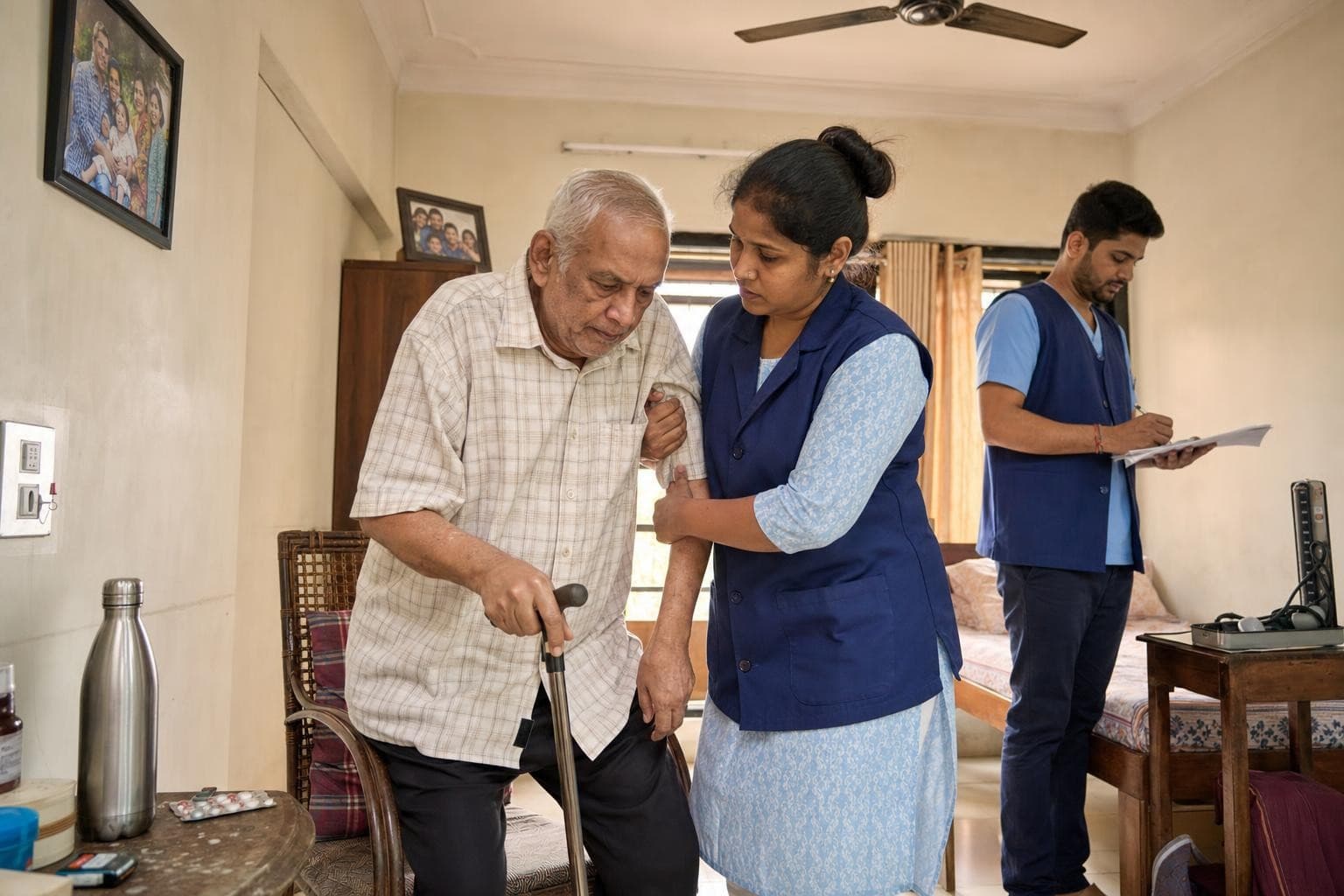
An attendant, sometimes called a ward boy, ward girl, aaya, GDA or nurse attendant, is trained in the physical work of looking after someone who cannot fully look after themselves. Lifting a patient off a bed. Turning them every couple of hours so a pressure sore never gets the chance to start. Bathing, toileting, diaper changes, feeding, and helping someone walk a few steps to the bathroom instead of using a bedpan.
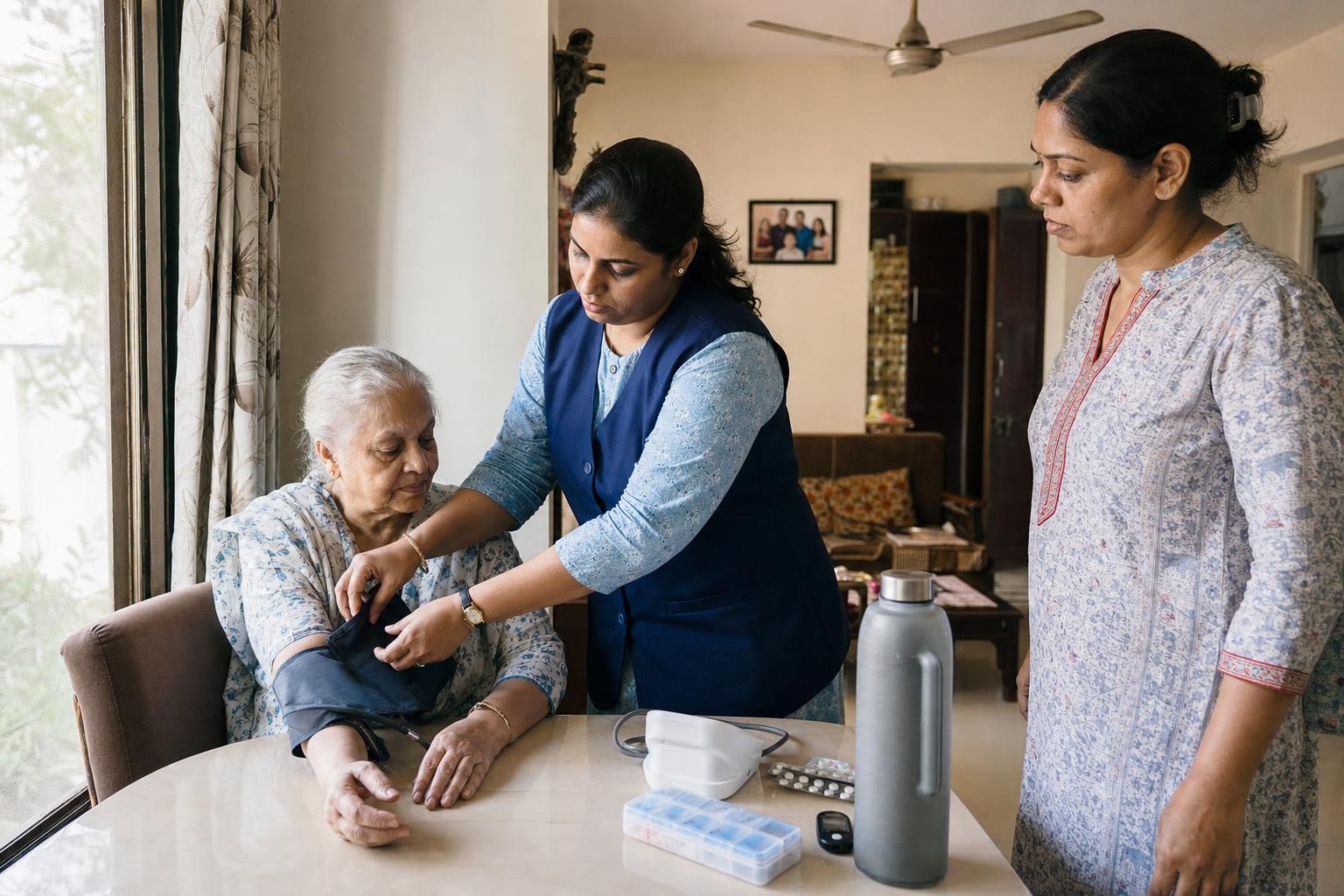
They also watch. A good attendant notes temperature, pulse, blood pressure and oxygen through a shift, reminds someone to take a tablet on time, and sits with a person who would otherwise be alone all day. None of this requires a nursing degree. It requires patience, physical strength, and training in how to move a body without hurting it or yourself.
What an attendant does not do is anything invasive. No injections, no wound dressings, no catheters, no IV lines. Not because the work is beneath them, but because it carries a real risk of infection or injury if it is done without clinical training. The full range of visits this tier covers is priced by the visit or by a 12- or 24-hour shift.
What only a qualified nurse can do
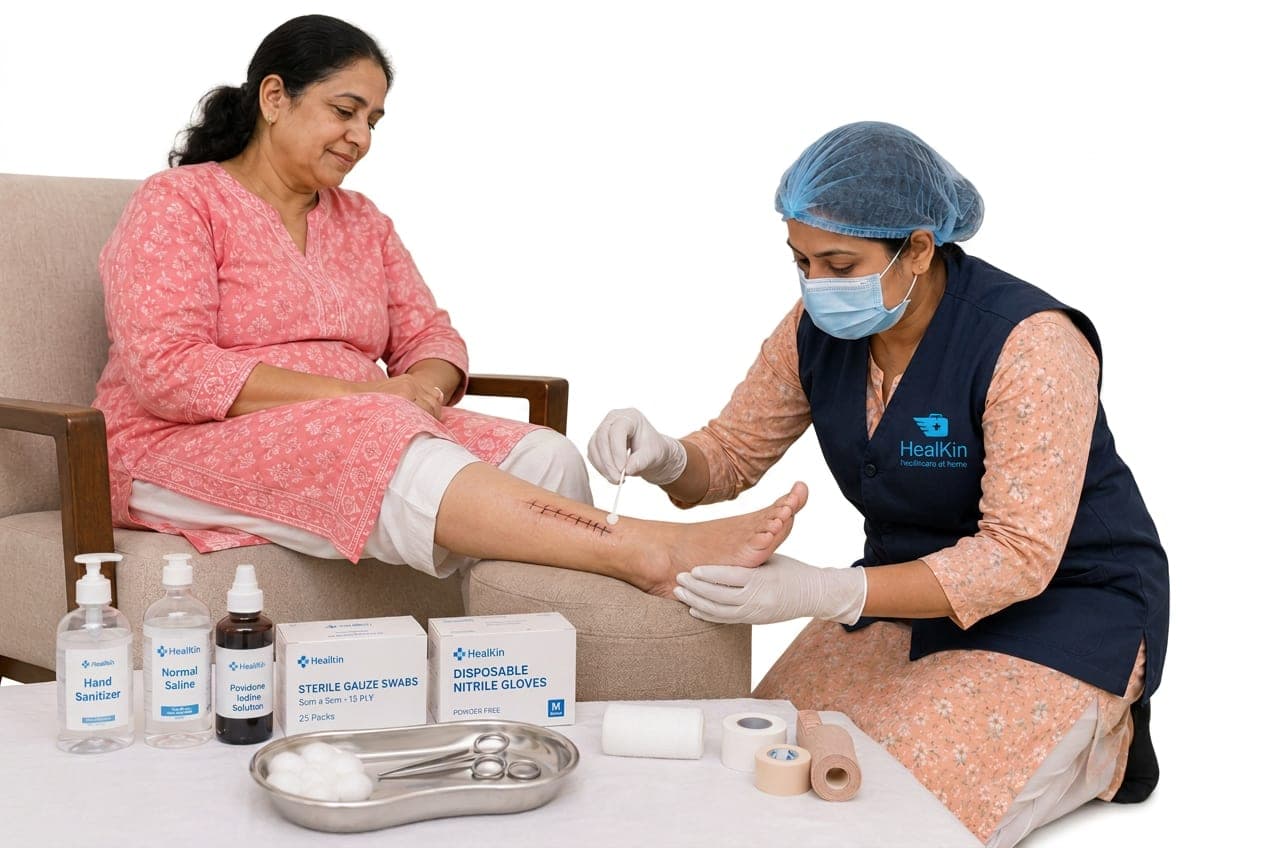
A nurse, the person most Indian families mean by "sister", does everything an attendant does and then the clinical layer on top. Changing a wound dressing. Managing a Ryle's or PEG feeding tube. Inserting, changing or caring for a urinary catheter. Giving a prescribed injection. Running an IV line and watching for a reaction while it drips.
This is trained, licensed work, and it is priced differently for a reason. A nurse is also the person you want watching a patient whose condition is not yet stable, someone a day or two out of surgery, or someone whose vitals still need a trained eye rather than a home reading once a shift.
If the task involves a needle, a wound, or a tube going into the body, it is nurse tier. Everything else is usually attendant.
How families end up paying for the wrong one
Two mistakes happen constantly, and they run in opposite directions. The first is booking a nurse for a patient who mostly needs company, help walking to the bathroom, and someone to sit through the night. That patient does not need clinical skill. They need reliable hands, and a nurse costs more for work an attendant handles just as well.
The second mistake costs more than money. A family books the cheaper attendant tier for a parent who needs a dressing changed daily, or who has a catheter that needs proper hygiene and periodic replacement. An attendant is not trained for that work and should not be asked to attempt it. A wound that gets dressed by someone without the right technique tends to heal slower, not faster, and can become infected in a way that lands the patient back in hospital.
Both mistakes usually trace back to the same thing: booking by job title instead of by task. "Ward boy" and "sister" describe who a family met on a hospital ward, not what their own relative needs at home this week.
How to tell which one you need, on the phone call
Describe the patient's actual day instead of asking for a title. What do they need help getting into and out of, bed, chair, bathroom? Do they eat normally or need a feeding tube? Is there a wound, a catheter, or a prescription that involves an injection? Are their vitals steady, or has a doctor asked for them to be watched closely?
A booking call that starts with these questions, not with "male or female, attendant or nurse", tends to land on the right tier the first time. If the answer changes mid-week, because a wound develops or a fever spikes, the tier should change too. It is not a fixed label for the whole recovery.
Most bedbound elderly patients, once past the acute stage of an illness, settle into the attendant tier for daily living and bring in a nurse only for the specific clinical piece, a dressing change twice a week, say, while the attendant handles everything else. That combination is usually the cheapest way to cover a full day properly, instead of paying nurse rates around the clock for work that does not need it.
When both are in the house at once
It is common, not unusual, for an attendant to be present through the day and a nurse to visit for the clinical task alone. The attendant handles the turning routine that prevents a bedsore from starting in the first place, the feeding, the company. The nurse arrives for the dressing, the catheter check, or the kind of tube and hygiene routine a urinary catheter needs day to day, then leaves once that task is done.
This is not double-booking. It is matching each hour of the day to the person actually trained for it, instead of asking one person to do both jobs badly or paying for one person to do one job all day.
Questions families ask
Is a ward boy legally allowed to give an injection if a family asks?
No. Giving an injection is nurse-tier clinical work regardless of how comfortable a family feels asking. A trained attendant should decline, and a responsible agency will not send one for that task in the first place.
Can an attendant change a simple dressing if the family is shown how?
A family member can be shown some very basic dressing changes for a minor, healed area. Anything post-surgical, deep, or still healing is better left to a nurse, since technique affects how well and how fast a wound closes.
Do we need a nurse for the whole day, or just for the clinical part?
Usually just the clinical part. A nurse can visit once or twice a day for a dressing, a catheter check, or an injection, while an attendant covers the rest of the day. That combination costs less than a nurse on a full shift.
What if we booked an attendant and it turns out a nurse is needed?
Say so as soon as you notice. Most agencies, including ours, will upgrade the visit rather than leave an attendant attempting clinical work they are not trained for. Waiting out the shift is not worth the risk to the patient.
Does "GDA" mean something different from "attendant"?
No. General Duty Assistant is the formal name for the same tier as ward boy, aaya or nurse attendant. It is the training certificate behind the job title families use at home.
How do we know which tier Healkin will actually send?
Describe the patient's day on the booking call, what they need help moving into and out of, whether there is a wound, tube or prescription involved, and you will be told plainly which tier fits, including if you have asked for the more expensive one than you need.
Healkin facilitates care at home and does not diagnose, prescribe, or change a doctor's treatment plan. A wound that looks infected, a fever in a patient with a catheter or feeding tube, or any clinical task you are unsure an attendant should be doing are reasons to call your doctor or book a nurse visit rather than waiting.