
Doctor Visit at Home in Mumbai: What It Settles, and What It Doesn't
A doctor visit at home in Mumbai settles most fevers, coughs and BP reviews properly. Here is what it can treat, what still needs a clinic's equipment, and how to prepare so the visit isn't wasted.
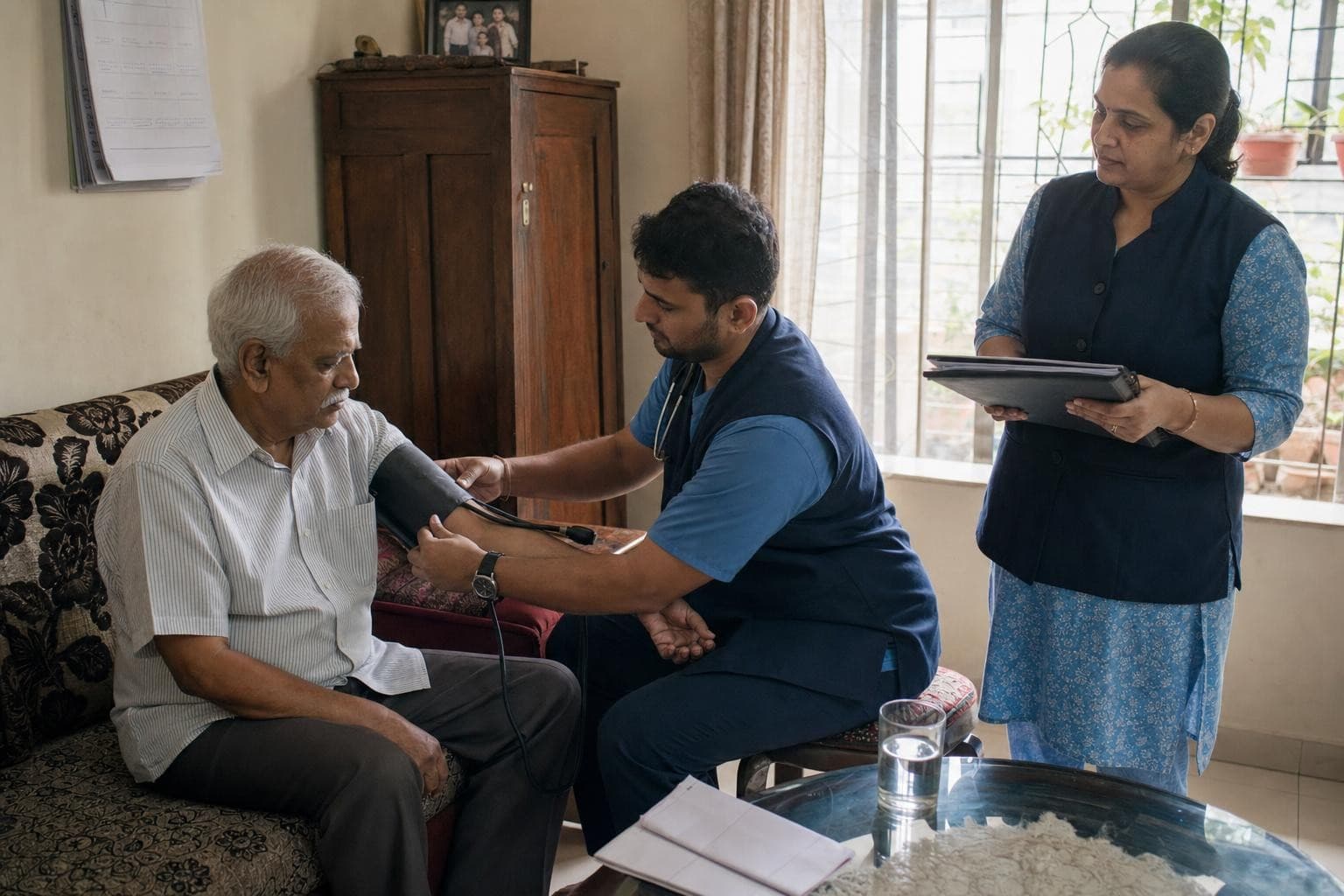
Your father has had a low fever for two days, the kind that comes with body ache but no cough. He doesn't want to sit in a clinic waiting room. You're not sure it's serious enough for one anyway. This is exactly the situation a doctor visit at home in Mumbai is built for, and knowing what it can and can't do before you call saves you a wasted trip and a second wait.
A home consultation is not a smaller version of a clinic visit. It's a different tool, suited to a specific list of complaints. Used well, it beats the clinic: the doctor sees the room the patient actually lives in, isn't rushed by a queue outside, and can examine someone who genuinely shouldn't be moved. Used for the wrong complaint, it just delays whatever the patient actually needed.
What settles properly at home
Most of what sends a Mumbai household looking for a doctor falls into a handful of clusters, and a home visit handles all of them well. Fever is the biggest one: viral fevers, flu, and the dengue or malaria spikes that follow every monsoon, where daily monitoring at home is often exactly what's prescribed anyway. Cough and breathing complaints are close behind, cold, bronchitis, an asthma or COPD flare that just needs a nebuliser, not a hospital bed.
Stomach trouble is a third cluster: loose motions, vomiting, the dehydration that follows a bout of food poisoning. Sometimes an IV drip gets arranged in the same visit. Blood pressure and diabetes reviews round out the list, along with rashes, minor skin infections, and the back or joint pain people put off treating because getting to a clinic is the part that hurts. A doctor examining any of these at home checks temperature, blood pressure, oxygen and pulse in front of you, writes a proper prescription, and orders whatever comes next: bloods, an ECG, a drip. You don't start over somewhere else.
What still needs a clinic or a hospital
A home visit has real limits. A good service tells you about them instead of stretching to cover everything. Anything needing imaging beyond a portable X-ray, an MRI, a CT scan, an ultrasound read by a radiologist on the spot, has to happen where that machine lives. So does an endoscopy, a cardiac stress test, a fracture that needs plastering, or a wound too deep for anything but a proper theatre.
Dialysis, chemotherapy infusions and anything needing continuous monitoring over days belong to a hospital too. A doctor who examines a patient at home and suspects one of these says so plainly, and helps arrange the next step rather than managing it from a dining table. That's the difference between a service that's honest about its edges and one that just wants the booking.
Then there's the list that isn't a judgment call at all. Chest pain, breathlessness while sitting still, weakness down one side of the body, a drooping face or slurred speech, fainting, fits, confusion, heavy bleeding, severe stomach pain. None of that is a home-visit situation. It's an ambulance and an emergency room, tonight, not a callback in the morning.
A home visit is for a condition you want examined. An ambulance is for one that's already in trouble.
Getting ready so the visit isn't wasted
A little preparation turns a home consultation into something closer to a full clinic appointment. Keep any existing prescriptions, discharge summaries or old reports where the doctor can see them, since a fresh complaint rarely arrives without history attached. If the family already tracks blood pressure or sugar at home, have the last few readings written down. Don't rely on memory for those.
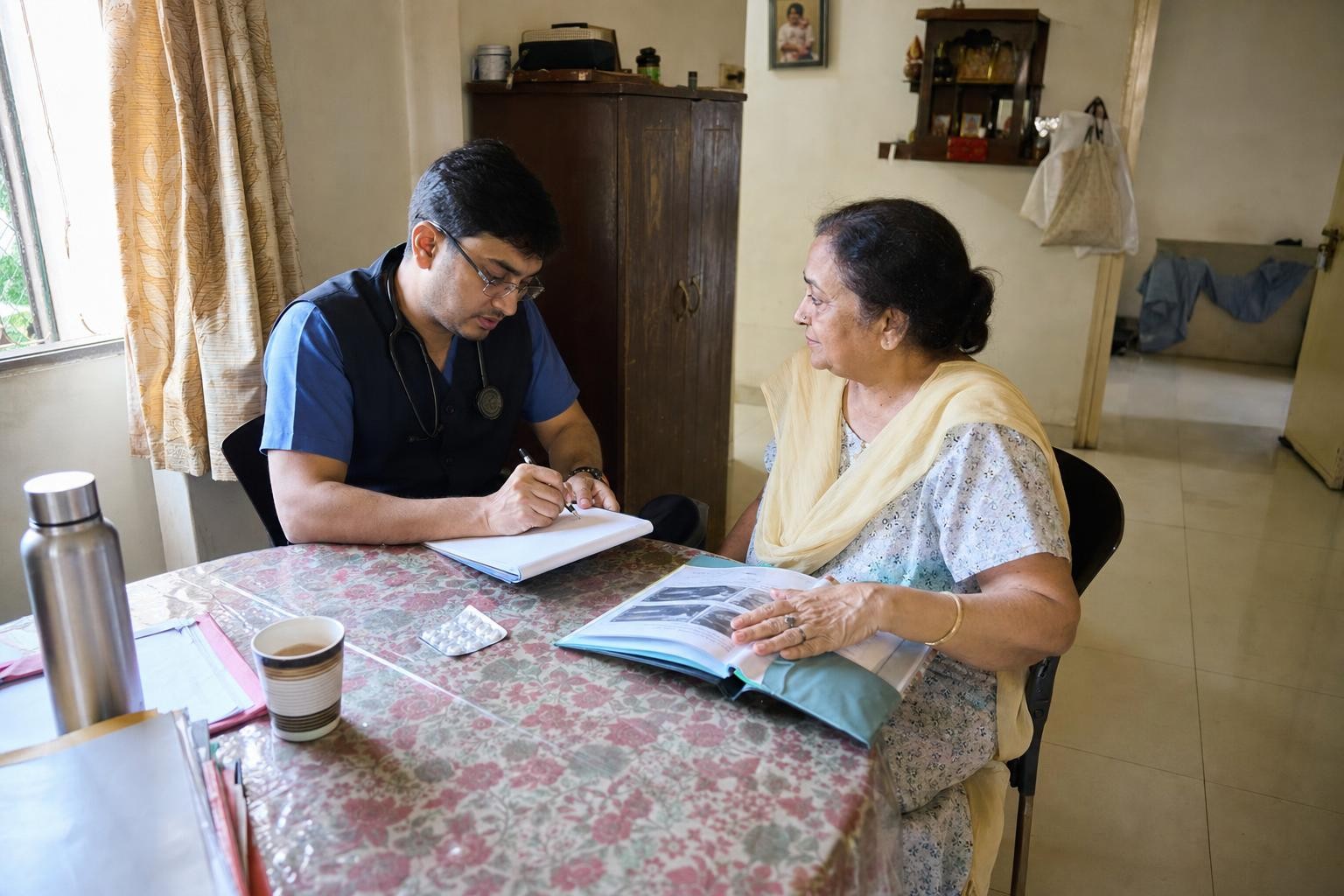
Write down when the symptom started and how it's changed. "Since Tuesday, worse in the evenings" tells a doctor far more than "a few days now." Have the current medicines out too, boxes and all, not just the names you remember. And if the patient can't easily describe their own history, a child, someone confused, an elderly parent who's hard of hearing, make sure somebody who knows it is in the room. Not in another city on the phone.
Video first, or straight to your door
Not every complaint needs someone standing in your living room. Fever, cough, loose motions, a rash, a routine BP or sugar review, most of these settle fine over video, and it's usually the faster option. What needs an actual doctor at home is anything that has to be examined by hand: stomach pain, breathlessness, chest or lung complaints, back pain with weakness or numbness, and anyone elderly, bed-bound or freshly discharged who genuinely can't be assessed through a screen.
Starting on video isn't a loss if it turns out you needed the visit anyway. A doctor who can't settle something on camera says so, and arranges the in-person exam for the same day. You don't get sent off to re-book somewhere else.
Families managing a longer list after a diagnosis sometimes need more than one visit's worth of care arranged at once. The fuller picture of what home healthcare in Mumbai covers is worth reading if a doctor visit is just the first piece. And if the consultation ends with a blood test ordered, what actually makes a fasting blood test at home go smoothly saves a second, avoidable trip for a redraw.
Questions families ask
Can a doctor really examine someone properly outside a clinic?
Yes, for most complaints. A doctor carries a stethoscope, a BP cuff, a thermometer and a pulse oximeter to every visit, which covers the physical examination for fever, chest infections, stomach complaints and BP or sugar reviews. What they can't bring is a lab, an X-ray suite or an operating theatre. Anything needing those gets referred, not attempted at home.
Is a home doctor visit only for emergencies?
No, and it shouldn't be used for one. Most home visits are routine: a fever that's dragging on, a BP review, a follow-up after discharge. A true emergency, chest pain, severe breathlessness, fainting, needs an ambulance and a hospital, not a scheduled home visit.
Do I need to already have a diagnosis before booking?
No. Most people call precisely because they don't know what's wrong yet. The doctor examines the patient, asks about the history, and either treats it on the spot or tells you what test or specialist comes next.
What happens if the doctor decides I need a hospital after all?
They tell you plainly, and help you decide where to go. Nobody who needs equipment a home visit doesn't carry gets talked into staying home for it.
Can the same doctor see an elderly parent who can't travel at all?
Yes, this is one of the more common reasons families call for a home visit in the first place. A bedbound or unsteady patient is examined exactly where they are, with nobody moved who shouldn't be.
How is a home consultation different from a video call with any app?
The difference is what happens next. A generic video consultation ends with a prescription and nothing else. A Healkin doctor who orders bloods, an ECG, an X-ray or a nurse for an injection has all of that arranged at home on the same call, rather than sending you to find a separate provider for each one.
Healkin facilitates care at home and does not diagnose, prescribe, or change a doctor's treatment plan on its own. Chest pain, breathlessness at rest, fainting, weakness down one side, or confusion are reasons to call an ambulance immediately, not to book a home visit.