
Booking a nurse at home in Andheri: how the east-west split shapes your visit
Andheri West and Andheri East are one name and two very different trips. Here is how a home nursing visit is planned around the railway line and the traffic, what to have ready, and what the first visit covers.
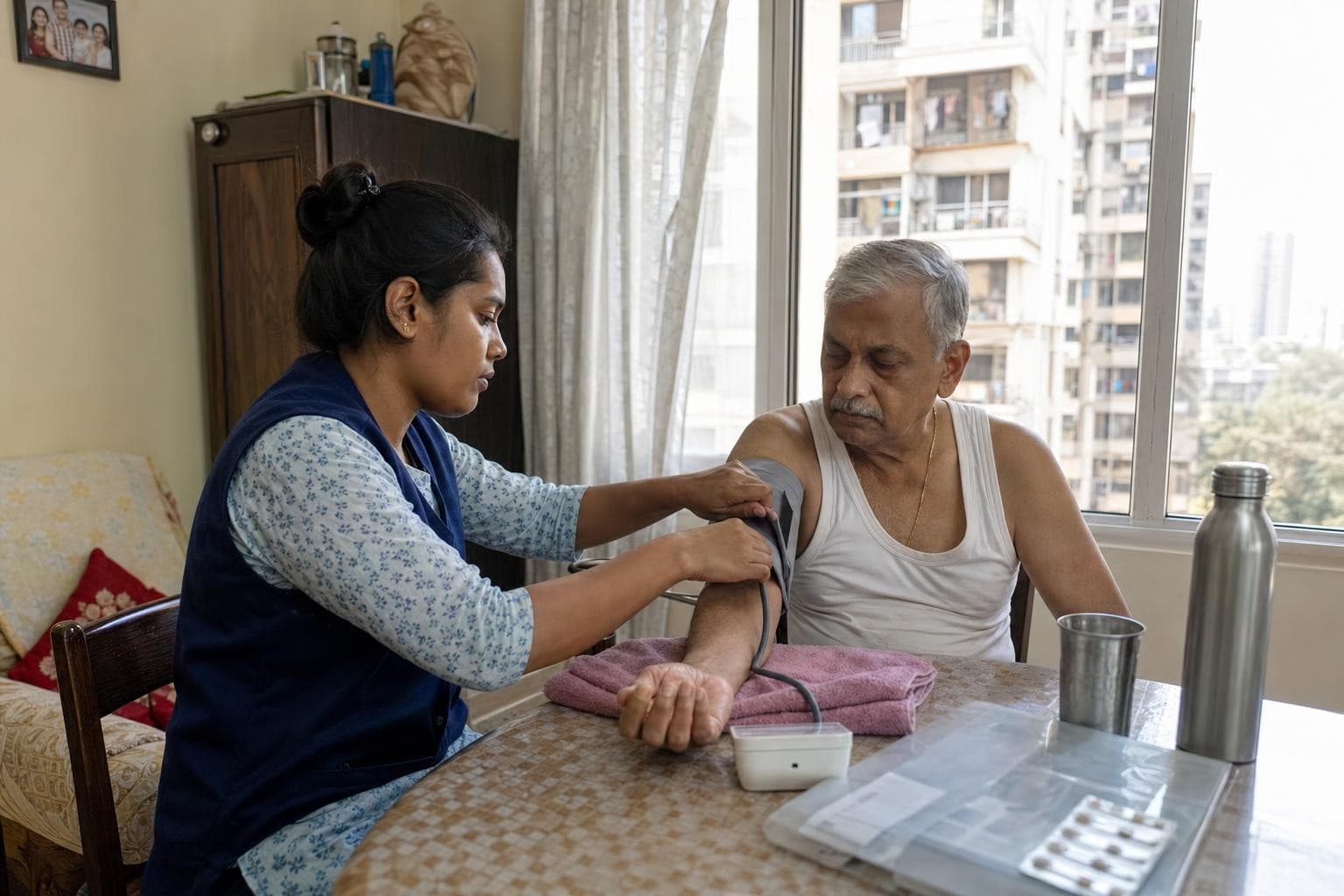
Ask anyone who lives there and they'll tell you: Andheri isn't one place. West is Lokhandwala towers, Versova lanes and Four Bungalows. East is Marol, Chakala, MIDC and the office blocks around SEEPZ. The railway line and the highway run between them. If you're looking for a nurse at home in Andheri, that split decides more about your visit than the distance on a map does.
This post is about the practical side. How a visit gets timed, what to have on the table when the nurse walks in, and what a first visit covers. It also covers the one situation where you shouldn't be booking a visit at all.
Two suburbs sharing a name
A flat in Versova and an office-colony flat near Marol can sit a few kilometres apart. On a weekday evening that can be the longest few kilometres in the western suburbs.
Crossing from West to East means the subway, a bridge or the highway. Each one jams at its own hours. The subway floods in a heavy monsoon spell, and when it does, everyone who'd have used it lands on the same two or three crossings at once. School pickup around Lokhandwala, the office rush out of MIDC and Chakala, a match day, a festival procession: each of these can add half an hour to a trip that took ten minutes at noon.
So when a visit in Andheri is scheduled, the question isn't really "how far". It's "which side, and at what time".
That's why slots here are set against the traffic. A nurse already on your side of the line is worth more than one who is closer as the crow flies but on the wrong side of it at six in the evening.
How the timing works
Visits run from 8am to 9pm, seven days a week. When you request one, the slot is confirmed within the hour, and you get the nurse's name and number before they set out. That number matters. If the building gate needs a name at security, or the lift is under maintenance and there's a service lift round the back, you can tell them directly.
A few things make the window tighter and more reliable:
Say which side you're on when you call. "Andheri" alone isn't enough. West or East, the building name, and the nearest landmark a rickshaw driver would know.
Give the pincode. Healkin covers 400053, 400058, 400059, 400069 and 400093. If your building sits just outside that list, the Care Team will tell you before you book, not after.
Mention anything fixed. A dressing that must be changed before the patient's lunch. An injection timed around a meal. A family member who can only be home until 11. These are easier to plan for up front than to squeeze in later.
Book repeats as a schedule. A daily dressing or a course of injections is set once and kept. Nobody should be re-booking the same visit every morning.
Late mornings and early afternoons are usually the calmest hours to cross the line. Evenings are the hardest. If the care can wait until after the rush, say so. If it can't, say that too, and the slot will be planned around it.
Coming home from Kokilaben, Seven Hills or Holy Spirit
A good share of visits in Andheri follow a discharge. The big hospitals are right there: Kokilaben Dhirubhai Ambani, Seven Hills, Holy Spirit, SRV. The patient comes home with a file, a bag of medicines and a list of instructions that seemed clear at the nurses' station and much less clear at the dining table.
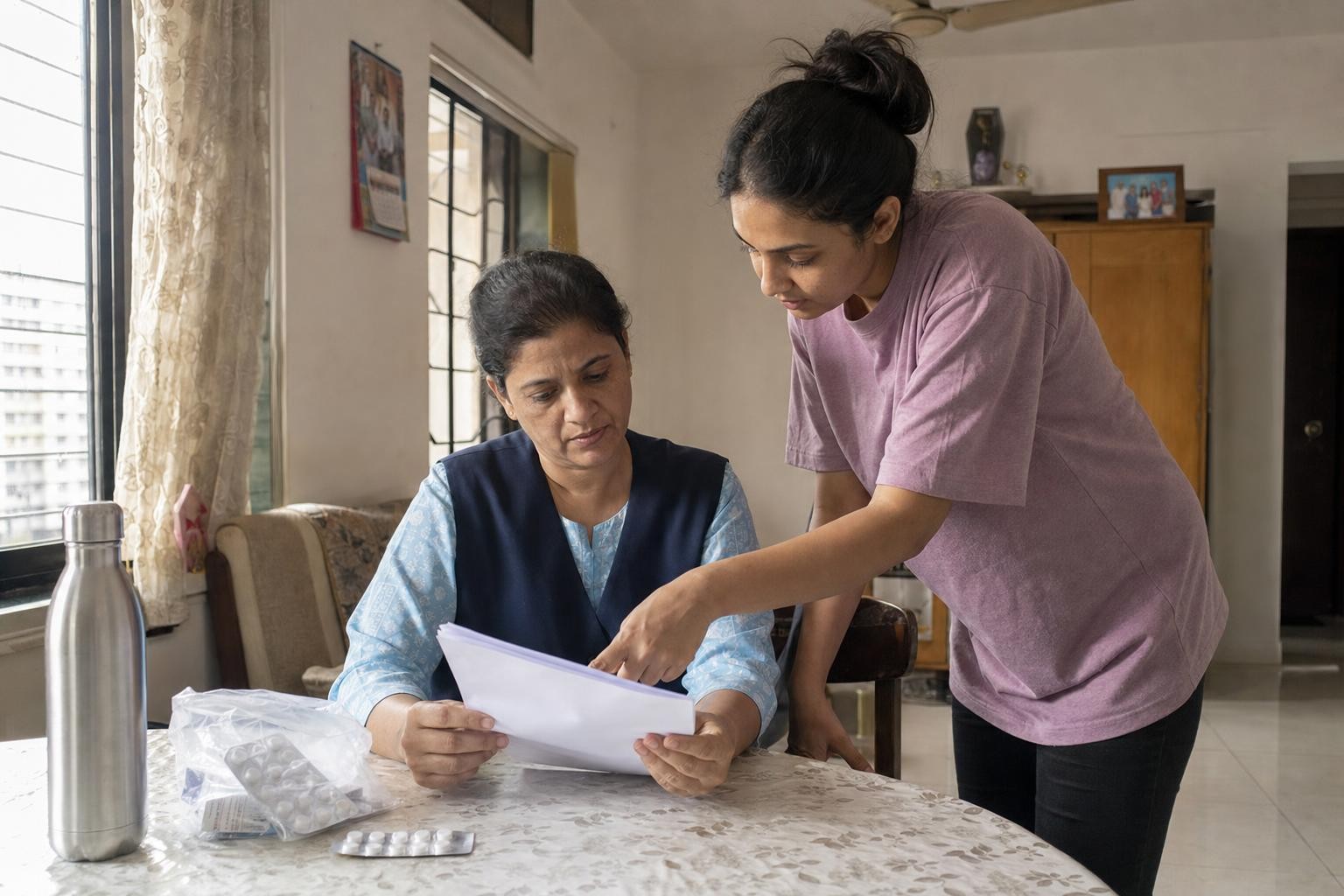
Keep that file together. The discharge summary is what the home nurse works to. It says what the wound needs, which drips or injections continue, and when the review is due. The nurse follows that plan. They don't rewrite it.
If you're still in the days before the ambulance leaves the hospital, there's a fuller list of what to arrange in home care after hospital discharge in Mumbai. It's worth reading before the discharge, not after.
What a first visit covers
People expect the first visit to be the procedure and nothing else. It's usually a bit more than that, and it goes better if you know what's coming.
The nurse will want to see the paperwork first. For an injection or an IV drip that means the prescription, and nothing gets given without one. For a wound, it's the discharge summary or the surgeon's note on how often the dressing changes. For a catheter or a feeding tube, it's whatever the hospital sent home about size and last change date.
Then comes a short look at the patient and the room. Where they sleep. Whether the bed can be reached from both sides. Where the light is good enough to see a wound. Whether there's a clean surface to lay out supplies. In a compact Andheri flat, this sometimes means moving a side table or clearing the dining table for ten minutes. Nothing more elaborate than that.
The care itself follows. A dressing, a drip, an injection, a catheter check, a sample for the lab.
Last, the part families tend to rush: the handover. You get a written note of what was done. You get told what to watch for until the next visit. If the course repeats, the next slot is fixed before the nurse leaves. Stay in the room for this bit. Take a photo of the note if it helps.
The visit isn't finished until someone in the family knows what to watch for tonight.
What to have ready
A short list, because most of it you'll already have:
The prescription or discharge summary, and any older reports that go with it.
The medicines and supplies the hospital or chemist gave you, still in their packaging, so the nurse can check names and expiry dates.
A clean towel, a bin bag, and a bit of cleared space near the patient.
Someone at home who'll be there on the days between visits. That person is who the nurse talks to.
If the visit is for a wound, the post on wound dressing at home after surgery explains what a healing wound should look like across the first fortnight. It's a useful read before the first dressing change, so you know what you're looking at.
When the answer isn't a home visit
A home nurse is for planned care. Some situations aren't that, and no amount of fast booking changes it.
Call an ambulance or go straight to the nearest emergency department if someone has chest pain, sudden breathlessness, a fall with a head injury, confusion that came on quickly, one side of the face or body going weak, or bleeding that won't stop. Don't wait for a slot. Don't wait for a callback. In Andheri, with three or four large hospitals close by, the emergency room is usually the quicker answer anyway.
The same goes for a wound that suddenly smells, turns hot and red, or starts leaking pus, or for a fever after surgery. The nurse can spot those and will tell you. But the call that matters that day is to the surgeon or your own doctor.
How to book
The nurse at home in Andheri page lists what's available on both sides of the line, the pincodes covered, and what each service needs before a visit. Pricing is shown before you book. It depends on the service, whether it's a single visit or a course, and whether the care needs a nurse or an attendant.
Call with the side, the pincode and the paperwork in hand. The rest is scheduling.
Questions families ask
Do you cover both Andheri West and Andheri East?
Yes. Visits run across Lokhandwala, Versova, Four Bungalows and JB Nagar on the West, and Marol, MIDC, Chakala and SEEPZ on the East. The pincodes covered are 400053, 400058, 400059, 400069 and 400093.
How soon can a nurse come?
Your slot is confirmed within an hour of the request, and same-day visits are the norm between 8am and 9pm. The exact time depends on which side of Andheri you're on and the traffic at that hour. If the timing is fixed, say so when you call.
Can the nurse continue the care the hospital started?
Yes. Share the discharge summary and the nurse works to it: the same dressing schedule, the same injections, the same review dates. The nurse doesn't change a doctor's plan. If something in it looks unclear, they'll tell you to check with the doctor who wrote it.
Do I need a prescription for every visit?
For injections, IV drips and prescribed medicines, yes. The nurse checks it before anything is given. Sample collection, attendant visits and monitoring don't need one.
What happens during the monsoon if the roads flood?
Visits go ahead, but timing can shift when the subway or low-lying roads close. You have the nurse's number, so a delay isn't a mystery. For care that can't slip, like a timed injection, tell the Care Team so it's planned with a margin.
Can I book an attendant instead of a nurse?
Yes, for help with bathing, feeding, turning and getting to the bathroom. A dressing, an injection or a drip needs a qualified nurse. If you're unsure which one you need, describe the day's care when you call and the Care Team will say.
Healkin facilitates care at home and does not diagnose, prescribe, or change a doctor's treatment plan. Chest pain, sudden breathlessness, confusion, a fall with a head injury or weakness on one side are reasons to call an ambulance immediately. Any new or worsening symptom is a reason to call your own doctor.