
Ryle's Tube Feeding at Home: What a Family Is Taught Before the Nurse Leaves
A Ryle's tube feed has a position, a pace and a flush that matter more than the feed itself. Here is what a nurse teaches a family before handing the routine over, and what a cough during a feed actually means.
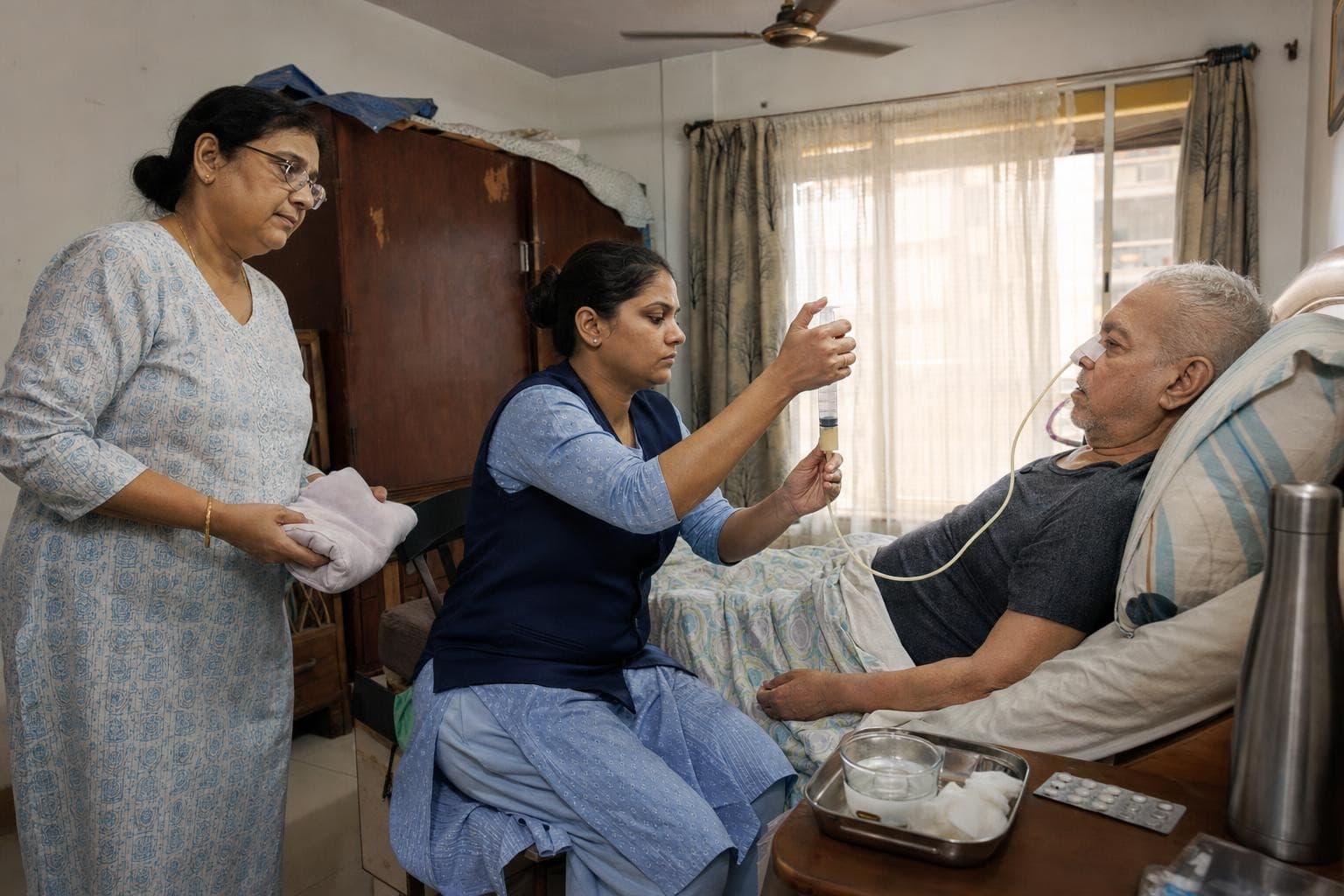
The first Ryle's tube feed after a discharge is rarely the hard part. A nurse comes, sets it up, and it goes fine.
It's the fortieth feed that worries people. Tuesday afternoon, nobody trained in the room, and the patient starts coughing halfway through. Ryle's tube feeding at home in Mumbai is less about equipment than about three habits a nurse hands over before she leaves: the position the patient sits in, the pace the feed goes at, and what a flush is for. Get those three right and most of what families fear never happens.
The position that matters more than the feed
Propped up, thirty to forty-five degrees. Never flat.
That isn't about comfort. It's the one change that does the most to keep feed moving down into the stomach instead of sitting in the oesophagus or working its way toward the airway. Pillows behind the back and shoulders hold the angle. Check it again halfway through, because bedbound patients slide down without noticing.
The angle doesn't end when the syringe is empty. Keep the patient upright, or as close to it as their condition allows, for at least thirty minutes after the feed finishes. Lying someone flat straight after a feed is the mistake families make most once the nurse is no longer standing there. Usually it's because the patient is tired and asking to lie back. Be firm about the wait anyway.
Feed rate: why slow is the whole point
A feed isn't poured in. It goes in gradually, at the pace the doctor or nurse set for that patient's tube size, feed type and stomach tolerance.
Rushing it is what brings on vomiting, cramping, or feed backing up the tube instead of going down. None of that is worth the four minutes you saved. A nurse teaching the routine will usually have the family watch the plunger or the drip rate over a few feeds before handing over, timed against a clock instead of judged by eye. A pace that feels painfully slow on the first feed feels normal by the fifth.
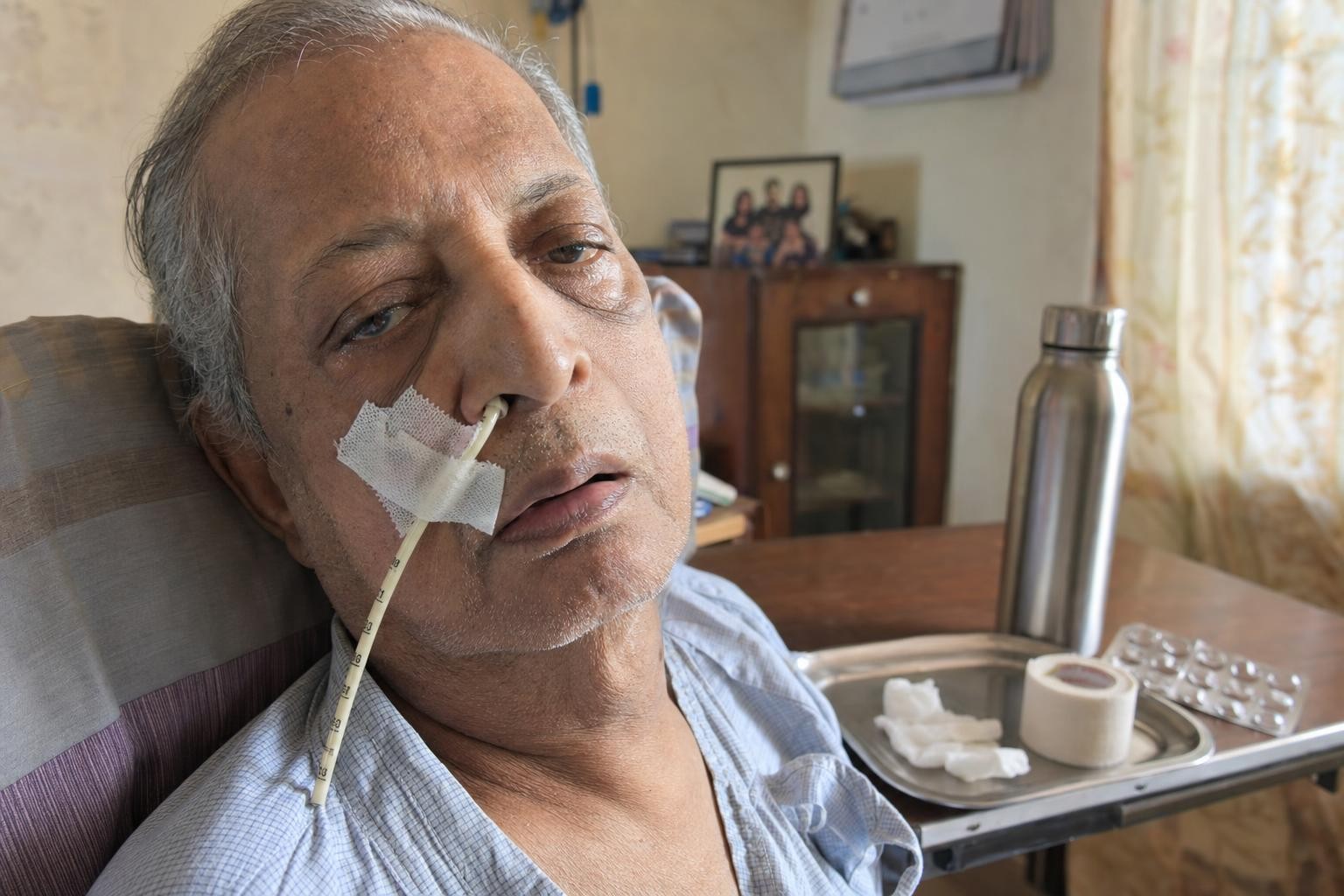
Before anything goes in, check that the tube is still in the stomach. Use the method the nurse demonstrated: drawing back a small amount of stomach contents, or checking the external marking on the tube against where it sat at the last confirmed check. A tube can shift a few centimetres and end up somewhere it shouldn't be. The check takes under a minute.
Flushing the tube, before and after
Water goes through the tube before the feed starts, and again after it ends. How much and how often is in the doctor's feeding plan, not in household habit.
The flush before clears whatever is sitting in the line from the last feed or the last medicine. The flush after clears the feed out so it doesn't curdle in there and block the tube before the next round. Skip the after-flush and you get a tube that fed smoothly yesterday and fights the plunger today.
A tube that suddenly resists the plunger is not a tube to push harder on. It is a tube to stop and call about.
Medicines the doctor has prescribed through the tube go in separately from the feed, each one followed by a small water flush before the next. Feed and crushed medicine mixed in the same line is a reliable way to block a tube.
What to do when the patient coughs during a feed
This is the moment families remember most vividly from their training, and for good reason. Coughing means stop. Not slow down, not wait and see.
Pause the feed, disconnect the syringe or feeding set, keep the patient upright, and watch. A single cough that settles, with normal breathing afterwards, is usually nothing worse than the tube shifting slightly or a swallow reflex firing on its own.
Coughing that keeps going is different. So are choking sounds, a change in breathing, or a blue or grey tinge around the lips. That combination can mean feed has reached the airway, and it needs an emergency response, not a wait.
Here is where a Healkin visit is deliberately bounded. A nurse teaches the family this response and handles the routine feed. Managing an actual choking or breathing emergency mid-feed is not what a scheduled home visit is built for, and it needs emergency services. If you're not confident you could tell the two apart, ask the nurse to run through it again at the next visit. That's a better use of five minutes than guessing under pressure later.
Signs the tube itself needs a nurse to look
Some things mean the tube needs a professional, not another attempt at home.
A tube that has visibly moved outward, where the external marking no longer sits where it did, should never be pushed back in by a family member. A tube reinserted at the wrong depth can go into the airway instead of the stomach. Repeated vomiting after feeds is another. So is a tube that won't flush even with gentle pressure, or an insertion site at the nose that looks red, sore or crusted. All of those are a phone call.
A patient on a Ryle's tube is often bedbound for the same reasons that put them at risk of pressure sores, and the two-hourly turning routine that prevents one usually has to run alongside the feeding schedule. Families managing a tube feed and a urinary catheter together aren't really running two routines. It's one set of care, and a home nurse's visit is built to check it together.
Questions families ask
Can a family member give the feed once the nurse has shown them how?
Yes. Once a nurse has demonstrated the position, the rate, the position check and the flush a few times over, most families handle routine feeds confidently between visits. Tube insertion, replacement, and any feed that goes wrong are nurse work.
How long should a single feed take?
That depends on the volume and on the plan set for that patient. What's worth knowing is which mistake is more common, and it's the feed given too fast, not too slow. If you're unsure of the pace, confirm it at the next visit instead of guessing.
Is it normal for a little feed to leak around the tube at the nose?
A small amount of moisture is common and usually just needs a gentle wipe with a damp cloth. Leaking that keeps happening is worth mentioning to the nurse. So is skin around the nose that looks sore or broken down. Neither is solved by cleaning it more often.
What if the tube blocks and will not flush?
Don't force the plunger. Try a gentle warm-water flush first, and if it still won't clear, book a nurse visit. Forcing a blocked tube can damage it or displace it, which turns a small problem into a bigger one.
Does Healkin's visit include inserting the tube as well as feeding?
Yes. A home visit can cover Ryle's NG tube insertion, feeding, or removal, each booked separately depending on what's needed. Insertion needs a prescription. Feeding-only visits are common for families managing a tube that's already in place.
Healkin facilitates care at home and does not diagnose, prescribe, or change a doctor's treatment plan. Persistent coughing, choking, breathing changes during a feed, or a tube that has shifted or will not flush are reasons to stop the feed and call your doctor immediately rather than waiting for a scheduled visit.