Dengue Care at Home During Monsoon: The Platelet Count Anxiety, and the Signs That Mean Hospital Tonight
A dropping platelet count is the number every dengue household in Mumbai watches, but it isn't the only one that matters. Here is what daily monitoring at home actually involves, and the warning signs that mean the hospital, not another home test.

Mumbai's monsoon brings the same phone call every year. A fever that won't break, a doctor's note that says "rule out dengue," and a family suddenly checking a platelet count like it's a stock ticker. Most dengue in adults gets managed at home, with rest, fluids and watching. But watching well is the whole job, and it means knowing which numbers matter and which symptoms don't wait for a follow-up appointment.
What the first days actually look like
Dengue usually starts like a bad flu: a sudden high fever, a headache behind the eyes, joint and muscle pain severe enough that older guides still call it "breakbone fever." A rash can show up a few days in, or not at all. None of this tells a family anything a blood test can't say faster and more precisely, which is why most doctors ask for a CBC within the first day or two of fever rather than diagnosing off symptoms alone.
In Mumbai, this pattern repeats every year from June through October, when the standing water left behind by the rains gives the Aedes mosquito exactly what it needs to breed, sometimes in nothing bigger than a building's tank room or a stagnant terrace planter. A fever that lasts more than two days during these months is reason enough to get tested, even before other symptoms show up.
A positive dengue NS1 or antibody test confirms the infection. It doesn't predict how the next week will go. That gets decided day by day, mostly by two things: how much fluid the patient is taking in, and what the platelet count is doing.
The platelet-count anxiety
Platelets fall in almost every dengue case, and they're expected to. The count typically drops through the fever phase, hits its lowest point a day or two after the fever breaks, then climbs back on its own over the following week. A number in the tens of thousands looks alarming on a phone screen. On its own, it usually isn't.
What matters more is the trend, and how the patient actually looks. A falling count with a patient who's eating, alert and passing urine normally is being watched, not treated. A falling count paired with bleeding gums, unusual bruising, or a patient who suddenly seems drowsy is a different conversation, and that one needs a doctor now, not tomorrow's blood draw.
Reading a lab report without panicking at every starred value is a skill in itself, and it matters more here than almost anywhere else. Daily numbers move. A single day's dip rarely changes the plan. A doctor is reading the trend line, not one result in isolation.
What daily monitoring at home really involves
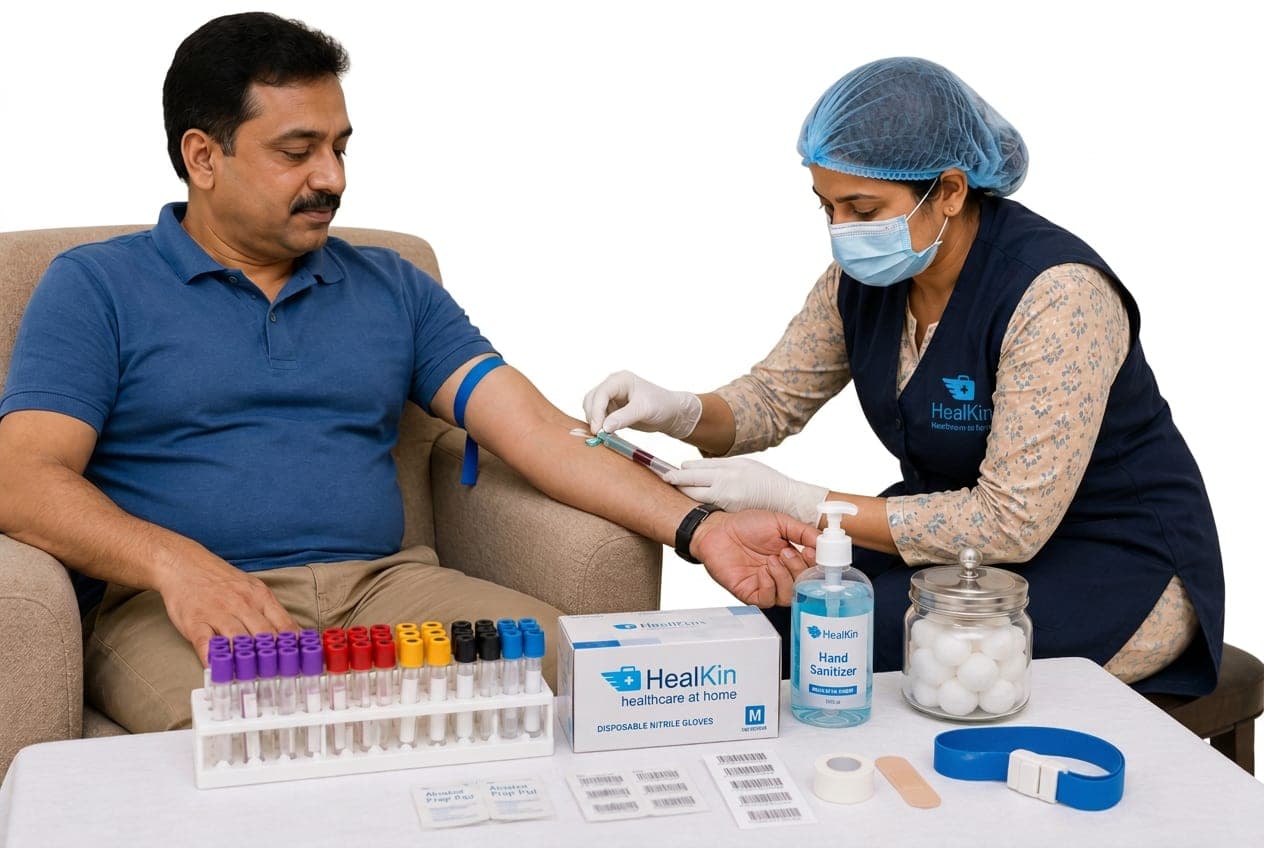
Most uncomplicated dengue is managed with rest, fluids and watching, not a hospital bed. A daily or alternate-day blood test at home tracks the platelet count and haematocrit without a fresh trip to a lab every morning of a fever week. Pair that with a fixed routine, and the week gets a lot less frightening.
Fluids matter more than almost anything else in this illness. Water, ORS, coconut water, thin soup, whatever goes down easily and often. Urine output is a rough but useful proxy for hydration. It should stay roughly normal, not drop to almost nothing over a day.
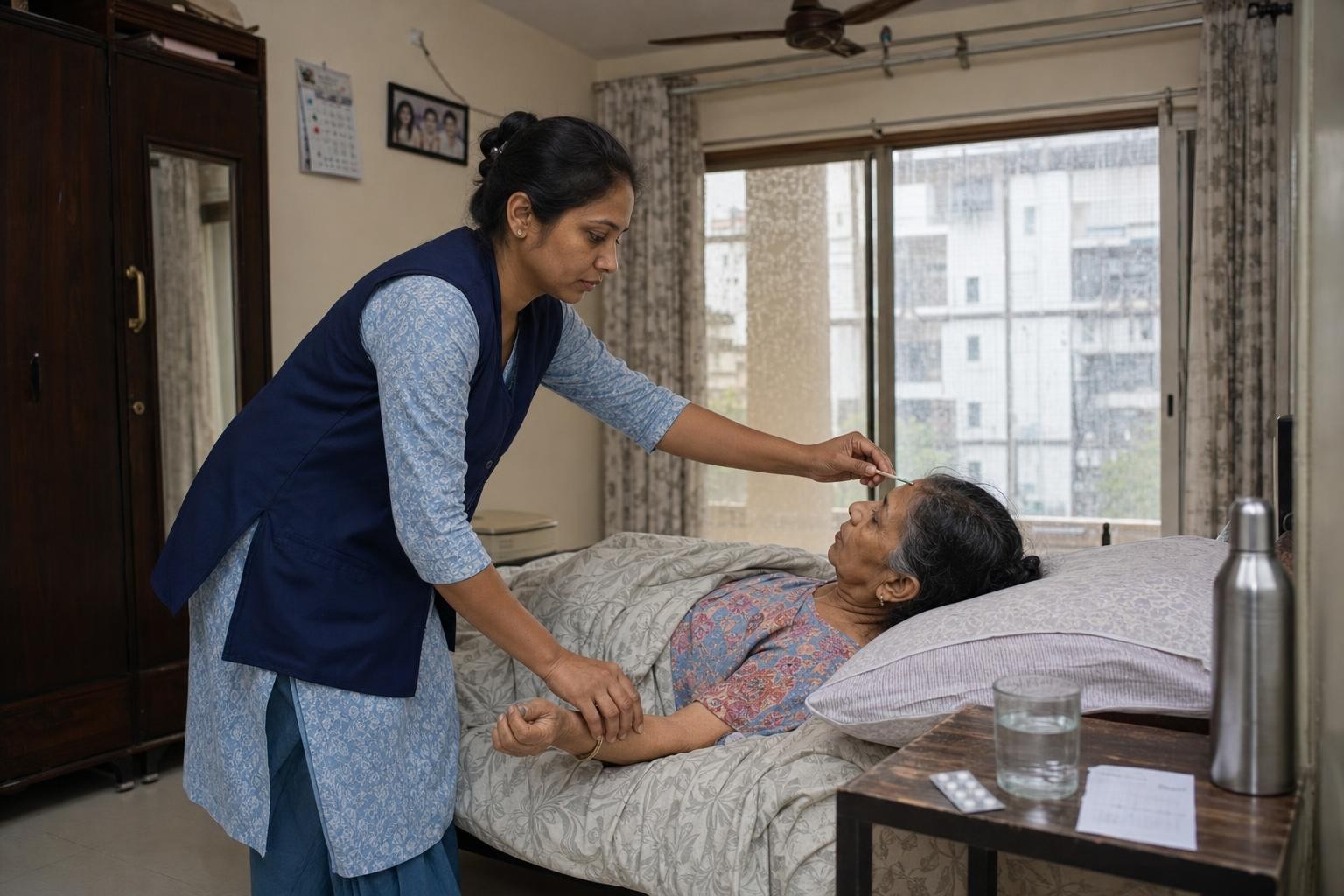
Fever is managed with paracetamol only, and only at the dose and timing a doctor sets. Anti-inflammatory painkillers like ibuprofen or aspirin are avoided in suspected dengue because they raise bleeding risk in a patient whose platelets are already dropping. This one rule causes more confusion than any other, mostly because it contradicts what people reach for out of habit.
A mosquito net over the patient's bed isn't paranoia. Someone with dengue is infectious to mosquitoes during the fever, and keeping that mosquito off everyone else in the house is one of the few things a family can control completely.
When oral fluids aren't enough
Most dengue dehydration is managed by mouth, a steady rhythm of small sips rather than one large glass after long gaps. Vomiting can get in the way of even that. If a patient can't keep fluids down for more than a few hours, or a doctor sees mild dehydration with none of the warning signs below, a prescribed IV drip at home is sometimes the next step, run under supervision with vitals checked through the infusion instead of a trip to a crowded ward for what is, at that point, a straightforward fluid top-up.
This is a narrow lane, not a substitute for admission when one is needed. A single bag of fluids followed by a return to normal drinking is one outcome. A patient who still can't hold fluids down afterward, or whose vitals wobble during the infusion, needs a hospital's monitoring, not a home nurse's.
The signs that mean hospital tonight
A short list of symptoms changes everything, and every family managing dengue at home should know it before it's needed, not while reading it at 2 a.m.
Severe abdominal pain that doesn't ease. Persistent vomiting, more than three times in a day. Bleeding from the gums or nose, or blood in vomit or stool. Rapid or unusually difficult breathing. Extreme tiredness, restlessness, or a sudden change in how alert the patient seems. Cold, clammy skin, or a pulse that feels weak and fast.
Any one of these means the emergency room, not a callback in the morning. Doctors call these warning signs for a reason: they tend to appear as the fever comes down, exactly when a family relaxes because the worst seems over.
Cold hands and a calm face can hide a falling blood pressure. Don't wait for someone to look sick before you act.
None of this means every dengue case needs admission. Most don't. It means the home-care plan needs a clear point where it stops being a home plan, agreed with the doctor before the fever even peaks, not improvised at midnight.
Questions families ask
Does every dengue fever need hospital admission?
No. Most adults with dengue recover at home with fluids, rest and monitoring. Admission usually follows a warning sign, or a platelet count your doctor decides has crossed a threshold worth watching in a hospital setting.
How often should platelets be checked at home?
Daily or on alternate days is typical, especially between day four and day seven of fever, when the count usually falls fastest. Your doctor will set the exact schedule based on how the patient is doing.
Can paracetamol be taken for dengue fever?
Generally yes, at a dose and timing your doctor sets. Avoid ibuprofen, aspirin and other anti-inflammatory painkillers, since they can add to bleeding risk while platelets are low.
Is a very low platelet count always dangerous?
Not by itself. Platelets normally dip through a dengue fever and recover on their own over the following week. What matters is the trend and whether warning signs appear alongside it, not one low number.
How long does recovery from dengue usually take?
The fever itself often settles within a week. Fatigue can linger longer, sometimes a couple of weeks, while the platelet count and the body both finish recovering.
Does mosquito control still matter once someone already has dengue?
Yes. A person is infectious to mosquitoes during the fever phase, so a net over the bed and repellent in the room protect the rest of the household from getting bitten by the same mosquito.
Healkin facilitates care at home and does not diagnose, prescribe, or change a doctor's treatment plan. Severe abdominal pain, bleeding, breathing difficulty, or a sudden change in alertness are reasons to seek emergency care immediately, not wait for a scheduled test.